
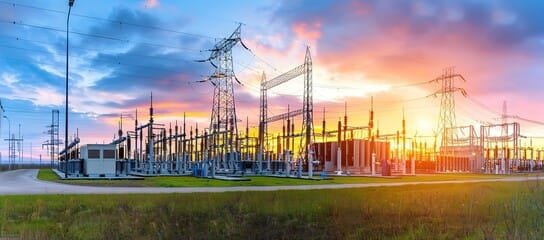
This week, the Baltic states of Estonia, Latvia, and Lithuania achieved a long-anticipated milestone: they disconnected from the Russian-controlled BRELL power grid, marking a decisive break from Moscow’s energy infrastructure influence. This move is not just about electricity — it is a strategic shift reinforcing the region’s security, independence, and resilience against hybrid threats.
Russia wielded energy dependence as a geopolitical tool for decades, using its vast oil, gas, and electricity exports to exert pressure on neighboring states. The Baltic nations have significantly reduced a key vulnerability by severing their reliance on the BRELL system and fully integrating into the European ENTSO-E network. But what does this mean for security, and how might Russia respond?
Since this article was published in February 2025, the Baltic synchronization has been successfully completed. On February 9, 2025, at 14:05 EET, Estonia, Latvia, and Lithuania officially joined the Continental European Synchronous Area, a grid serving over 400 million customers across 26 countries. All 16 power lines to Russia and Belarus were permanently disconnected.
The threat environment, however, has intensified. Throughout 2025, undersea cable sabotage in the Baltic Sea continued — including the Estlink 2 power cable (December 2024), the Latvia–Gotland fiber-optic link (January 2025), repeated damage to the C-Lion1 cable, and the seizure of the vessel Fitburg after a Helsinki–Tallinn cable disruption on December 31, 2025.
In January 2026, Lithuania moved to accelerate the Harmony Link — an ~$850 million onshore interconnector between Poland and Lithuania — with Poland approving the route in February 2026. Construction is set to begin in 2026 with completion targeted for 2030. The EU’s December 2025 Grids Package identified the project as a priority for European energy security.
Undersea Sabotage: The Hidden Threat to Global Infrastructure →
This banner reflects developments through March 2026. The original analysis below has been preserved.
The Disconnection: A Historic Energy Break
The transition to the European electricity network has been years in the making. The BRELL power ring, including Belarus and Russia, dates back to the Soviet era. This made the Baltic states dependent on Moscow for power stability even after their independence in the early 1990s. Recognizing the risks, Estonia, Latvia, and Lithuania have spent the past decade preparing for this transition by strengthening interconnections with Poland, Finland, and Sweden.
Now, by integrating into ENTSO-E, the European grid, the Baltic states have secured their energy supply from Western Europe rather than from Russia. This move eliminates a major point of leverage Russia could have exploited in times of geopolitical tension.
The Geopolitical Context: Energy as a Weapon
Russia has long used energy dependence as a strategic weapon. Its history of energy coercion provides the context for why the Baltic disconnection carries such strategic weight.
Ukraine: A History of Gas Cutoffs
Russia has used gas supply disruptions to pressure Ukraine. In 2006, Moscow cut gas supplies after a pricing dispute, severely affecting Ukrainian households and industries. The crisis had spillover effects on European countries relying on transit through Ukraine. In 2009, another dispute led to a full gas cutoff, impacting several EU states. Russia blamed Ukraine for siphoning supplies, while Kyiv accused Moscow of using energy as a political weapon.
The situation escalated in 2022 after Russia’s full-scale invasion of Ukraine. Moscow reduced and eventually cut off gas flows to Ukraine, attempting to weaken its economy and force political concessions. Despite these efforts, Ukraine diversified its energy sources and sought alternatives through European partners. Ukraine itself had already performed an emergency desynchronization from the Russian-controlled IPS/UPS grid at the onset of the invasion, immediately requesting — and receiving — integration with the European grid.
Moldova: Targeted Energy Retaliation
Moldova has faced similar pressure from Russia. In 2022, as Moldova moved closer to EU integration, Moscow cut gas supplies, causing an energy crisis. Moldova had to secure emergency electricity supplies from Romania to prevent blackouts. The gas crisis underscored Moldova’s vulnerability and accelerated its plans to disconnect from Russian energy infrastructure. The country now prioritizes energy partnerships with the EU to reduce its dependency on Gazprom.
The EU Energy Crisis: A Strategic Manipulation
Between 2021 and 2022, Russia weaponized its dominance over Europe’s gas supply. Moscow created artificial shortages by restricting exports, leading to soaring energy prices. This destabilized European economies and tested EU unity over sanctions against Russia. Countries like Germany, heavily reliant on Russian gas, scrambled to find alternatives. The crisis prompted Europe to accelerate its transition to renewable energy and expand LNG imports from the U.S. and Qatar.
Implications for the Baltic States
By breaking free from BRELL, the Baltic states have insulated themselves from similar coercion. This transition ensures energy security and sends a strong political message: they are fully committed to European integration.
The strategic implications are threefold. First, the move eliminates Russia’s ability to disrupt the Baltic power grid — Moscow’s central dispatch in Russia can no longer control the frequency stability that keeps lights on in Tallinn, Riga, and Vilnius. Second, integration with ENTSO-E provides access to a more stable, transparent, and competitive energy market backed by the generation capacity of 26 European nations. Third, reduced reliance on Russia strengthens NATO’s eastern flank and enhances the resistance operating concept that underpins regional defense.
The disconnection from BRELL marks a crucial step toward complete independence from Russian energy influence. However, vigilance is necessary as Moscow explores alternative means to exert pressure, including cyberattacks, subversion, and disinformation campaigns.
Irregular Warfare and Hybrid Threats
While the physical disconnection from the Russian grid is a success, new threats have emerged in response. Russia’s toolkit for coercion extends well beyond energy supply — it includes cyber operations, physical sabotage, and information warfare.
Cyberattacks on Energy Infrastructure
Russia has a well-documented history of cyber warfare. The 2007 Estonia cyberattack was one of the first large-scale cyber offensives against a state, targeting government institutions and financial systems. Since then, cyberattacks have become a key element of Russia’s hybrid warfare tactics.
Ukraine has faced repeated cyberattacks on its energy infrastructure. In 2015, Russian hackers disabled parts of Ukraine’s power grid, leaving hundreds of thousands without electricity. A year later, another cyberattack targeted Kyiv’s energy systems, demonstrating Moscow’s capability to disrupt national power grids.
Experts warn that the Baltic states could become the next target. Russia may attempt cyber sabotage on power stations, transmission systems, or even financial networks supporting the energy sector. To counter this, Estonia, Latvia, and Lithuania are bolstering cybersecurity defenses with EU and NATO support.
Sabotage and Physical Disruption
Physical sabotage remains a pressing concern. Russian-backed actors have been linked to attacks on critical infrastructure across Europe. Recent incidents include suspected sabotage of German railway systems and Baltic undersea communication cables. These acts highlight Russia’s willingness to engage in covert operations against vital infrastructure.
The potential for sabotage against Baltic energy infrastructure is significant. Transmission lines, substations, and even renewable energy installations could be targeted. The LitPol Link interconnector — the primary physical connection between the Baltic grid and Continental Europe — has been identified as a critical vulnerability. Lithuania’s Public Security Service has assumed direct protection of LitPol Link sites, replacing private security arrangements. Governments in the region are also increasing intelligence-sharing to mitigate these risks.
Disinformation Campaigns
Russia is well-versed in using disinformation as a strategic tool. The Kremlin may attempt to erode public confidence in the transition to European energy networks by spreading false narratives.
Moscow could amplify claims that the move will lead to rising energy costs, grid instability, or supply shortages. In the past, Russian state media have promoted misinformation to influence public opinion in the Baltic states, particularly among Russian-speaking minorities. Lithuania’s State Security Department warned ahead of the disconnection that Russia would likely take active measures to discredit the decision and attempt to influence public opinion regarding Baltic energy stability. Baltic governments are investing in media literacy programs and enhancing cooperation with Western fact-checking organizations to counter this.
What Comes Next
The physical disconnection is complete, but the broader challenge of securing Baltic energy independence is ongoing. Several priorities will define the next phase.
Grid resilience and redundancy. The Baltic states are now connected to the European grid primarily through the LitPol Link with Poland, along with undersea interconnectors to Finland (Estlink 1 and 2), Sweden (NordBalt), and internal Baltic transmission lines. The Harmony Link — a new onshore interconnector between Poland and Lithuania with an estimated cost of $850 million — is the most critical infrastructure project ahead. Its completion, targeted for 2030, will significantly increase transmission capacity and reduce the risk that damage to any single connection could isolate the Baltic grid.
Defending against cyber threats. NATO and the EU are working with Baltic nations to strengthen cybersecurity. Investments in digital resilience, rapid response capabilities, and the deployment of synchronous condensers and battery storage systems are crucial to maintaining grid stability against both technical faults and deliberate attacks.
Reducing remaining energy dependencies. Electricity is now secure, but oil and gas dependence must be further addressed. Lithuania’s Klaipėda LNG terminal, operational since 2014, opened the Baltics to global gas suppliers. Expanding renewable generation — Lithuania exceeded its 2025 solar target early, reaching 1.2 GW by 2024 — and regional offshore wind development in the Baltic Sea will help eliminate remaining vulnerabilities.
Monitoring Russian retaliation. Moscow may respond with economic pressure, cyber warfare, or hybrid tactics. Russia’s Kaliningrad exclave, now isolated from the mainland grid and dependent on local generation, could become a pressure point if Moscow frames its energy difficulties as a pretext for regional escalation. Continuous intelligence sharing and diplomatic coordination across NATO’s eastern flank remain essential to counter potential threats.
The Baltic states’ disconnection from Russia’s power grid is more than a technical achievement — it is a declaration of sovereignty and a crucial step in securing their future against geopolitical threats. By cutting one of the last energy ties to Moscow, they have demonstrated their commitment to independence, resilience, and European solidarity. This move reshapes the geopolitical landscape of Eastern Europe, reinforcing the Baltic region as a stronghold against Russian influence while setting an example for other nations seeking to escape Moscow’s energy grip.
// Further Reading
Marshall I. Goldman — Petrostate: Putin, Power, and the New Russia. Essential reading on how Russia transformed its energy wealth into a geopolitical weapon — the strategic backdrop to the Baltic disconnection.
Atlantic Council — Baltic States Unplug from Russia’s Power Grid — But Moscow Still Looms. Expert analysis of the infrastructure security challenges that follow synchronization.
ECFR — Synch and Swim: How Escaping Russia’s Grid Strengthens Baltic Energy Security. EU policy recommendations for the post-synchronization security landscape.
More on The Resistance Hub