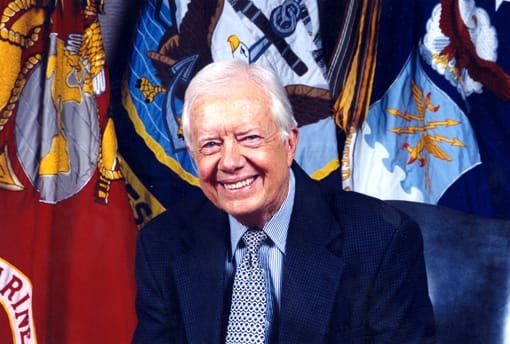
The presidency of Jimmy Carter (1977–1981) coincided with a global wave of irregular warfare that stretched from the mountains of Afghanistan to the jungles of Central America. Carter entered office promising a foreign policy rooted in human rights. He left it having authorized covert operations, weathered a hostage crisis that defined his presidency, and watched proxy conflicts reshape Cold War alliances on three continents. As the world reflects on Carter’s legacy following his passing in December 2024, this retrospective examines how unconventional conflict tested — and ultimately overwhelmed — his administration’s ambitions.
The Soviet-Afghan War: The Genesis of a Proxy Conflict
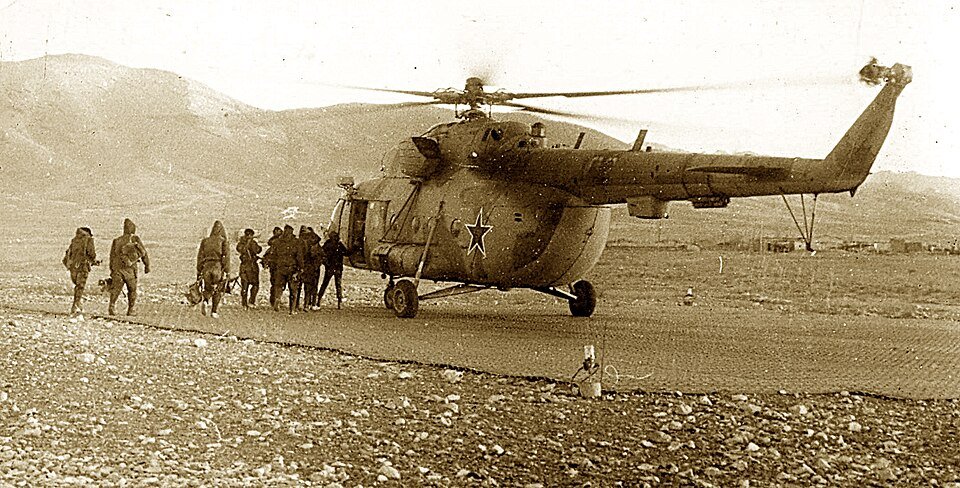
The Soviet invasion of Afghanistan in December 1979 triggered the most consequential irregular warfare program of the Cold War. Carter’s National Security Advisor, Zbigniew Brzezinski, had actually begun laying groundwork for covert support to Afghan resistance fighters months before the invasion, viewing the destabilization of Soviet influence in Central Asia as a strategic opportunity. The resulting program, Operation Cyclone, channeled CIA funding, arms, and training to the mujahideen through Pakistan’s Inter-Services Intelligence (ISI).
Though Operation Cyclone would expand dramatically under Reagan — eventually becoming the largest covert operation in CIA history — its origins under Carter established the template for a proxy war that would consume the Soviet military for a decade. The Pulitzer Prize-winning account of this program, Steve Coll’s Ghost Wars, traces how decisions made in the Carter era set in motion dynamics that would ultimately fuel the rise of the Taliban and al-Qaeda — consequences no one in Washington anticipated in 1979.
The Iranian Revolution and Hostage Crisis
The Iranian Revolution of 1979 toppled the U.S.-backed Shah and replaced his government with Ayatollah Khomeini’s Islamic Republic — a seismic shift that eliminated Washington’s most important ally in the Persian Gulf virtually overnight. On November 4, 1979, Iranian militants stormed the U.S. Embassy in Tehran and took 52 Americans hostage, launching a 444-day crisis that consumed the remainder of Carter’s presidency.
The crisis precipitated Operation Eagle Claw, a special operations rescue mission launched in April 1980. The operation ended in catastrophe when a helicopter collision at the Desert One staging area killed eight servicemen, and the mission was aborted. The failure exposed critical gaps in American special operations capability — gaps that led directly to the creation of the United States Special Operations Command (USSOCOM) and the restructuring of joint special operations under the 1986 Goldwater-Nichols Act. Mark Bowden’s Guests of the Ayatollah provides the most detailed account of the crisis and its aftermath, while Gary Sick’s All Fall Down, written by a member of Carter’s National Security Council staff, offers an insider’s perspective on how the administration managed — and was consumed by — the crisis.
Latin America: Revolution and Counterrevolution
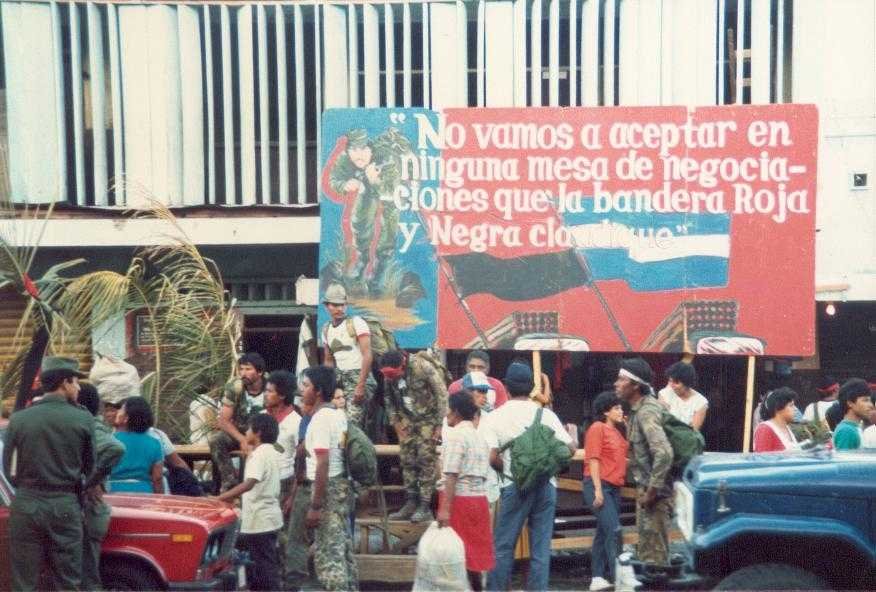
Central America became a crucible for guerrilla warfare during Carter’s term, with Marxist insurgencies challenging U.S.-aligned governments across the region.
In Nicaragua, the Sandinista National Liberation Front (FSLN) overthrew the Somoza dictatorship in July 1979. The Sandinistas had waged a classic guerrilla campaign, building rural support networks and urban cells before launching coordinated offensives that overwhelmed the National Guard. Carter initially recognized the new government in an attempt to maintain influence, but the Sandinistas’ alignment with Cuba and the Soviet Union created tensions that would later escalate into the Reagan-era Contra war. Stephen Kinzer’s Blood of Brothers, written by the New York Times bureau chief in Managua, remains the definitive account of this period.
In El Salvador, the Farabundo Martí National Liberation Front (FMLN) launched insurgent campaigns against a U.S.-backed government notorious for human rights abuses. Carter’s policy created a painful contradiction: his commitment to human rights clashed with Cold War imperatives to contain Marxist insurgencies. The result was a delicate balancing act that pleased no one and foreshadowed the brutal civil war that would claim over 75,000 lives in the 1980s. Mark Danner’s The Massacre at El Mozote documents the worst single atrocity of that war, committed by a U.S.-trained battalion.
The Horn of Africa: Cold War Proxies
The Ogaden War (1977–1978) between Ethiopia and Somalia demonstrated how rapidly Cold War alliances could shift. When Somalia invaded Ethiopia’s Ogaden region, the Soviets — who had previously backed Somalia — switched sides and provided massive military support to Ethiopia along with 12,000 Cuban combat troops. Somali-backed insurgents employed guerrilla tactics but were overwhelmed by the conventional force deployed against them.
Carter’s administration avoided direct military involvement but the conflict had lasting consequences: it pushed Somalia toward the U.S. orbit and destabilized the Horn of Africa for decades. Jeffrey Lefebvre’s Arms for the Horn documents how U.S. security policy in the region shifted during and after this period.
Southeast Asia: The Aftershocks of War
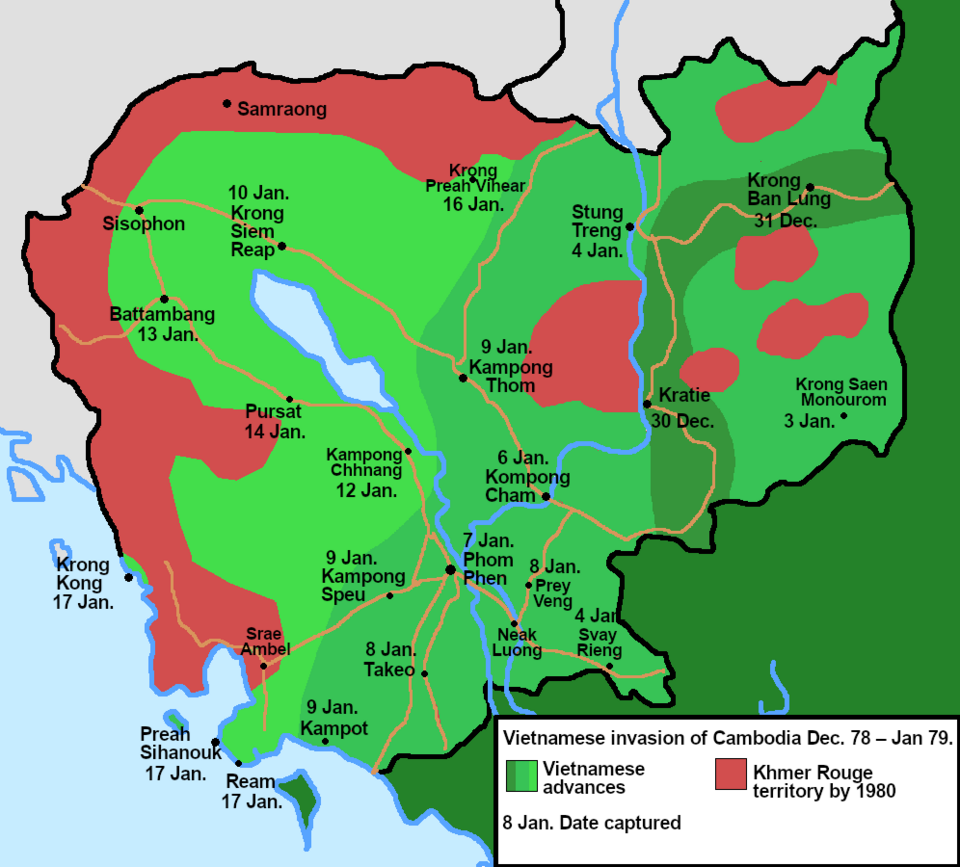
Vietnam’s 1979 invasion of Cambodia overthrew the Khmer Rouge, whose reign had produced one of the most devastating genocides in modern history. Driven more by Cold War alignment than moral calculus, the Carter administration condemned the invasion — despite the regime it displaced having killed an estimated 1.5 to 2 million of its own citizens. The conflict underscored how guerrilla warfare and subversion continued to reshape Southeast Asian borders even after the U.S. withdrawal from Vietnam. David Chandler’s Brother Number One, a political biography of Pol Pot, provides essential context for understanding the regime and its fall.
The Middle East and South Asia: Seeds of Future Conflict
Beyond Iran and Afghanistan, Carter’s tenure saw irregular warfare dynamics emerge that would shape conflicts for decades.
The Kurdish insurgency against Iraq’s Ba’athist regime persisted throughout Carter’s presidency. Led by Mustafa Barzani, Kurdish guerrilla forces sought autonomy in northern Iraq through a campaign of ambushes and territorial control. While U.S. involvement was limited — the CIA had quietly abandoned Kurdish fighters after a 1975 deal between Iraq and Iran — the conflict exemplified how ethnic groups leveraged unconventional warfare to pursue political aims against authoritarian states. Michael Gunter’s The Kurds of Iraq traces this struggle from its origins to its modern implications.
Meanwhile, Pakistan became a critical front following the Soviet invasion of Afghanistan. As the primary conduit for CIA support to the mujahideen, Pakistan’s ISI gained enormous influence — and the country became a hub for Islamist fighters from across the Muslim world. Although Carter’s involvement was early-stage, this period planted the seeds for a complex relationship that would later fuel both global terrorism and regional instability. Ahmed Rashid’s Taliban documents the long-term consequences of these decisions.
The phenomenon of hostage-taking also expanded during this period, extending well beyond the Iran crisis. Groups including the Palestinian Liberation Organization (PLO) employed kidnapping and siege tactics as political instruments, making hostage-taking a defining feature of late-Cold War irregular warfare. Lawrence Wright’s The Looming Tower traces how the grievances and networks of this era eventually converged toward September 11.
Southern Africa and the Carter Doctrine
The Rhodesian Bush War (1964–1979) concluded during Carter’s presidency with the Lancaster House Agreement, leading to Zimbabwe’s independence. The war featured sustained guerrilla campaigns by ZANLA and ZIPRA — campaigns that drew on Maoist principles of people’s war adapted to the Southern African context. Carter’s diplomatic efforts to push for negotiated settlement rather than military escalation represented one of the administration’s clearer successes in managing irregular conflict. Paul Moorcraft’s The Rhodesian War: A Military History provides a comprehensive operational account of the conflict.
In January 1980, Carter announced the Carter Doctrine, declaring that the United States would use military force to defend its interests in the Persian Gulf. While framed as a conventional deterrence policy, the doctrine also accelerated preparations for unconventional warfare and special operations in the region — laying institutional groundwork that would prove essential in future conflicts from Desert Storm to the post-9/11 campaigns in Iraq and Afghanistan.
A Legacy of Complex Challenges
Carter’s single term encompassed a remarkable concentration of irregular conflicts — from sabotage and proxy warfare in Africa to revolutionary insurgencies in Latin America, from espionage operations in Central Asia to hostage crises in the Middle East. His administration’s attempts to balance human rights commitments with Cold War realities produced painful contradictions that future presidents would inherit — and amplify.
The operational failures of this era, particularly Eagle Claw, drove institutional reforms in American special operations that remain in effect today. The proxy relationships initiated under Carter — especially in Afghanistan and Pakistan — produced consequences that shaped global security for decades. For students of counterinsurgency theory and international law in conflict, the Carter years offer a case study in how unconventional warfare can overwhelm a presidency that hoped to transcend it.
For broader context on these themes, explore our Irregular Warfare Glossary and the Essential Books on Resistance.
Affiliate Disclosure
As an Amazon Associate and affiliate partner, The Resistance Hub earns from qualifying purchases at no extra cost to you.