Che Guevara: Revolutionary Icon, Guerrilla Strategist, and Controversial Legacy
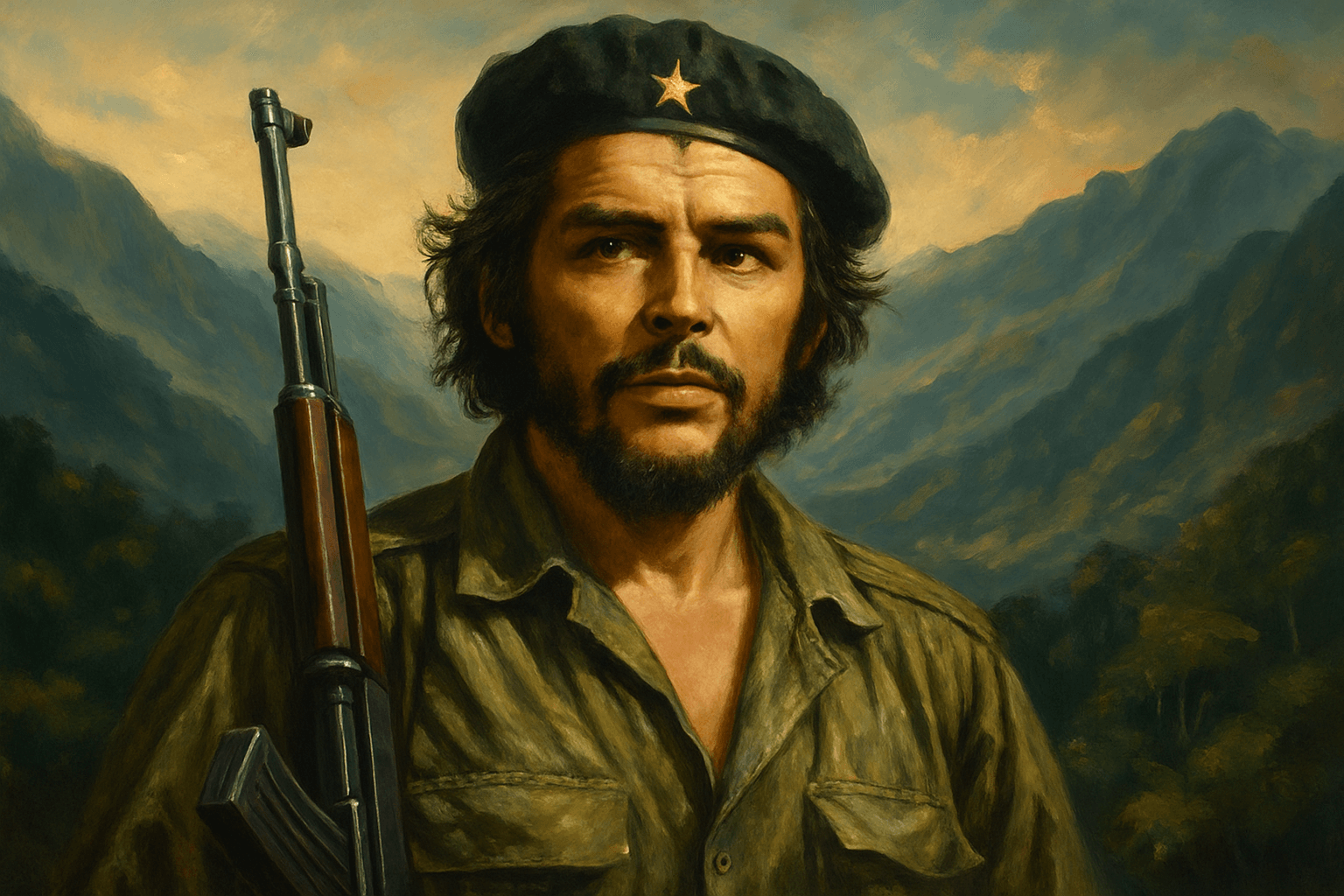
Few figures in modern history evoke as much debate as Ernesto “Che” Guevara. His name is often linked to revolution, guerrilla warfare, and defiance against imperialism. Yet the iconic image on T-shirts and protest banners only scratches the surface. Behind the symbol was a complex strategist whose successes, failures, and unwavering ideology influenced insurgent movements across the globe.
Was Che Guevara a freedom fighter or a ruthless ideologue? Was he a brilliant tactician or an inflexible revolutionary? The truth lies between these extremes. This article examines his rise to prominence, the core principles of his guerrilla doctrine, his failures in Africa and South America, and the enduring influence of his ideas on modern insurgency.
From Medical Student to Revolutionary Fighter
Guevara did not begin life as a soldier. Born into a middle-class Argentine family in 1928, he studied medicine at the University of Buenos Aires. His early worldview shifted dramatically after an extended motorcycle journey across South America in 1951 to 1952. Traveling through Argentina, Chile, Peru, Colombia, and Venezuela, he encountered widespread poverty, disease, and inequality.
These experiences radicalized him. Guevara concluded that systemic injustice could not be corrected through reform alone. It required armed struggle. This belief drew him to political activism and eventually into the orbit of Latin American revolutionaries.
By 1955, in Mexico City, Guevara met Fidel Castro and joined the 26th of July Movement. His medical training was valuable, but he soon proved himself as more than a field doctor. In the Cuban Revolution, Guevara served as both a commander and strategist, playing a central role in the guerrilla campaign against Fulgencio Batista’s U.S.-backed government.
The Cuban Revolution: Proving Ground for Guerrilla Warfare
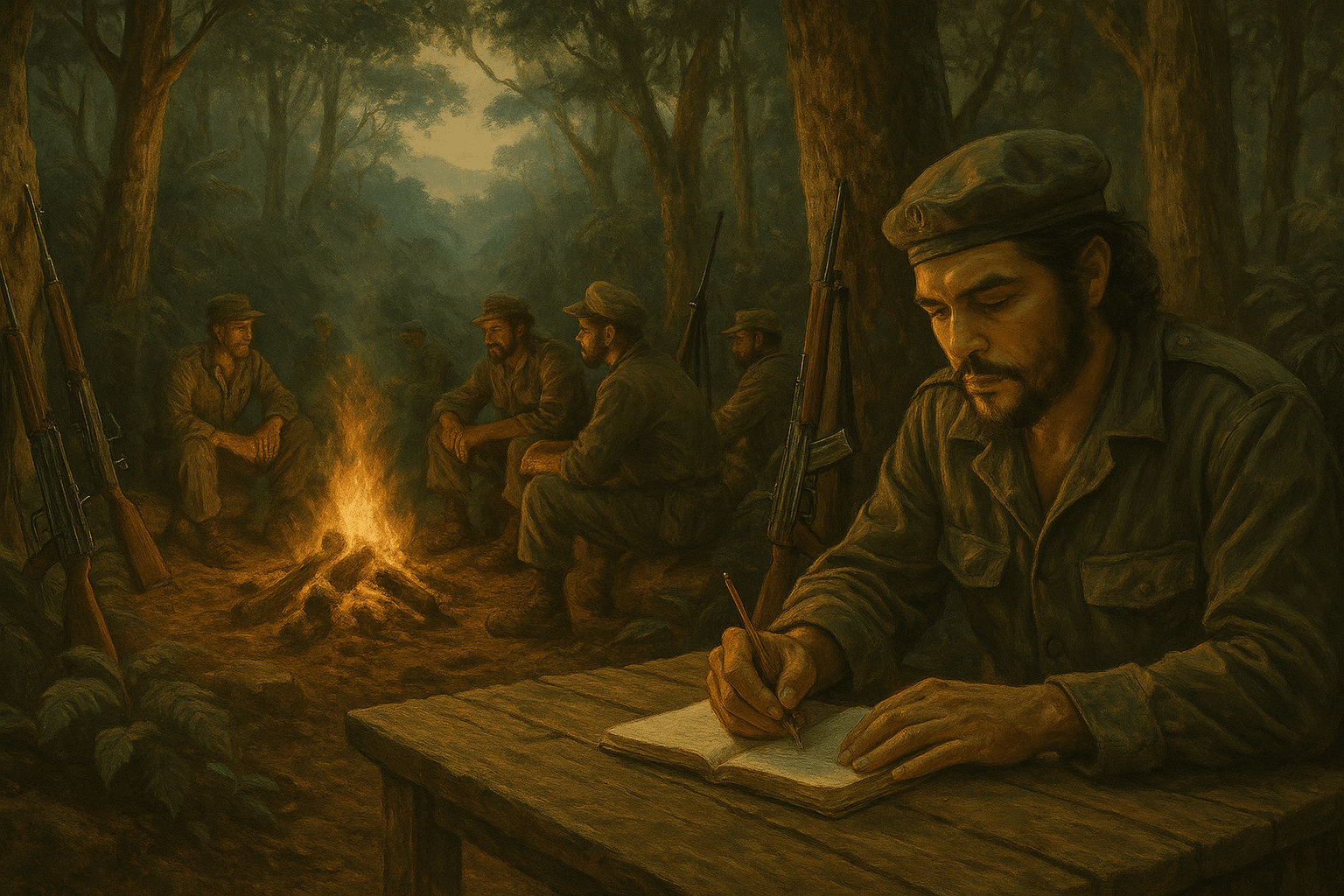
In Cuba’s Sierra Maestra mountains, Guevara developed and refined the tactics that would later define his military doctrine. Fighting alongside Castro’s forces, he commanded several successful operations against numerically superior government troops.
The rebels operated in small, mobile units. They relied on surprise attacks, ambushes, and rapid withdrawals. Rural villages provided food, recruits, and intelligence. Guevara also emphasized the political dimension of insurgency. Guerrillas offered medical care to locals, respected civilian property, and used Radio Rebelde to spread their message.
By January 1959, the Batista regime collapsed. For Guevara, the Cuban victory confirmed that a determined guerrilla force, supported by rural populations, could topple a better-equipped military.
Revolutionary Spirits: The Guerrilla Warfare Theory of Che Guevara
Foco theory tested against the record, Cuba’s success and the failures that followed it, with Guevara’s tactical framework set out and assessed rather than repeated.
Guevara’s Guerrilla Warfare Doctrine
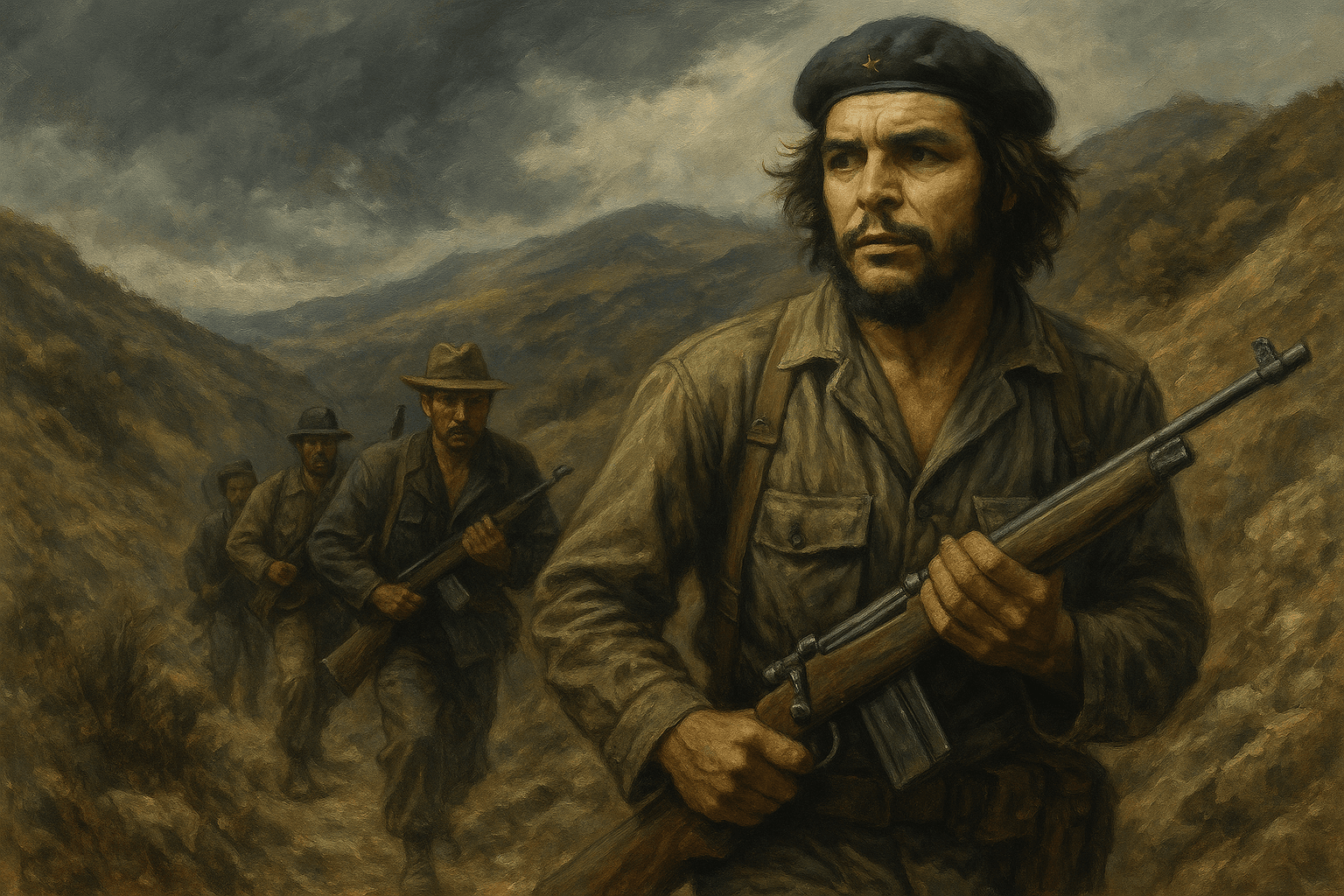
Following the revolution, Guevara codified his strategies in his 1960 manual Guerrilla Warfare. His doctrine rested on three core principles:
- Small, Mobile Units – Fighters should operate in flexible groups capable of rapid strikes and retreats.
- Rural Insurgency – Revolutions begin in the countryside, where terrain and peasant support offer strategic advantages.
- Political Education – Combatants are both soldiers and educators, responsible for spreading revolutionary ideology through subversion and persuasion.
Central to Guevara’s thinking was the concept of the foco, a small nucleus of armed fighters who could ignite a broader revolutionary movement without waiting for the political conditions that Marxist orthodoxy considered prerequisites. The French philosopher Régis Debray systematised the idea in Revolution in the Revolution? (1967) and gave foco theory the name it still carries. This was a direct departure from Mao Zedong’s doctrine, which emphasized protracted political mobilization before armed action. Where Mao argued that political consciousness must precede the gun, Guevara believed the gun could create the conditions for political consciousness.
In Cuba, these principles proved effective. The insurgents leveraged the mountainous terrain, limited Batista’s ability to deploy large forces, and steadily expanded their influence. They blended military operations with political outreach, turning peasant communities into allies.
However, Guevara assumed these conditions could be replicated elsewhere. This belief would later contribute to failures abroad.
The Congo Campaign: Misreading the Terrain
In 1965, Guevara sought to export revolution to Africa. He traveled to the Congo to support Marxist rebels fighting the U.S.- and Belgian-backed Congolese government. The campaign collapsed within months.
- Lack of Local Support – Congolese fighters were fragmented, poorly trained, and often indifferent to Guevara’s leadership.
- Cultural and Language Barriers – Communication breakdowns weakened coordination and trust.
- Stronger Enemy Forces – The government had external backing, better equipment, and intelligence advantages.
Guevara opened his own account of the campaign, published as Pasajes de la guerra revolucionaria: Congo, with the line “This is the history of a failure.” The collapse showed that without cohesive local support and favorable terrain, guerrilla warfare could falter quickly. For a full treatment of why foco theory did not travel, see Beyond Cuba: foco theory in the Congo and Bolivia.
Bolivia: The Final Campaign
Undeterred, Guevara turned his attention to Bolivia in 1966. He aimed to ignite a rural-based insurgency that would spread across South America. Instead, Bolivia became his last battlefield.
- Misjudging Geography – Bolivia’s terrain lacked the natural cover of Cuba’s mountains.
- Alienating the Peasantry – Locals viewed Guevara’s group as outsiders with foreign goals, undermining the resistance mobilization that had been critical in Cuba.
- International Intervention – The CIA and U.S. military supported Bolivian forces with training, equipment, and intelligence. Bolivia’s counterinsurgency campaign, guided by American advisors, proved devastatingly effective against the isolated guerrilla band.
By October 1967, Bolivian troops, aided by U.S. advisors, captured Guevara. He was executed the next day in the village of La Higuera. For a chapter-length assessment of the Congo and Bolivia campaigns, see Revolutionary Spirits on Guevara’s guerrilla doctrine.
Ideological Rigidity: A Double-Edged Sword
Guevara’s commitment to Marxist-Leninist principles gave him focus and resolve. Yet his ideological rigidity often worked against him.
- Refusal to Compromise – He rejected alliances with groups whose political views diverged from his own.
- Lack of Local Adaptation – He assumed the Cuban model of insurgency could succeed anywhere, disregarding local realities.
- Alienation of Potential Allies – His uncompromising stance sometimes pushed away sympathetic movements.
Guevara envisioned revolution as a process that would create a “new man” (hombre nuevo), selfless, disciplined, and committed to the collective good. In practice, these ideals often collided with the political and cultural complexities of other regions.
Guevara’s Three Campaigns: A Comparative Analysis
IW Glossary · Sources: Anderson, Che Guevara: A Revolutionary Life (2010); Guevara, The Bolivian Diary (1968)
Modern Relevance of Guevara’s Strategies
Even decades after his death, Guevara’s writings influence insurgent movements worldwide. His emphasis on small-unit tactics, rural bases, and ideological training remains part of guerrilla warfare doctrine.
However, modern resistance movements face a different environment:
- Advanced Surveillance – Drones, satellites, and digital monitoring make it harder for guerrillas to hide.
- Urban-Centered Revolts – Many 21st-century uprisings begin in cities rather than remote countryside.
- Hybrid Resistance – Movements like the Zapatistas combine armed struggle with political activism and digital campaigns.
- Nonviolent Alternatives – Civil resistance has gained traction as an effective tool for political change, offering pathways that Guevara’s doctrine largely dismissed.
While Guevara’s approach may seem dated in the age of cyber warfare, its core principles of mobility, adaptability, and political legitimacy remain relevant. His insistence that guerrillas must earn popular support, not merely impose ideology, continues to separate successful resistance networks from those that collapse under their own isolation.
Lessons from Success and Failure
Guevara’s career offers both inspiration and caution:
- From Cuba – The value of aligning with local populations, using terrain to advantage, and integrating political and military efforts.
- From the Congo and Bolivia – The dangers of misjudging local conditions, overestimating ideological appeal, and underestimating external opposition.
For modern strategists, Guevara’s story underscores that insurgency is context-dependent. What worked in one setting may fail in another. His experience in Bolivia, where a sophisticated counterinsurgency campaign dismantled his movement in months, remains one of the clearest case studies in the limits of foco theory.
Cultural Legacy and Global Symbolism
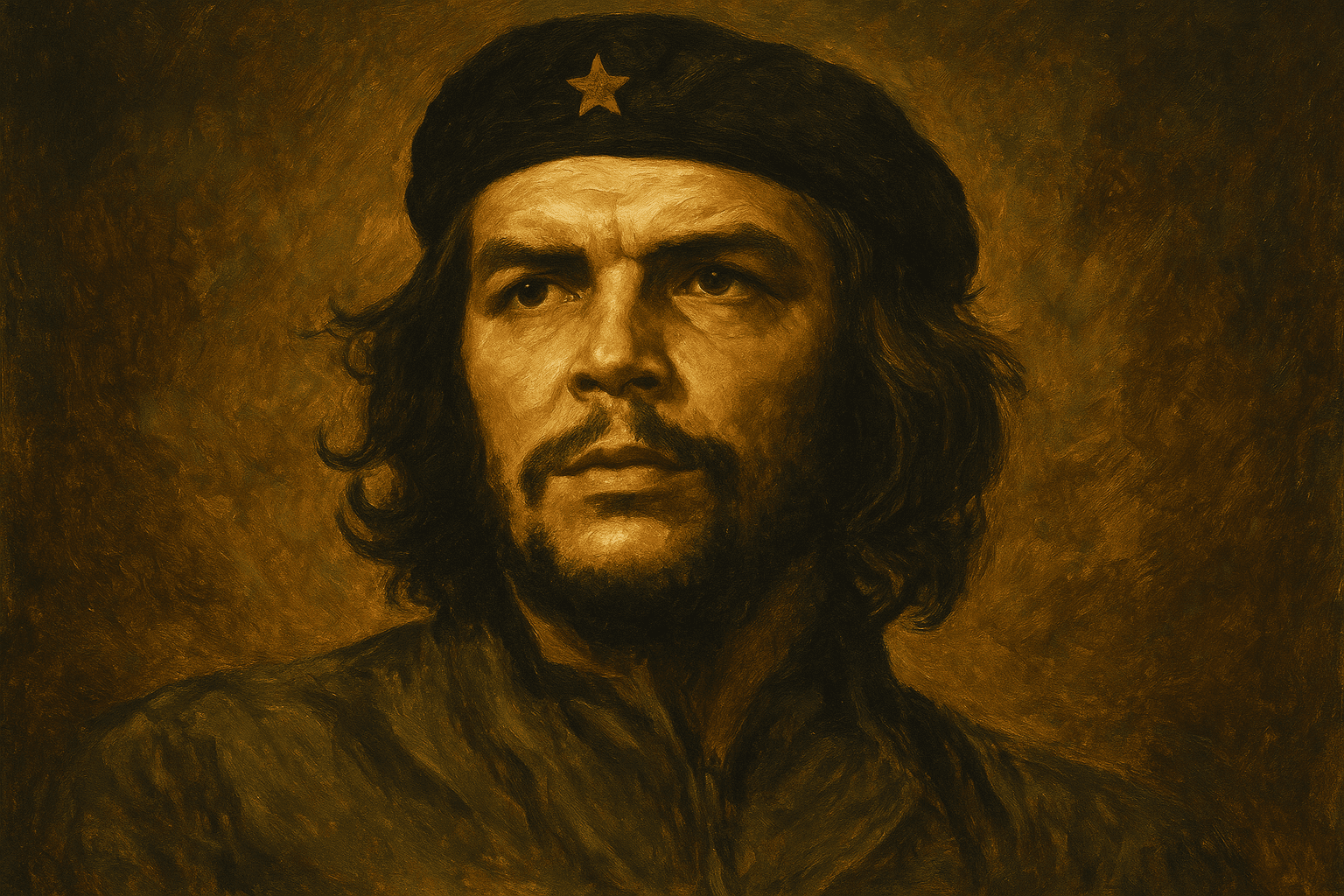
Beyond military theory, Che Guevara became a global symbol of rebellion. His image, captured in Alberto Korda’s famous photograph, has been reproduced millions of times. For some, it represents courage, sacrifice, and resistance to oppression. For others, it symbolizes violent revolution and failed ideology.
His life has inspired books, films, and academic studies. This cultural resonance ensures that debates over his legacy remain active nearly six decades after his death.
Conclusion: The Man, the Myth, the Strategic Mind
Che Guevara was more than an image. He was a doctor turned fighter, a thinker turned commander, and a revolutionary whose strategies shaped, and sometimes misled, insurgent movements worldwide.
His victories in Cuba demonstrated the potential of guerrilla warfare when matched with favorable conditions and strong local support. His failures in the Congo and Bolivia revealed the risks of applying a single model to diverse contexts. Today, his writings remain required reading for those studying unconventional warfare, even as technology and geopolitics reshape the battlefield.
Understanding Guevara is to understand both the art of revolution and its limits. His life and legacy remain essential for anyone examining the intersection of ideology, strategy, and the human cost of armed struggle. Read alongside Mao Zedong’s protracted war doctrine and T.E. Lawrence’s Arab Revolt campaigns, Guevara’s work completes the doctrinal triangle that defines modern guerrilla theory.
Recommended Reading
// Recommended Reading
Primary Sources
Guerrilla Warfare by Che Guevara. The foundational manual codifying his doctrine of rural insurgency, small-unit tactics, and political education. The authoritative revised edition includes Guevara’s own corrections to the original text.
Reminiscences of the Cuban Revolutionary War by Che Guevara. A firsthand account of the Sierra Maestra campaign assembled from Guevara’s combat diary. Essential for understanding how his theoretical principles emerged from lived experience.
The Bolivian Diary by Che Guevara. His final diary, found in his backpack after capture. A raw, day-by-day chronicle of a guerrilla campaign’s disintegration, and the clearest evidence that the foco model had fatal limits.
Biographies & Analysis
Che Guevara: A Revolutionary Life by Jon Lee Anderson. The definitive biography. Anderson lived in Cuba for three years and secured unprecedented access to Guevara’s private archives and widow. His reporting led to the discovery of Guevara’s remains in Bolivia.
The War of the Flea by Robert Taber. A classic analysis of guerrilla warfare by a CBS journalist who marched with Castro’s forces. Places Guevara’s foco theory in the broader context of twentieth-century insurgencies.
Invisible Armies by Max Boot. A sweeping history of guerrilla warfare from antiquity to the present. Guevara’s campaigns receive detailed treatment alongside Mao, Lawrence, and dozens of other insurgent leaders.
Masters of Resistance by The Distillery Press. Mao, T.E. Lawrence, and Che Guevara: three volumes distilled into one accessible primer on insurgency, guerrilla strategy, and revolutionary doctrine.
More on The Resistance Hub
