

OSS: Textbooks for a Shadow War
The OSS, Explained
The Office of Strategic Services was the United States’ first centralized intelligence and special operations agency, stood up in 1942 under William J. Donovan and dissolved in 1945. In barely three years it ran foreign intelligence, analysis, sabotage, morale and propaganda operations, and guerrilla warfare alongside resistance movements across occupied Europe and Asia. Its people and its methods became the foundation of both the Central Intelligence Agency and Army Special Forces.
The documents in this collection are that wartime doctrine in its original form, the field manuals, reports, and assessments the OSS wrote for its own operators. Read together, they show modern irregular warfare at its point of origin, before the craft was divided among separate institutions and buried under decades of later practice. Each card below records where the document came from, its date, and its declassification history.
Editor’s Pick
⭐ Highest RecommendedOffice of Strategic Services: Combined & Remastered Manuals
Unites all eight original Office of Strategic Services manuals, faithfully reproduced and newly formatted for clarity and continuity. Each manual has been meticulously typeset and standardized to preserve historical integrity while enhancing usability for research, study, and instruction. Available in hardcover and paperback.
Declassified OSS Field Manuals
8 DocumentsSimple Sabotage Field Manual (1944)
Outlines practical methods for ordinary citizens to disrupt enemy operations using simple, low-risk acts, wasting time, spreading confusion, and minor physical sabotage that could cumulatively degrade enemy efficiency. Written for distribution in occupied territories as a primer on low-end disruptive tactics.
Morale Operations Field Manual
Guided OSS officers in psychological and propaganda campaigns designed to weaken enemy confidence. Provides detailed techniques for rumor-spreading, black propaganda, and other covert methods of undermining morale behind enemy lines. A foundational reference in the study of psychological operations and information warfare.
Document Details & Provenance
Morale Operations Field Manual, Strategic Services (Provisional), Strategic Services Field Manual No. 2Office of Strategic Services, Washington D.C., 26 January 1943 · declassified under authority NND 843099, 3 December 2013 · PDF, 3.0 MB
Copies are also held by the Internet Archive and in the CIA Reading Room as CIA-RDP89-01258R000100010002-4.
Special Operations Field Manual
A comprehensive guide for training and conducting irregular warfare operations during World War II. Covers planning, organization, guerrilla tactics, demolitions, and coordination with resistance movements. Reflects the OSS’s role as the forerunner of modern U.S. special operations forces, blending doctrine with practical fieldcraft.
Document Details & Provenance
Special Operations Field Manual, Strategic Services (Provisional)Office of Strategic Services, Washington D.C., 23 February 1944, over the signature of William J. Donovan · PDF, 1.3 MB
Printed secret, with the instruction that “the contents of this Manual should be carefully controlled and should not be allowed to come into unauthorized hands,” handled under AR 380-5. A copy is also held by the Internet Archive.
OSS Organization and Functions
Provides an overview of the OSS’s internal structure, outlining the roles, responsibilities, and coordination of its various branches during World War II. Captures the OSS’s evolution into a unified wartime intelligence organization and remains a key reference for understanding the origins of U.S. covert and special operations.
Document Details & Provenance
Office of Strategic Services (OSS) Organization and FunctionsOffice of Strategic Services, a school and training publication · no date printed on the document · PDF, 5.1 MB · DECLASSIFIED stamps throughout
Prints its original handling restriction: “The student may retain his numbered copy of the book for reference during the course, but it must be returned to the Chief Instructor on demand.”
Maritime Unit Field Manual
Documents the doctrine and methods of the OSS Maritime Unit, the forerunner of today’s naval special operations. Covers coastal infiltration, swimmer delivery systems, demolition techniques, and specialized maritime sabotage operations. Reflects the OSS’s pioneering role in combining irregular warfare with naval tactics.
Document Details & Provenance
Maritime Unit Field Manual, Strategic Services (Provisional)Office of Strategic Services, Washington D.C., 18 July 1944 · OSS Reproduction Branch 47189 · PDF, 0.9 MB
Printed Secret. No declassification stamp appears in the front matter.
Operational Groups Field Manual
Outlines the organization, training, and mission of the OSS Operational Groups, elite, uniformed units conducting guerrilla warfare in occupied Europe. Covers small-unit tactics, coordination with resistance forces, demolitions, and intelligence integration. Precursor to modern U.S. Army Special Forces.
Document Details & Provenance
Operational Groups Field Manual, Strategic Services (Provisional), Strategic Services Field Manual No. 6Office of Strategic Services, over the signature of the Director of Strategic Services, 25 April 1944 · PDF, 1.8 MB
Printed Secret under AR 380-5 of 15 March 1944, with a DECLAS notation at the end of the document.
OSS Secret Intelligence Manual
A procedural handbook for clandestine intelligence work during World War II. Lays out organizational principles, tradecraft, and security practices for gathering, evaluating, and transmitting critical information. Emphasizes cover work, compartmentation, secure communications, and rigorous source evaluation.
Document Details & Provenance
Secret Intelligence Field Manual, Strategic Services (Provisional), Strategic Services Field Manual No. 5Office of Strategic Services, over the signature of the Director of Strategic Services, 22 March 1944 · OSS Reproduction Branch 39526 · PDF, 7.9 MB
Printed TOP SECRET. Declassified under authority NND 974345, by TKN, 12 March 2013.
OSS Provisional Basic Field Manual
A field primer for OSS personnel preparing for overseas operations. Describes essential duties, reporting standards, and practical preparations, including training scopes, arrival and departure procedures, and handling of agents and records under high risk. Stresses clarity, speed of reporting, and minimal paperwork.
Document Details & Provenance
Office of Strategic ServicesPDF, 1.7 MB
War Reports, Assessments & Specialist Documents
4 DocumentsOSS Special Weapons and Devices
An illustrated manual produced by the OSS Research and Development Branch cataloguing specialized weapons and devices developed for sabotage, covert action, and unconventional warfare. Details the design, construction, and employment of clandestine tools, including explosives, incendiaries, disguised firearms, and mechanical sabotage equipment, for field agents and resistance networks.
Document Details & Provenance
OSS Research and Development BranchNot hosted by The Resistance Hub · held as a private record by the National Archives of Singapore, 54 pages
Presented by the holding archive in a page-turning viewer rather than as a downloadable PDF.
Assessment of Men: Selection of Personnel for the Office of Strategic Services
A landmark study detailing the OSS’s groundbreaking WWII psychological program for selecting spies and agents. The OSS developed innovative, multi-day, scenario-based assessments to evaluate candidates’ adaptability, resilience, and problem-solving skills, methods that still influence modern intelligence and corporate talent selection.
Document Details & Provenance
Prepared by the OSS Assessment StaffRinehart and Company, New York, 1948 · PDF, 50.2 MB
A commercial imprint of a study written inside a U.S. Government body. No renewal of the 1948 registration appears in the U.S. copyright renewal record indexed by Stanford Libraries, and the HathiTrust copyright review records all three digitised copies as full view.
War Report of the Office of Strategic Services, Volume I
Documents the creation and wartime operations of the Office of Strategic Services, the United States’ first coordinated intelligence organization. It traces the origins, missions and structure of the OSS, and its lasting influence on modern American espionage, covert action and psychological-warfare doctrine. Kermit Roosevelt, chief of the History Project, signed the preface to the 1947 report and later supplied the introduction to the 1976 commercial edition.
Document Details & Provenance
Compiled by the History Project, Strategic Services Unit, Office of the Assistant Secretary of War, 1947U.S. Government Printing Office, Department of State Service Office, July 1949 · originally Top Secret · declassified under authority NND 974345 and released under the Nazi War Crimes Disclosure Act, PL 105-246
Document Details, Provenance & Rights
Simple Sabotage Field Manual, Strategic Services (Provisional), Strategic Services Field Manual No. 3Office of Strategic Services, Washington D.C., 17 January 1944, over the signature of William J. Donovan, Director of Strategic Services · OSS Reproduction Branch · PDF, 2.2 MB
Prints controlled handling under AR 380-5 and carries DECLASSIFIED stamps.// Rights Position
The edition previously hosted on this page was Walker and Company, New York, 1976, ISBN 0-8027-0529-4, LCCN 75-40760, published with a new introduction by Kermit Roosevelt. That edition prints “Introduction copyright © 1976 by the Walker Publishing Company, Inc. All rights reserved,” followed by a clause barring reproduction of the new introduction in any form without written permission from the publisher. The Resistance Hub is not currently redistributing that file. The 1947 report is linked below in the U.S. Government Printing Office text.
War Report of the Office of Strategic Services, Volume II: The Overseas Targets
Chronicles the overseas operations of the OSS across Europe, North Africa, and Asia. Details field missions, intelligence networks, sabotage, and guerrilla coordination from London to Burma, illustrating how OSS shaped Allied strategy, global resistance movements, and the enduring institutional foundations of postwar intelligence.
Document Details, Provenance & Rights
Compiled by the History Project, Strategic Services Unit, Office of the Assistant Secretary of War, 1947U.S. Government Printing Office, Department of State Service Office, July 1949 · originally Top Secret · declassified under authority NND 974345 and released under the Nazi War Crimes Disclosure Act, PL 105-246// Rights Position
The edition previously hosted on this page has been withdrawn pending a rights review, as the companion volume of the Walker and Company, New York, 1976 two-volume set published with a new introduction by Kermit Roosevelt. That set prints “Introduction copyright © 1976 by the Walker Publishing Company, Inc. All rights reserved,” followed by a clause barring reproduction of the new introduction in any form without written permission from the publisher. The Resistance Hub is not currently redistributing that file. The 1947 report is linked below in the U.S. Government Printing Office text, catalogued by the Internet Archive under the volume heading Operations in the Field.
Why Study the OSS
The OSS compressed the full craft of unconventional warfare into a handful of wartime years, which makes its record unusually legible. One organization built foreign intelligence, covert action, and partisan support from almost nothing, wrote down how it did so, and left a paper trail that later agencies spent decades elaborating. For the practitioner, these manuals are a primary-source baseline for how a state generates irregular capability under real pressure and short timelines.
For the student and the historian, the OSS is the common root of two modern lineages, CIA covert action and Army Special Forces, captured before either had hardened into its own bureaucracy and vocabulary. The accounts below add operational history, biography, and analysis around the primary documents above, and are a sound place to go deeper.
Additional Historical Accounts of the OSS
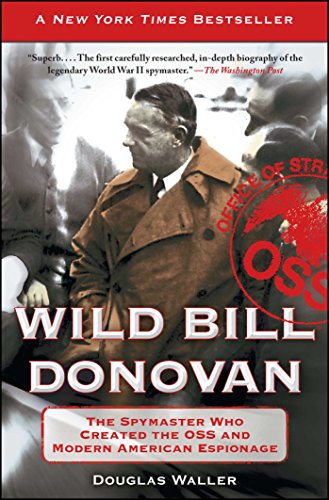
6 BooksWild Bill Donovan: The Spymaster Who Created the OSS and Modern American Espionage
The definitive biography of William J. “Wild Bill” Donovan, the lawyer, war hero, and visionary who built the OSS from scratch and shaped U.S. intelligence for generations. Essential reading for understanding the institutional origins of modern American covert action.
OSS: The Secret History of America’s First Central Intelligence Agency
A detailed institutional history of the OSS, tracing how America’s first centralized intelligence apparatus was assembled, deployed, and eventually disbanded, laying the groundwork for the CIA and the modern U.S. intelligence community.
Operatives, Spies, and Saboteurs: The Unknown Story of the Men and Women of WWII’s OSS
Chronicles the largely untold stories of the men and women who served as OSS agents in the field, their recruitment, training, missions, and the personal cost of covert operations behind enemy lines across multiple theaters of the war.
The OSS: A Captivating Guide to America’s First Spy Agency and Its Secret Operations in WWII
An accessible overview of the OSS, its formation, key operations, major figures, and lasting influence on U.S. military and intelligence strategy. A solid entry point for readers new to the history of American covert action.
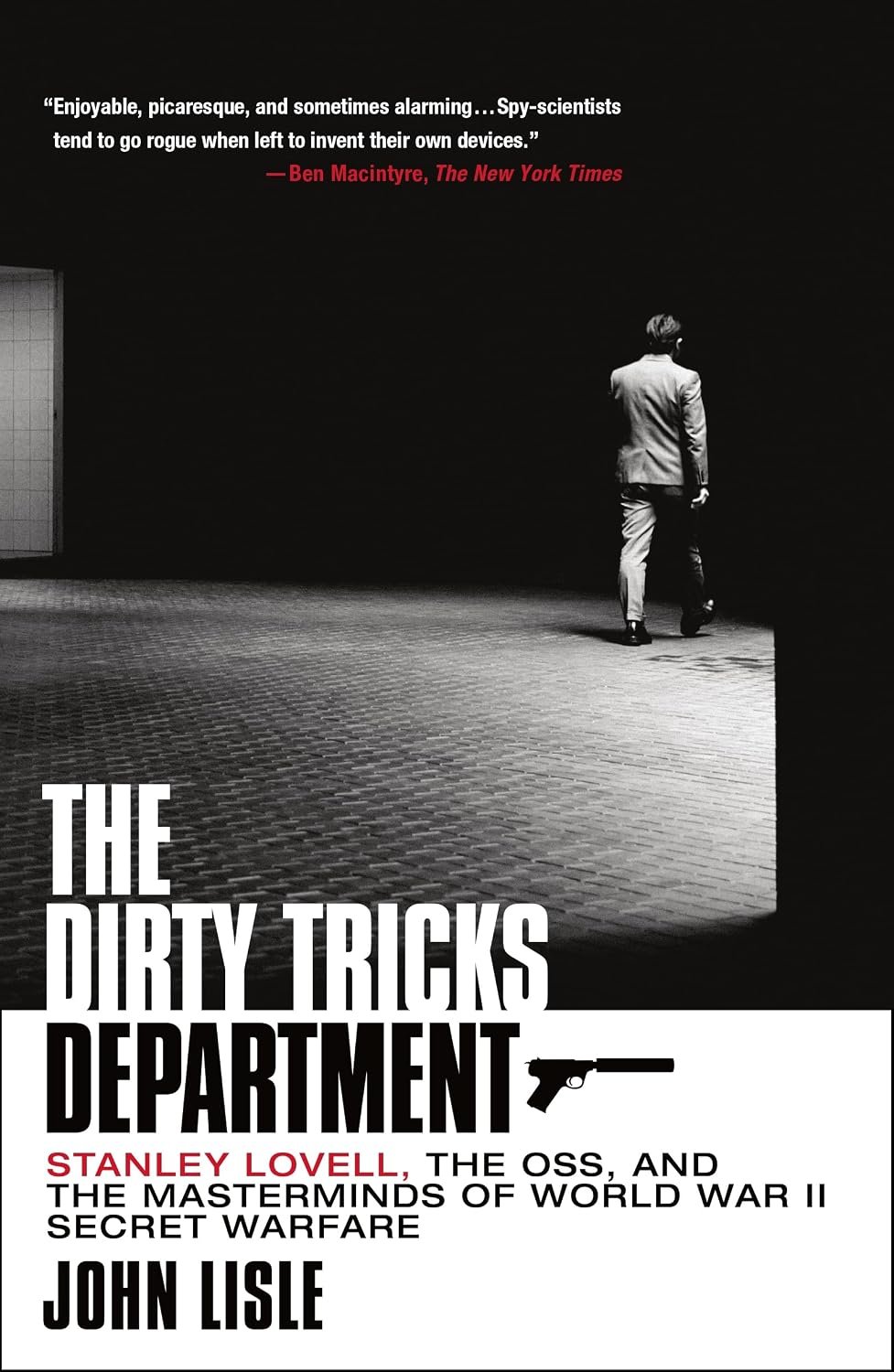
The Dirty Tricks Department: Stanley Lovell, the OSS, and the Masterminds of WWII Secret Warfare
The story of the OSS’s Research and Development Branch under Stanley Lovell, the scientists, engineers, and inventors who created the gadgets, poisons, and devices used by Allied agents. A fascinating look at the intersection of science and clandestine warfare.
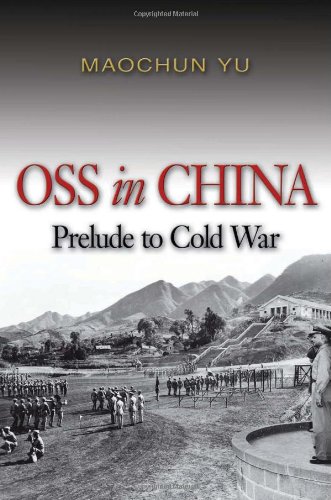
OSS in China: Prelude to Cold War
Examines OSS operations in wartime China, navigating the complex rivalry between Nationalist and Communist forces while building intelligence networks that would shape the early Cold War. A critical study of how WWII covert operations set the stage for decades of conflict in Asia.
Try clearing a filter or adjusting your search.
// Filter by Type
// Quick Navigation