Resilience Toolkit: Prepare Before the Crisis. Not After.
Resilience is not a slogan. It is the capacity to prepare, absorb shock, adapt, and recover when systems fail. This toolkit distills proven practices from nations that treat preparedness as a civic duty, and translates them into actions you can take before the next disruption.
Every national model on this page is drawn from a published government or defence-ministry document, not from secondary commentary. Each featured guide below lists its issuing body, edition year, page count and file size so you can verify what you are downloading before you download it.
Where a document has been superseded by a newer edition, we say so. Where we host a copy, we name the original publisher and link to it. Guides are reviewed against their source ministries on a rolling basis; the review date above reflects the last full pass.
01 · How To Use This Toolkit
Start HereMost preparedness advice fails because it asks people to do everything at once. This toolkit is sequenced. Work the four steps below in order, and you will have a defensible baseline in a weekend rather than an unfinished shopping list.
Fix the physical baseline first
Water, food, light, heat, medication, and a way to receive information without mains power. Nothing in the other four domains matters if you cannot get through the first seventy two hours at home. Start with Physical Resilience.
Name three people before you need them
A neighbour who has a key, someone outside your region who can act as a message relay, and one person who knows your medical situation. Social capacity is the domain people skip and the one that decides outcomes. See Social Resilience.
Remove your single points of failure
Cash outside the banking system, documents outside the house, backups outside the cloud provider you use daily. Then rehearse thinking clearly under pressure. Work through Economic Resilience and Mental Resilience.
Write the plan down and test it once
An unrehearsed plan is a wish. Pick one scenario, walk it through with your household, and note what broke. Planning For The Worst has the scenario tools and the citizen guides that national governments issue for exactly this purpose.
02 · The Five Dimensions of Resilience
Interlocking DomainsResilience stacks in layers. Each domain reinforces the others: physical preparedness reduces mental stress, strong social networks extend economic staying power, and coherent planning ties all four together.
Physical Resilience
Sustain body, home, and essentials when systems fail. Food and water storage, first aid, shelter hardening, and operational fitness under stress conditions.
Domain 02 · Mental & CognitiveMental Resilience
Stay calm, think clearly, and resist manipulation. Stress inoculation, cognitive hygiene, decision-making under pressure, and information literacy in high-uncertainty environments.
Domain 03 · Community & SocialSocial Resilience
Organize neighbors, protect community services, and distribute the load. Mutual aid structures, trusted network-building, and continuity of essential local functions.
Domain 04 · Digital & EconomicEconomic Resilience
Secure data and income streams. Keep work and communications functional both online and offline. Financial continuity, cash reserves, and data backup strategies.
Planning for the Worst
Scenario planning tools and the world's best citizen preparedness guides, adapted for individuals and communities. Turn risk awareness into actionable plans before disruption arrives.
Keep people safe, preserve function, and recover faster, as individuals, neighborhoods, and institutions. The goal is not to avoid all disruption. It is to ensure that when disruption comes, it does not become collapse.
03 · Why Resilience Matters
Five National ModelsThe systems we depend on for power, food, communication and finance are tightly coupled. When one link breaks, cascading failures follow. Nations that plan ahead do not merely endure: they recover faster and protect their people better. Five states have built civilian preparedness into national practice, and each one solves a different part of the problem.
 Finland
Trains citizens to resist disinformation and defend networks. Treats preparedness as a civic duty embedded in national culture rather than as an emergency protocol invoked after the fact.
Source: Finnish Ministry of the Interior Japan
JapanBuilds redundancy into every layer of infrastructure. Public drills, earthquake-resistant construction standards, and multi-agency coordination are routine practice rather than exceptional measures.
Source: Japan preparedness guide, TRH repository Lithuania
Teaches its public how to survive occupation or blackout. Developed under the direct threat of hybrid warfare, combining physical, digital and psychological defense in one civilian handbook.
Source: Ministry of National Defence of the Republic of Lithuania Sweden
Household readiness and information hygiene distributed at national scale. The brochure "If Crisis or War Comes", mailed to every household and reissued in November 2024, remains the benchmark for civilian preparedness communication.
Source: Swedish Civil Defence and Resilience Agency (MCF) Singapore
Psychological Defence and Digital Defence sit alongside military, civil, economic and social defence as formal pillars of Total Defence. Citizens are trained to identify and resist influence operations as a matter of national security.
Source: Total Defence, Government of SingaporeResilience is not fear-based. It is pragmatic readiness: the bridge between vulnerability and endurance, shock and recovery, panic and order. This toolkit collects the world's best civilian models and adapts them into something anyone can act on.
04 · Global Models & Guides
3 Featured · Free DownloadThe Resistance Hub hosts a repository of 24 national and institutional resilience guides, freely available, organised by region and threat type. Browse the full collection →
The three guides below are produced by national governments and defence institutions for civilian use. Each represents a different threat environment and preparedness philosophy. Publisher, edition year, page count and file size are listed so you know what you are getting before you download.
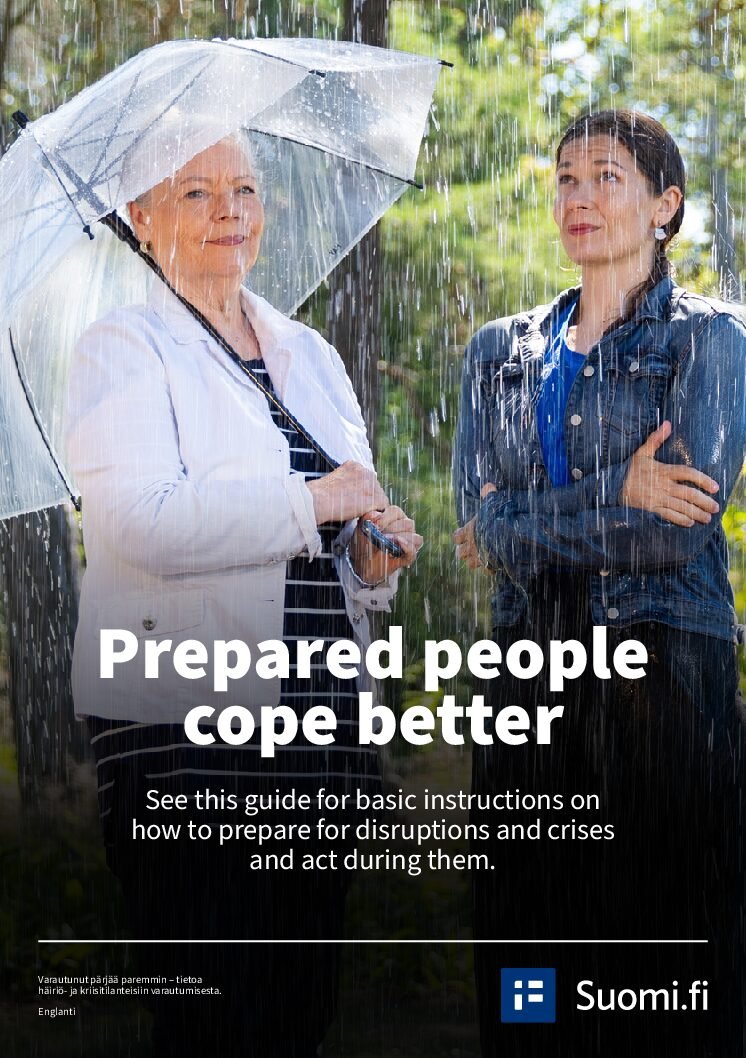
Finland: Prepared People Cope Better
Finnish Ministry of the Interior · Household Preparedness SummaryA concise national summary of how to prepare for disruptions and how to act during them. Finland's approach blends household readiness with national defense and cognitive resilience against disinformation, and this guide is the entry point that every Finnish household is pointed to. Short by design: it covers water, food, heating, communication and household planning in plain language, and directs readers to the deeper national programmes behind it.
Published October 2024 · 13 pages · 1.1 MB · English edition of "Varautunut pärjää paremmin" · Publisher: intermin.fi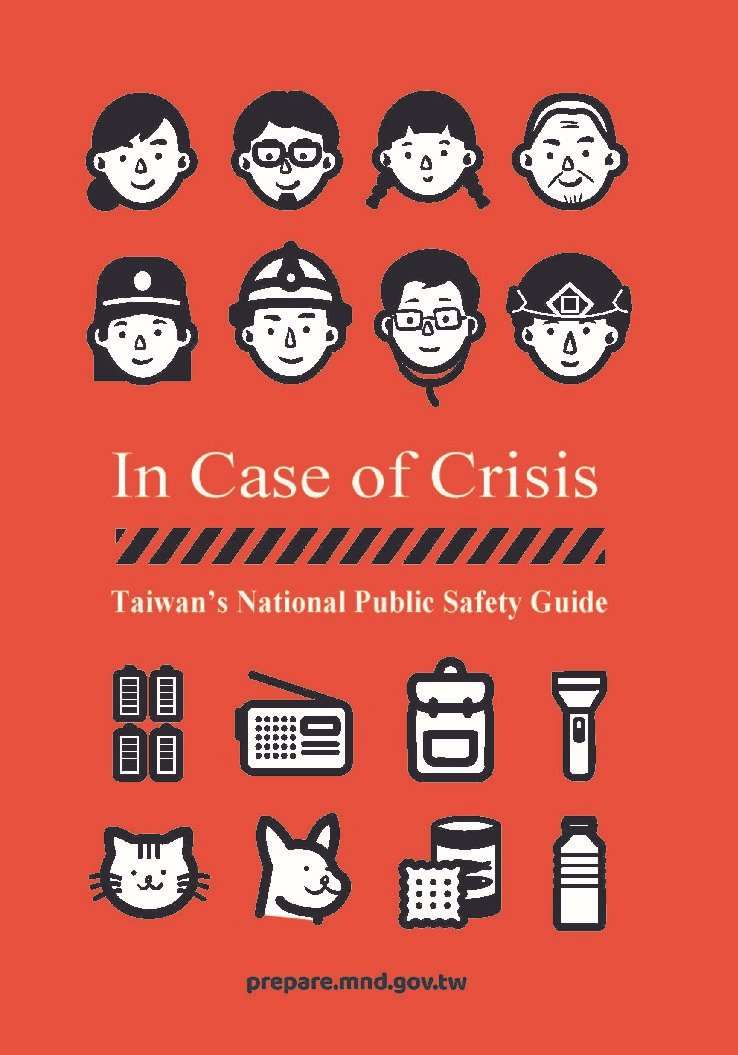
Taiwan: In Case of Crisis
All-out Defense Mobilization Agency, Ministry of National Defense · Taiwan's National Public Safety GuideTaiwan's newest whole-of-society readiness manual, and the most direct of the three. Covers air-raid safety and shelter location, emergency communication discipline, supply staging, and what to do when critical infrastructure and undersea cables are cut. Produced under the direct threat of military coercion, it names disinformation and the collapse of cashless payment as first-order problems rather than afterthoughts. Illustrated throughout and built around QR codes to live shelter locators, which makes it unusually easy to act on.
First edition, 21 September 2025 · 36 pages · 9.9 MB · English edition · Supersedes the 2023 All-Out Defense Contingency Handbook · Publisher: prepare.mnd.gov.tw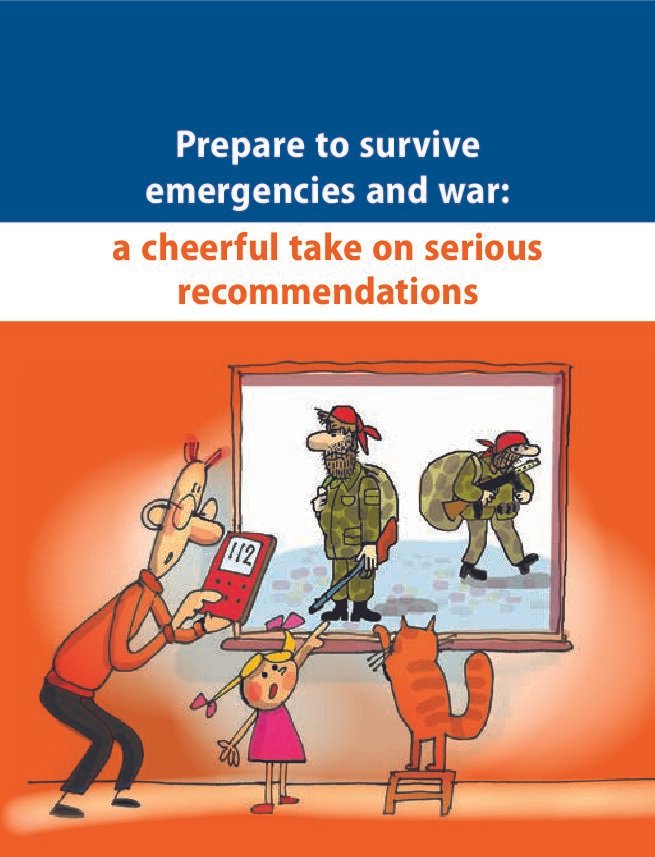
Lithuania: Prepare to Survive Emergencies and War
Lithuanian Ministry of National Defence · Hybrid Warfare PreparednessDeveloped under the direct threat of hybrid warfare, Lithuania's handbook trains citizens to recognize disinformation, sustain themselves during prolonged disruption, and support civil defense networks. It remains one of the most explicit civilian guides to a hybrid threat environment, combining physical survival, information hygiene and community coordination in a single accessible document, and it is unusual in addressing conduct under occupation directly.
Second edition, 2015 · 60 pages · 1.5 MB · ISBN 978-609-412-084-8 · Publisher: kam.lt · Note: Lithuania has issued newer preparedness material since this editionResilience begins locally. The guides above show what nations achieve through collective readiness, but the next step belongs to individuals and communities. Work the four steps in How To Use This Toolkit, then go domain by domain.
National preparedness doctrine grew out of resistance and civil defense thinking. These three Distillery Press volumes cover the source material that shaped it.
The digital half of the resilience problem: contested networks, information integrity, and continuity when the connection is the target. The closest fit to the Economic and Mental domains.
The foundational thinkers on organised civilian resistance. Useful background for why states such as Finland and Lithuania build preparedness around the population rather than around the state alone.
The wartime field manuals that established how ordinary civilians sustain themselves and function under occupation. Direct ancestor of the Lithuanian and Taiwanese handbooks featured above.
// Page Contents
// Resilience Toolkit
// Free PDF Guides
// Related Resources
// Advertisement