
Counterinsurgency, often referred to as COIN, is a vital discipline within military and political science. It combines strategy, governance, and human behavior into a single operational framework aimed at defeating insurgent movements. These movements usually stem from deep political, economic, or social grievances that traditional military force alone cannot resolve. Counterinsurgency theory therefore extends beyond combat, requiring an understanding of legitimacy, public trust, and state authority in contested environments.
Throughout the twentieth century, numerous scholars and practitioners have attempted to codify the principles of successful counterinsurgency. Among them, three stand out for their influence on both doctrine and practice: David Galula, Robert Thompson, and Sir Gerald Templer. Their work collectively transformed COIN from an improvised response to a structured discipline rooted in political reality. Galula systematized the logic of insurgent and counterinsurgent behavior; Thompson emphasized governance, legitimacy, and the rule of law; and Templer demonstrated how integrated civil-military efforts could defeat an organized insurgency.
Their theories remain central to modern debates about irregular warfare. From Iraq and Afghanistan to regional stabilization missions in Africa and Southeast Asia, their principles continue to shape operational planning, force structure, and political engagement. Understanding their legacy is essential not only for military professionals but also for policymakers, analysts, and educators who confront the complex intersection of violence, governance, and legitimacy that defines modern conflict.
David Galula: A Systematic Approach to Counterinsurgency

David Galula, a French military officer and scholar, is widely recognized as one of the most influential figures in counterinsurgency theory. His 1964 book Counterinsurgency Warfare: Theory and Practice remains foundational in understanding how governments can counter organized insurgent movements. Drawing on his operational experience in Algeria, China, and Greece, Galula distilled a framework that blended military precision with political understanding. His systematic approach helped transform counterinsurgency from ad-hoc reactions into a structured discipline that prioritized control, legitimacy, and population engagement.
Galula observed that insurgencies draw their strength from the population’s support. This insight led him to propose a model where success depends on isolating insurgents from their social and logistical base rather than focusing solely on battlefield victory. His framework is organized around four enduring principles that continue to inform modern COIN doctrine.
The Support of the Population is Crucial
Galula argued that the population is the true center of gravity in any insurgency. Without popular support, insurgents lose access to recruits, resources, and information. Conversely, a government that secures public confidence gains the intelligence and legitimacy required to dismantle the insurgent network. For Galula, success required more than eliminating fighters—it meant changing the political relationship between the state and its citizens through trust, protection, and effective governance.
Support Must Be Actively Maintained
Winning support is not a static achievement but a continuous effort. Galula warned that populations are pragmatic; they will side with whoever offers stability and justice. Governments must therefore demonstrate consistent security, responsive administration, and credible reforms that address grievances. When the state fails to deliver, insurgents exploit the resulting vacuum. Sustained population engagement, in Galula’s view, is a daily operational requirement, not a one-time political objective.
Political and Military Actions Must Be Synchronized
Galula viewed counterinsurgency as a political campaign supported by military means, not the reverse. He emphasized the importance of coordination between civilian authorities, military commanders, and local governance structures. Disunity between these elements undermines legitimacy and allows insurgents to exploit gaps in communication or policy. His approach called for unified command structures and shared strategic goals, an idea that later became a core element of modern interagency and whole-of-government operations.
The Insurgents’ Weaknesses Should Be Exploited
Galula recognized that insurgent movements are rarely homogeneous or invulnerable. Internal divisions, logistical constraints, and dependency on population sympathy can be exploited through intelligence operations, targeted amnesty programs, and selective use of force. He advocated for flexible tactics that adapt to local dynamics, combining persuasion with precision strikes. The objective is to erode the insurgents’ credibility while reinforcing the government’s legitimacy.
Galula’s Legacy
David Galula’s insights continue to shape counterinsurgency doctrine around the world. His work heavily influenced the U.S. Army’s Field Manual 3-24: Counterinsurgency, authored under General David Petraeus and General James Mattis, which guided operations in Iraq and Afghanistan. The manual’s emphasis on population security, legitimacy, and civil-military coordination mirrors Galula’s foundational ideas. Although modern conflicts have evolved in technology and scale, his core principles remain relevant to understanding how legitimacy and control intersect in irregular warfare.
Robert Thompson: Legitimacy and Hearts and Minds
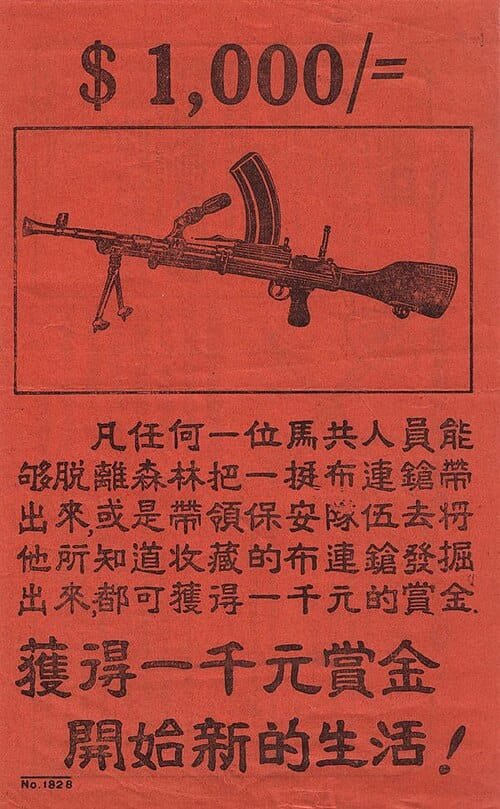
Sir Robert Grainger Ker Thompson, a British colonial officer and strategist, was one of the key architects of modern counterinsurgency doctrine. His experience during the Malayan Emergency (1948 to 1960) provided the foundation for his influential book Defeating Communist Insurgency (1966). In it, Thompson presented a model that placed political legitimacy at the heart of counterinsurgency operations. He understood that lasting victory required not only defeating insurgents on the battlefield but also establishing a government that citizens viewed as just, competent, and accountable.
Thompson’s approach was pragmatic and grounded in field experience. He recognized that military force alone could suppress insurgents temporarily but could not eliminate the political and social conditions that sustained them. His framework distilled counterinsurgency into five interrelated principles that remain relevant to this day.

Clear Political Aim
Thompson argued that every counterinsurgency must begin with a clear and achievable political objective. Governments must define what “success” means in political terms, not only in military ones. A unified political vision provides direction for all agencies involved and helps the population understand what stability and reform will look like once violence subsides.
Adherence to the Rule of Law
Maintaining the rule of law is central to Thompson’s model. He warned that extrajudicial actions, corruption, or arbitrary violence erode legitimacy and strengthen insurgent propaganda. Governments must demonstrate discipline, transparency, and respect for human rights even under pressure. For Thompson, the moral high ground was not rhetorical, it was operationally decisive.
Unified Strategy
Counterinsurgency, in Thompson’s view, requires synchronization across military, political, and economic domains. Disjointed efforts or interagency rivalries create exploitable gaps that insurgents can manipulate. A unified command structure and consistent messaging ensure that all instruments of power reinforce the same objectives, from local governance programs to national reforms.
Population Security
Thompson emphasized that protecting civilians is more important than killing insurgents. Civilian safety, access to food, and freedom from intimidation determine whether the population aligns with the government or the insurgency. He viewed security as a prerequisite for political progress and for the reestablishment of normal civil life.
Addressing Grievances
Finally, Thompson identified root causes, poverty, inequality, and lack of representation, as the lifeblood of insurgency. Unless governments address these issues through reform and development, insurgent ideologies will continue to find receptive audiences. His approach required patience, long-term planning, and credible governance capable of meeting public needs.
Thompson’s Legacy
Robert Thompson’s ideas proved instrumental in the British campaign in Malaya, where the insurgency was ultimately defeated through a mix of security, resettlement, and governance reforms. His model shaped later counterinsurgency efforts, influencing both British and American doctrine. Though later conflicts such as Vietnam departed from his prescriptions, his principles, particularly the emphasis on legitimacy, population protection, and unity of effort, remain foundational to modern COIN strategy. Contemporary operations in Iraq and Afghanistan drew heavily from his framework, reaffirming his belief that the moral and political dimensions of war are inseparable from its military conduct.
Sir Gerald Templer: The Comprehensive Approach
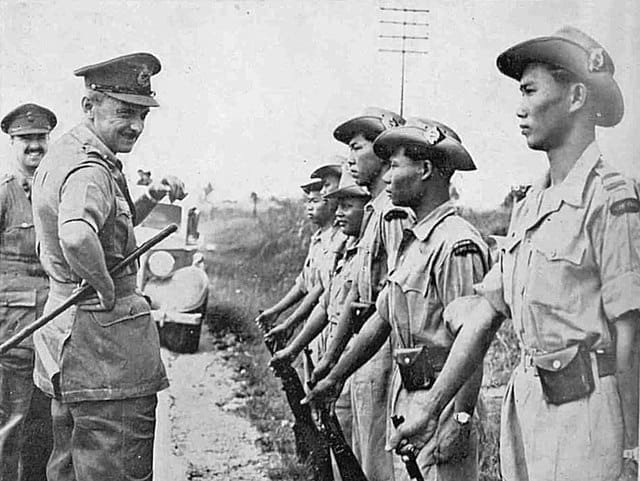
Field Marshal Sir Gerald Templer, a distinguished British officer and statesman, is widely regarded as the architect of the British victory in the Malayan Emergency (1948 to 1960). Appointed as High Commissioner and Director of Operations in 1952, Templer faced an insurgency that combined guerrilla warfare, political agitation, and ideological subversion. His leadership transformed the British campaign by integrating political authority, civil governance, and military operations under a single, coherent strategy. Templer believed that defeating an insurgency required not only tactical success but also the restoration of legitimate governance and social stability.
Templer’s tenure in Malaya became a model for modern counterinsurgency planning. He understood that an insurgency is as much a political and psychological struggle as a military one. His approach was built on coordination, legitimacy, and reform, a comprehensive system that targeted both the insurgents’ capabilities and their appeal to the population.
Winning Hearts and Minds
Templer famously emphasized the need to win the “hearts and minds” of the population, a phrase that became synonymous with effective counterinsurgency. He recognized that coercion alone could not produce lasting stability. Instead, the government had to demonstrate integrity, deliver justice, and offer tangible improvements to people’s daily lives. Security operations, therefore, had to be paired with reforms that inspired confidence in government institutions and separated civilians from insurgent influence.

Resettlement and Security
To cut insurgents off from their rural support networks, Templer implemented a large-scale resettlement program that relocated thousands of civilians into newly constructed “new villages.” These settlements provided protection from insurgent intimidation, regular access to food and medical care, and opportunities for education and employment. Though controversial, the initiative succeeded in depriving the insurgency of recruits and logistical support while allowing civil administration to take root in secure zones.
Civil-Military Cooperation
One of Templer’s greatest achievements was unifying civil and military operations under a single strategic command. He viewed the separation of political and military efforts as fatal to success. Templer insisted that local administrators, police, and soldiers coordinate on planning, intelligence, and community engagement. This unity of effort created consistent messaging, reduced duplication, and ensured that every action, whether humanitarian or kinetic, advanced the same overarching political objectives.
Economic Development
Templer recognized that material conditions drive political sentiment. He prioritized public works, infrastructure expansion, and land reforms designed to improve rural livelihoods and reduce economic inequality. By linking economic progress with security gains, he created visible evidence of the government’s commitment to rebuilding a stable and inclusive Malaya. These initiatives weakened insurgent narratives that portrayed the state as exploitative or indifferent.
Templer’s Legacy
Sir Gerald Templer’s leadership marked a turning point in the British campaign. The combination of security, reform, and administrative coherence produced measurable success and provided a blueprint for integrated counterinsurgency operations worldwide. His “comprehensive approach” became a reference point for later campaigns in Southeast Asia, the Middle East, and Africa.
While the conditions in Malaya were unique, defined by clear geography, external isolation of the insurgency, and colonial authority, Templer’s principles remain influential. His belief in unity of effort, legitimacy through governance, and the moral dimension of counterinsurgency continues to inform both military doctrine and academic study. His legacy endures as a reminder that political order cannot be restored by force alone but must be rebuilt through credible governance and public trust.
Enduring Lessons in Counterinsurgency
David Galula, Robert Thompson, and Sir Gerald Templer remain the intellectual pillars of modern counterinsurgency theory. Galula’s systematic model of population control, Thompson’s governance-centered approach, and Templer’s comprehensive integration of civil and military power together form a framework that continues to guide both doctrine and practice. Each thinker understood that success in counterinsurgency depends less on destroying enemies than on establishing legitimacy, securing communities, and aligning all instruments of power toward a unified political objective.
Yet understanding counterinsurgency also requires studying the insurgents themselves. Mao Zedong’s theories of protracted people’s war and T.E. Lawrence’s reflections on the cultural dimensions of rebellion reveal the logic that drives irregular movements. Their insights illuminate the moral and psychological terrain that counterinsurgents must navigate, a realm where perception often outweighs firepower.
For policymakers, military professionals, and analysts, revisiting these foundational ideas is not an exercise in nostalgia but a strategic necessity. Modern insurgencies, from urban militias to decentralized networks, still operate on principles these thinkers identified decades ago. Their combined legacy underscores a simple truth: counterinsurgency is fundamentally political, sustained by legitimacy, and dependent on the will of the governed. Success requires not only strength but also understanding, an enduring balance between control, compassion, and credibility.