
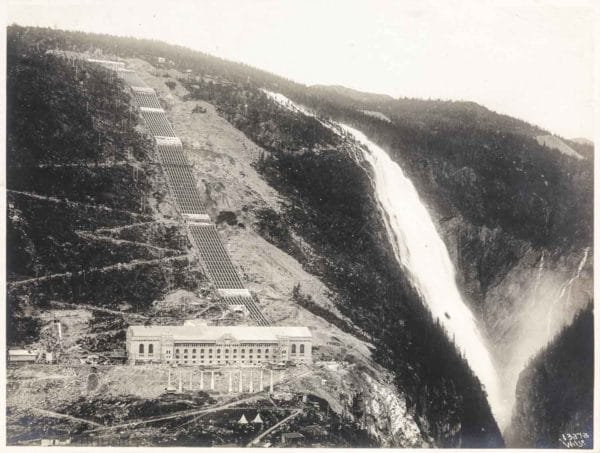
Operation Gunnerside stands as one of the most consequential acts of sabotage in the history of warfare. On the night of February 27–28, 1943, nine Norwegian commandos infiltrated the heavily guarded Vemork hydroelectric plant in Telemark, Norway, and destroyed the sole industrial-scale facility producing heavy water for Nazi Germany’s nuclear weapons program — without firing a single shot and suffering zero casualties on either side.
The mission, directed by the British Special Operations Executive (SOE), combined months of intelligence gathering, extraordinary survival in Arctic conditions, and precision demolition work to strike at the heart of Hitler’s atomic ambitions. This article examines the strategic context, planning, execution, aftermath, and enduring significance of Operation Gunnerside.
Joachim Rønneberg, the last surviving leader of the Gunnerside mission, died on October 21, 2018, at age 99. A statue commemorating him now stands near the harbour in his hometown of Ålesund. The Vemork plant today houses the Norwegian Industrial Workers Museum, which preserves the story of the heavy water sabotage. Recent analysis of salvaged heavy water barrels from the sunken ferry Hydro confirmed that the Germans were transporting far less usable heavy water than previously estimated — reinforcing assessments that Gunnerside dealt a decisive blow to the Nazi nuclear program.
Sources: BBC News → Nuclear Museum → Norwegian Industrial Workers Museum →
The Strategic Importance of Heavy Water
Heavy water (deuterium oxide, D₂O) contains deuterium — a hydrogen isotope with an extra neutron — in place of ordinary hydrogen. While chemically similar to normal water, heavy water’s nuclear properties made it invaluable for early atomic research. It could serve as a neutron moderator in nuclear reactors, slowing neutrons to the speed required to sustain a controlled chain reaction and produce plutonium for weapons.
By the early 1940s, the Vemork hydroelectric plant at Rjukan was the only facility in the world capable of industrial-scale heavy water production. Built by Norsk Hydro in 1934, the plant produced heavy water as a byproduct of its nitrogen-fixing operations, with a capacity of approximately 12 tonnes per year. When Germany invaded Norway in April 1940, they inherited the world’s sole supply chain for this critical material.
The Nazi Nuclear Program and Allied Concerns
In 1938, German scientists Otto Hahn and Fritz Strassmann achieved nuclear fission — splitting uranium atoms and releasing enormous energy. The following year, Germany launched the secret Uranverein (“Uranium Club”) under physicist Kurt Diebner, recruiting some of Germany’s most brilliant minds including Nobel laureate Werner Heisenberg. Unlike the American Manhattan Project, which used graphite as a neutron moderator, the German program settled on heavy water — making Vemork an essential node in their nuclear ambitions.
British intelligence learned of Germany’s escalating heavy water demands through Professor Leif Tronstad, a Norwegian chemist who had helped design Vemork’s production systems. Tronstad fled to Britain in 1941 and became the key intelligence liaison between Norwegian resistance contacts inside the plant and the SOE’s Scandinavian section. By mid-1942, the Allies concluded that Vemork had to be destroyed.
Failed Attempts: Operations Grouse and Freshman
The assault on Vemork did not begin with Gunnerside. Two prior operations — one successful in establishing a foothold, one catastrophically failed — set the stage for the final mission.
In October 1942, Operation Grouse inserted a four-man Norwegian advance team onto the Hardangervidda plateau above the plant. Their mission was to conduct reconnaissance, identify approach routes, and prepare a landing zone for a larger assault force. The Grouse team survived months in extreme Arctic conditions, living on reindeer meat and moss in isolated mountain cabins at over 1,200 metres elevation.
The follow-up, Operation Freshman, launched in November 1942, was a disaster. Thirty-four British Royal Engineers were dispatched in two military gliders towed by Halifax bombers. Severe weather caused both gliders and one tug aircraft to crash in southern Norway. All 34 commandos were either killed on impact or captured by the Gestapo. Under Hitler’s Kommandobefehl (Commando Order), the survivors were interrogated, tortured, and executed — despite wearing military uniforms. In the wreckage, the Germans found a map with Vemork circled in red, though they mistakenly focused their security reinforcements on a nearby dam rather than the heavy water cells.
Planning and Assembling the Gunnerside Team
With the Grouse team still operational on the plateau (now redesignated “Swallow”), the SOE designed a new approach. Rather than a large glider-borne force, Gunnerside would deploy a small team of Norwegian commandos from Norwegian Independent Company 1 (Kompani Linge) — SOE-trained specialists who combined demolition expertise with intimate knowledge of Norwegian terrain and winter survival.
The team was led by 23-year-old Second Lieutenant Joachim Rønneberg, a trained sabotage instructor. His five-man squad included Sergeant Birger Strømsheim (31), Second Lieutenant Knut Haukelid (31), Sergeant Hans Storhaug (27), Sergeant Fredrik Kayser (24), and Second Lieutenant Kasper Idland (24). All were Norwegian nationals, fluent in the local language, and experienced in mountain warfare. Before departure, Colonel Tronstad reportedly told them the mission’s significance without revealing the atomic connection: the now-famous line about living in Norway’s memory for a hundred years.
The commandos wore British Army uniforms beneath their white camouflage suits — a deliberate choice to deflect German reprisals away from the local civilian population. Each man carried suicide capsules; they knew that capture under the Kommandobefehl meant execution.
Execution of Operation Gunnerside
Insertion and Link-Up
On the night of February 16, 1943, the six Gunnerside commandos parachuted from a 138 Squadron Halifax bomber into the Hardangervidda. Poor visibility caused them to land kilometres from their target zone, and a blizzard struck almost immediately. After several days of searching on cross-country skis, they linked up with the Swallow advance team. The combined nine-man force made final preparations for the assault, scheduled for the night of February 27–28.
The Approach: Crossing the “Impossible” Gorge
The Vemork plant sat on a steep rock shelf above the Måna River, protected by a 200-metre-deep gorge that served as a natural moat. The Germans had reinforced security after Operation Freshman — doubling the guard, mining approaches, and installing floodlights — but they considered the gorge impassable and focused their defenses on the single suspension bridge. The commandos chose to exploit precisely this assumption.
On the evening of February 27, the nine men descended into the gorge, crossed the partially frozen Måna River at a ford identified during prior reconnaissance, and scaled the 150-metre cliff face on the far side — in darkness, in winter, carrying demolition equipment. It was an extraordinary feat of mountain warfare that the German garrison believed physically impossible.
The Sabotage
Once inside the plant perimeter, the team split into a five-man demolition squad led by Rønneberg and a four-man covering party. The demolition team accessed the basement heavy water production room through a cable duct, bypassing locked doors. Working with precision under extreme time pressure, they placed shaped charges on all eighteen electrolysis cells — the heart of the heavy water production system — and daisy-chained the detonators with 30-second fuses.
A Norwegian night watchman discovered the team during the placement but offered no resistance. Rønneberg allowed him to take cover before lighting the fuses. The explosions destroyed all eighteen cells, sending approximately 500 kilograms of accumulated heavy water and the production equipment into the floor drains. Not a single shot was fired by either side. No lives were lost.
The Escape
The team evacuated down the railway line toward Rjukan before the Germans could organize a response. The nine men then split up: the five-man Gunnerside core team skied over 400 kilometres across Norway to neutral Sweden — a journey of several weeks through some of Europe’s most hostile terrain. The remaining four Swallow members dispersed across the Hardangervidda. Despite the Germans deploying an estimated 12,000 troops to sweep the area, not a single saboteur was captured.
Follow-Up Operations and the Sinking of the SF Hydro
Despite the success of Gunnerside, the Germans rebuilt the heavy water production cells within five months and resumed operations by May 1943. This prompted a second phase of Allied attacks.
On November 16, 1943, 140 American B-17 bombers dropped over 700 bombs on the Vemork complex and surrounding Rjukan facilities. The bombing caused significant structural damage but largely missed the underground heavy water cells. Tragically, 22 Norwegian civilians were killed — the exact outcome that Tronstad and the SOE had sought to avoid through commando raids rather than aerial bombardment.
The combined pressure of the Gunnerside sabotage and Allied bombing convinced the Germans to abandon Vemork and ship their remaining heavy water stocks to Germany. Norwegian intelligence agents intercepted the transport schedule. On February 20, 1944, Knut Haukelid — one of the original Gunnerside team — led a small sabotage team that planted timed explosives aboard the railway ferry SF Hydro as it crossed Lake Tinn. The ferry sank at the lake’s deepest point (430 metres), taking virtually all the remaining heavy water to the bottom. Fourteen Norwegian civilians and four German soldiers died in the sinking — a cost that weighed heavily on Haukelid for the rest of his life.
Strategic Significance and the Nuclear Debate
The question of how close Germany actually came to building an atomic bomb remains debated among historians. Some argue that German nuclear research was far behind the Manhattan Project and would not have produced a weapon regardless. Others point out that the Germans’ decision to use heavy water rather than graphite as a moderator made Vemork an irreplaceable bottleneck — and that destroying it bought the Allies crucial time during the most uncertain period of the nuclear race.
What is beyond dispute is the operational achievement. Gunnerside demonstrated that a small, well-trained force with local knowledge and extreme environmental skills could neutralize a strategic target that thousands of conventional troops and hundreds of bombers could not. It became a textbook case in the doctrine of strategic sabotage — proving that precision unconventional operations could achieve effects disproportionate to their size. The SOE’s integration of human intelligence from inside the target, extended advance reconnaissance, and indigenous commando forces created a model that modern special operations forces continue to study.
Recent analysis of a heavy water barrel salvaged from Lake Tinn in 2004 confirmed that while the barrels contained water from the electrolytic process, the actual concentration of heavy water was far lower than the manifest suggested — most barrels contained only 0.5–1.0 percent D₂O. The Germans would have needed approximately 5 tonnes of pure heavy water to operate even a single reactor. The Gunnerside sabotage and subsequent operations ensured they never came close.
Legacy and Recognition
The Gunnerside commandos were celebrated as national heroes in Norway. Joachim Rønneberg became a prominent public figure who dedicated his later decades to educating younger generations about the resistance. He was awarded the War Cross with Sword — Norway’s highest military decoration — and in 2013 was personally honoured by the British Prime Minister. He died on October 21, 2018, at age 99, as the last surviving leader of the mission.
The operation has been depicted in numerous cultural works, including the 1965 film The Heroes of Telemark (starring Kirk Douglas), the 2015 Norwegian television series The Heavy Water War, and the metal band Sabaton’s song “Saboteurs.” The Vemork plant today houses the Norwegian Industrial Workers Museum, which includes a dedicated exhibition on the heavy water sabotage.
For students of irregular warfare, Gunnerside remains one of the clearest demonstrations of how unconventional operations — combining espionage, reconnaissance, indigenous forces, and precision sabotage — can achieve strategic outcomes that conventional military power alone cannot. The OSS field manuals from the same era document many of the principles the SOE applied in planning and executing this mission.
The Heavy Water Campaign: October 1942 – February 1944
Recommended Reading
For those interested in exploring Operation Gunnerside in depth, these are the essential accounts — spanning definitive histories, firsthand memoirs, and survival-focused narratives. Each title is available through our affiliate links below. For more recommendations, see our Essential Books on Resistance collection.
- “The Winter Fortress: The Epic Mission to Sabotage Hitler’s Atomic Bomb” by Neal Bascomb — The definitive modern account, drawing on declassified documents and previously unseen diaries. A New York Times bestseller and the most comprehensive narrative of the entire heavy water campaign from Grouse through the ferry sinking.
- “Skis Against the Atom” by Knut Haukelid — A firsthand memoir by one of the Gunnerside commandos who also led the SF Hydro ferry operation. Offers an intimate, unvarnished perspective on the mission’s challenges, the months of survival on the plateau, and the moral weight of the ferry sinking.
- “Assault in Norway: Sabotaging the Nazi Nuclear Program” by Thomas Gallagher — An earlier but highly readable account that focuses on the tactical execution of the raids and provides essential context on the Allied decision-making process.
- “The Real Heroes of Telemark: The True Story of the Secret Mission to Stop Hitler’s Atomic Bomb” by Ray Mears — Wilderness expert Mears brings unique insight into the survival dimension, analyzing how the commandos’ ability to endure Arctic conditions was as critical to the mission as their demolition skills.