
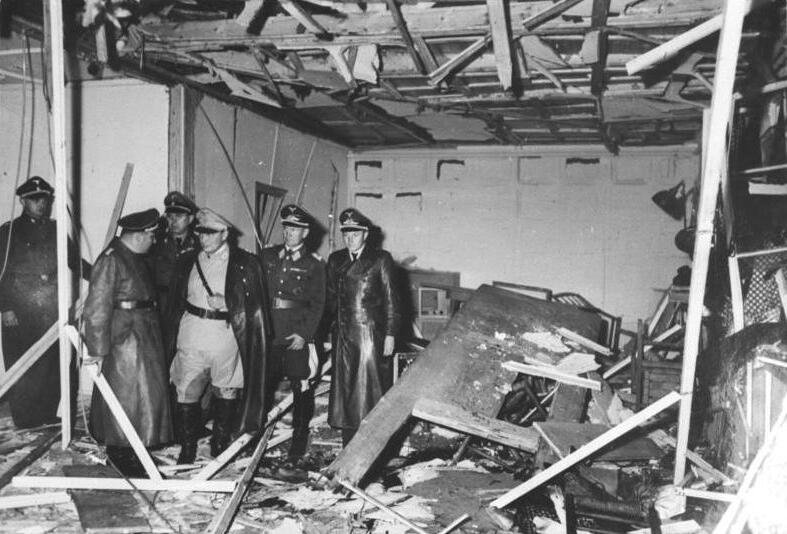
Eighty-two years ago, in July 1944, a decorated colonel walked into Adolf Hitler’s most secure headquarters carrying a briefcase, set it down a few feet from the man he intended to kill, and left the room. The charge detonated at 12:42 on 20 July 1944, the signal that was meant to launch Operation Valkyrie. Hitler survived. Within twelve hours the officers who had planned the coup were dead or in custody, and over the months that followed the regime executed roughly five thousand people in reprisal.
The 20 July plot is remembered mostly for its failure and its courage. For students of resistance it is something more useful: the most fully developed attempt to overthrow a modern totalitarian state from inside its own command structure, and a near-complete catalogue of what internal resistance demands and how it breaks. The conspirators were not partisans in the hills. They were serving officers who tried to turn the regime’s own machinery against it. That is what makes the operation worth studying long after the men who ran it were hanged.
What Operation Valkyrie Actually Was
Valkyrie was not a secret plan. It was the Reserve Army’s official contingency order, approved at the highest levels, for maintaining control inside Germany if the home front collapsed. Its stated purpose was to put troops on the streets in the event of mass unrest, an uprising by the millions of foreign forced laborers inside the Reich, or a breakdown of order under Allied bombing.
The conspiracy’s central insight was that they did not need to raise a clandestine army. They needed to hijack a legally sanctioned one. Henning von Tresckow and Claus von Stauffenberg quietly rewrote the Valkyrie orders so that, once triggered, Reserve Army units would occupy government buildings, radio stations, and party offices under the cover of suppressing an SS coup. The soldiers carrying out the seizure would believe they were defending the state, not overthrowing it. This is subversion in its purest institutional form: the plan weaponized the regime’s own legitimacy against it.
Loading podcast player…
The Twenty Minutes That Failed
The operational half of 20 July came apart in a wooden hut near Rastenburg. That morning the daily situation conference was moved out of the reinforced concrete bunker to an above-ground barrack because of the summer heat. That single change of venue mattered more than any decision the conspirators made, because a blast that would have been contained and lethal inside the bunker had somewhere to go in a ventilated timber room.
Stauffenberg had time to arm only one of his two one-kilogram charges before an orderly interrupted him. His aide, Werner von Haeften, kept the second. Half the intended explosive went under the table. Then a small physical accident finished what the venue had started: Colonel Heinz Brandt, needing legroom at the map table, pushed the briefcase behind the table’s heavy oak support. The support absorbed the blast. Four men were killed. Hitler walked out with a perforated eardrum and singed trousers.
Note how the failure compounds: a changed room, a single charge, a nudged briefcase. None of these was a strategic error. Resistance operations rarely fail at the level of grand design. They fail at the seams between the plan and contact with reality, and 20 July failed at three seams in the space of twenty minutes.
Why It Came Apart
Even a dead Hitler might not have delivered the coup, because the Berlin half of the operation was the weaker one. Three failures ran deeper than the bomb, and each of them is a standing lesson for how internal resistance succeeds or collapses.
The Decapitation Trap
The entire plan hinged on one man’s death as the event that would unlock everything else. Kill Hitler, the reasoning went, and the officer corps would be released from its personal oath, the fence-sitters would commit, and the machinery of Valkyrie would roll. When Hitler survived, the whole theory of change evaporated in an afternoon. A resistance strategy built on a single decisive act inherits a single decisive point of failure. The men who planned 20 July had bet everything on a briefcase, and the briefcase moved.
The Switchboard They Never Seized
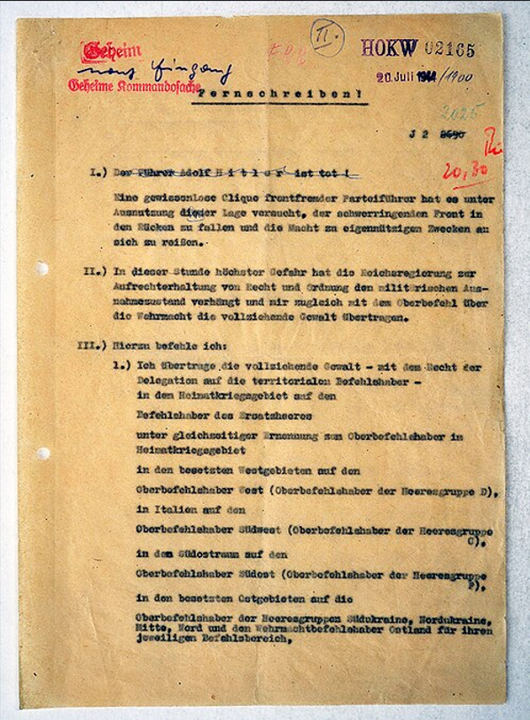
General Erich Fellgiebel, the plot’s communications officer, was supposed to sever the Wolf’s Lair from the outside world long enough for Berlin to present the coup as an accomplished fact. He managed only a partial, temporary blackout. The regime kept talking. By early evening Hitler himself was on the telephone, and a few phone calls were enough to turn the garrison in Berlin back to obedience. Control of communications and infrastructure is not a supporting task in a coup. It is the operation. The same logic that makes a rail line or a power node a target in sabotage made the telephone exchange the decisive terrain on 20 July, and the conspirators never held it.
The Legitimacy Vacuum
Stauffenberg spent three critical hours in the air. In that window the conspirators in Berlin waited rather than acted, and the officers whose loyalty was conditional, above all Fromm, waited with them to see who would win before choosing a side. A coup that cannot answer the question “who is in charge now” in its first hour does not get a second. The plotters had a shadow government ready to go, with Beck as head of state and Carl Goerdeler as chancellor, but they never controlled the ground long enough to put anyone in the chair. Authority they had drafted on paper was never asserted in the street.
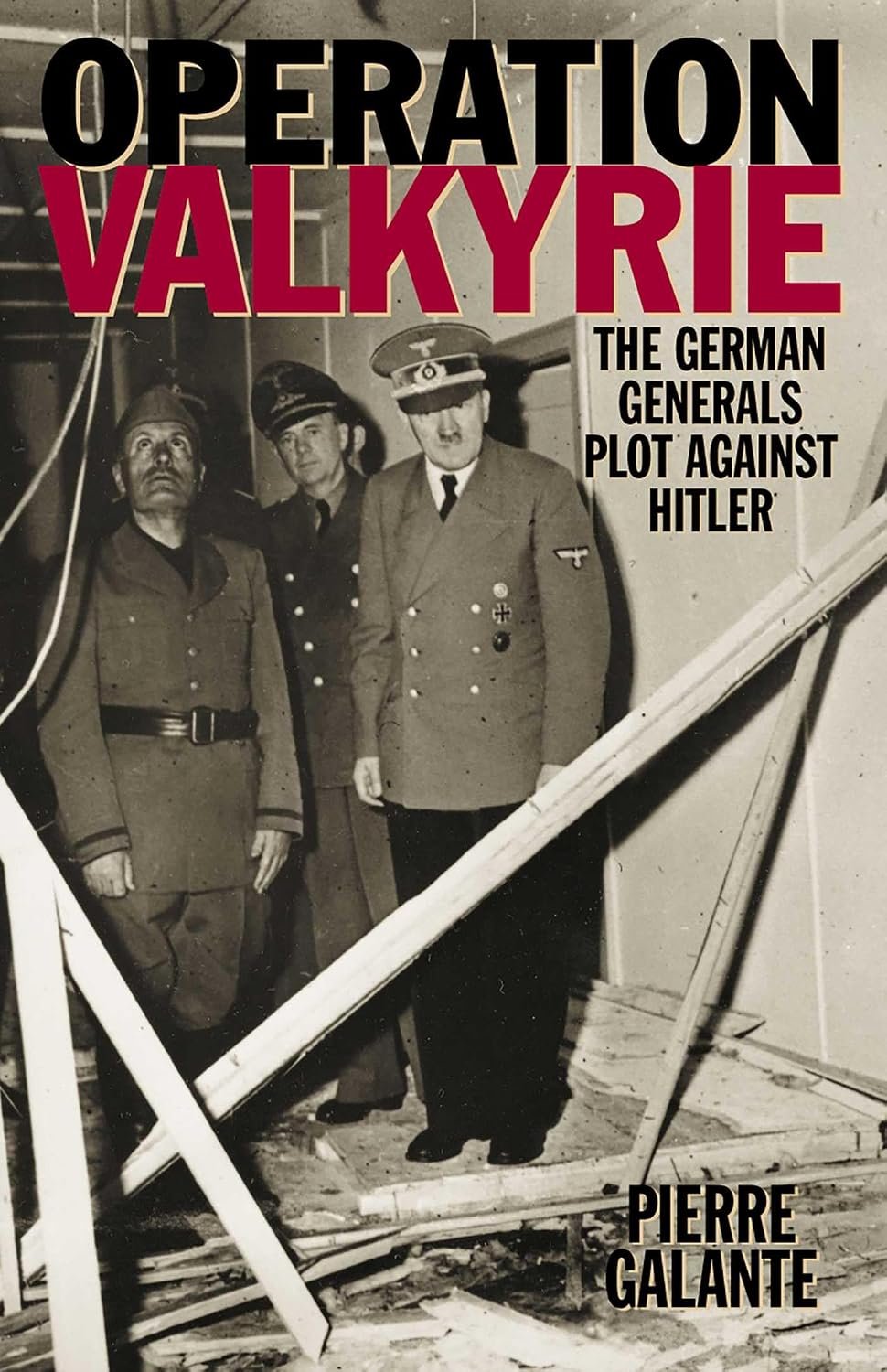
The bomb in the Wolf’s Lair on 20 July 1944 came closer than any other attempt to killing Hitler. Operation Valkyrie is Pierre Galante’s account of how dissent inside the German officer corps grew until the generals moved: the plot to kill Hitler, install a provisional government, and negotiate peace with the Allies, and its grim aftermath.
View on Amazon →What Internal Resistance Requires
Strip 20 July down to its mechanics and it reads like a checklist written in the negative, a list of everything a resistance operation needs by showing what happens when each is missing.
The first requirement is redundancy over decapitation. Durable resistance distributes its objectives so that no single failure, a surviving target, a missed signal, a jammed weapon, ends the operation. The second is that communications and infrastructure come first, not last. Whoever controls the means of command controls the outcome, which is why seizing the exchange should have preceded everything else. The third is that the plan must survive partial success. There was no branch in the 20 July design for “Hitler wounded, not dead,” and the absence of that single contingency was fatal. The fourth is that legitimacy has to be pre-built and instantly assertable: a credible successor authority ready to speak within the hour, not a cabinet that exists only on paper.
There is a fifth lesson that cuts against the others. The plot was held so tightly, out of necessity, that when the moment came and it needed thousands of soldiers to move on command, most of those units had never been briefed and defaulted to obedience. Compartmentation keeps a conspiracy alive, but it starves the mobilization that a coup ultimately depends on. Balancing secrecy against the mass action needed to win is one of the oldest unsolved problems in the study of resistance mobilization, and 20 July is its sharpest illustration.
The Meaning of a Failed Coup
The men of 20 July knew the odds. Henning von Tresckow, before taking his own life at the front the next day, framed the attempt in moral rather than tactical terms, arguing that it had to be made regardless of its chances, so that the German resistance would have staked its life on the decisive throw. As an operation it failed at nearly every technical seam. As a statement it outlived the people who made it.
For anyone studying how resistance works, and how it fails, those twelve hours remain among the most instructive of the twentieth century. They are proof that courage and access are not enough on their own, that an operation must carry redundancy, communications, and legitimacy in hand from the first minute or it will unravel from the first setback. Stauffenberg’s reported last words in the Bendlerblock courtyard, “Long live sacred Germany,” were spoken into a rifle volley. The state he defied outlived him by less than ten months.
Masters of Resistance collects the doctrinal literature behind the four requirements 20 July exposed by their absence: redundancy, control of communications, planning for partial success, and legitimacy that can be asserted within the hour.
View on Amazon →External references: the German Resistance Memorial Centre in Berlin and the Cambridge University Library Operation Valkyrie archive hold primary material on the conspiracy and its members.
