

VILNIUS — In a striking public attribution this week, Lithuanian authorities said they have charged six foreign nationals in connection with a Russian military intelligence-linked sabotage campaign targeting infrastructure connected to European security and Ukraine support. This case, and related incidents from Poland to the Baltic Sea, illustrates a pattern of hybrid sabotage that European governments and analysts increasingly describe as a strategic strand of Russia’s destabilization effort.
Updated March 2026
Since this article’s publication, the investigation has expanded significantly. In March 2026, Eurojust announced that a joint investigation by German, Polish, Dutch, British, and Lithuanian detectives had identified 22 suspects in the 2024 parcel bomb campaign — up from the five originally charged. The suspects, recruited from Russia, Latvia, Estonia, Lithuania, and Ukraine, were described as individuals in vulnerable socioeconomic situations working on behalf of Russia’s GRU. Five will stand trial in Lithuania on terrorism charges facing up to 10 years in prison. Investigators confirmed that parcels containing self-made explosive-incendiary charges were mailed from Vilnius in July 2024, detonating at Leipzig airport (Germany), on a DPD truck in Poland, and in a DHL warehouse in Birmingham (UK). Two additional “test packages” sent to the United States and Canada were also identified. This expansion from isolated arson cases to a continent-spanning parcel bomb network confirms the article’s assessment of an escalating, coordinated GRU sabotage campaign.
This article was originally published January 17, 2026. The analysis and framework remain current.
The Lithuanian Case: Arson Targeting Defense Supply Chain
Lithuanian prosecutors announced on January 16, 2026 that six individuals, citizens of Spain, Colombia, Cuba, Russia and Belarus, have been charged over attempted arson attacks in 2024 against a Lithuanian plant that supplies radio wave scanners to the Ukrainian army. The suspects face up to 15 years in prison if convicted.
According to authorities, the arson plot was not isolated. Investigators allege that the group also tried arson attacks in Poland, Romania and the Czech Republic targeting oil facilities, warehouses, and public buildings. Law enforcement officials said the crimes were coordinated from Russia by individuals linked to the GRU, Russia’s military intelligence.
Officials further reported that the suspects were paid approximately €5,000 to €10,000 each, underscoring a method of recruiting financially motivated operatives through opaque networks tied back to Russia. Lithuania has issued additional international arrest warrants and is seeking extraditions for suspects abroad. Moscow has not engaged publicly with the case but historically denies involvement in such operations. The pattern of recruiting low-cost, deniable operatives mirrors the tactics documented in Russia’s foreign recruitment operations for the war in Ukraine.
This announcement marked one of the clearest public attributions by a European capital of cross-border physical sabotage directed by Russian intelligence, moving beyond cyber or informational campaigns into kinetic disruption of infrastructure with geopolitical significance.

Parallel Sabotage Cases: Explosive Parcels Across Nations
On the same day Lithuania’s charges were publicized, Polish prosecutors disclosed a separate Russian-linked plot involving explosive parcels. In this case, five men, four Ukrainians and one Russian, were charged with participating in a sabotage scheme involving explosive parcels destined for multiple countries including the United Kingdom, United States, Canada, and Poland.
According to court filings, several parcels detonated at courier depots in Britain, Germany and Poland in 2024, suggesting an intent to disrupt logistics and air cargo networks critical to both civilian commerce and support for Ukraine. Some suspects allegedly planned further operations involving test packages shipped to North America. The case has been submitted to a Polish court, which is expected to pursue life sentences for those convicted.
This development echoes earlier indictments in Germany, where prosecutors in late 2025 charged two Ukrainian nationals in a Russia-linked postal bomb reconnaissance plot involving GPS-tracked parcels to map logistics routes for potential sabotage, part of a broader campaign to analyze and exploit vulnerabilities in European transport infrastructure.
Such explosive parcel schemes show a shift from isolated arson attempts toward organized efforts to probe and undermine critical trans-European logistics networks, lines of commerce upon which supply chains and wartime support depend.
Maritime and Undersea Tracks: Cable Disruption and Gray Zone Pressure
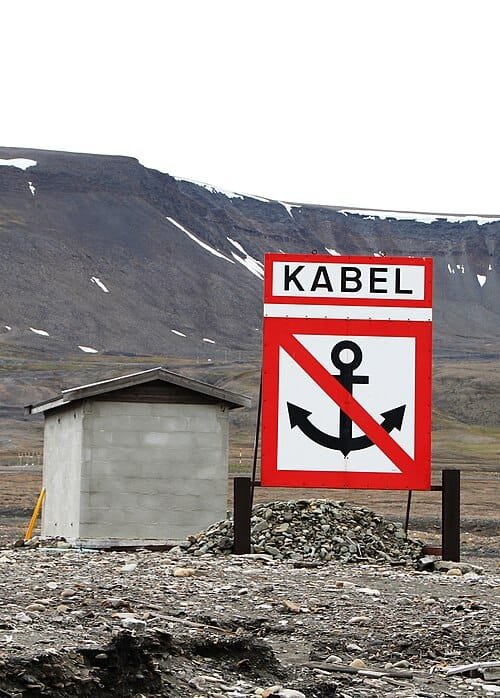
Sabotage threats have not been limited to fires or explosive packages. In the Baltic Sea region, authorities in Finland and Estonia have investigated incidents involving damaged undersea data and power cables, prompting the seizure and later release of a Russia-linked cargo ship, the Fitburg. Finnish police detained crew members and conducted joint investigations with Estonian counterparts after disruptions to telecommunications lines connecting Helsinki and Tallinn.
Publicly available open-source research and maritime incident records show repeated outages and suspected sabotage affecting undersea cables, including the Balticconnector gas pipeline and adjacent communications cables, since Russia’s full-scale invasion of Ukraine in 2022. Western officials have frequently cited these events as unlikely to be coincidental, given the pattern and strategic geography of the Baltic maritime infrastructure. The Finnish rail signaling attacks near NATO bases reflect a parallel pattern of infrastructure targeting in the Nordic-Baltic theater.
These maritime and sub-sea cases highlight how infrastructure that lies outside traditional surface security perimeters, critical nodes of connectivity, have become a contested domain in the broader hybrid competition.
Analysts See a Broader Pattern
While individual incidents vary in method and scope, analysts increasingly describe them as part of an overarching sabotage campaign by Russian intelligence services intended to impose costs, test adversary responses, and influence political will.
A recent Royal United Services Institute (RUSI) report characterizes Russia’s modus operandi as leveraging “disposable” operatives recruited via encrypted platforms like Telegram and paid in cryptocurrency. These recruits often lack ideological commitment, and their actions range from arson and vandalism to disruptive attacks on transport and energy infrastructure, not necessarily to achieve significant physical destruction but to strain security responses and sow uncertainty.
North American and European data aggregations also show increases in suspected Russian activities, from sabotage to arson and surveillance across multiple countries since 2022. A dataset compiled by political violence tracking organizations recorded nearly 40 sabotage incidents across Europe between 2022 and 2025, with additional cases of drones, spying, and other hybrid actions.
Open-source institutional research further notes that sabotage operations expanded significantly after Western nations began approving advanced weapons for Ukraine in 2024, suggesting Russian strategic prioritization of deniable coercive actions targeting infrastructure associated with Western support. The documented surge in sabotage within Russia itself offers a mirror image of this dynamic, as internal resistance networks adopt similar methods against Russian military infrastructure.
Tactics, Targets and Strategic Logic
Across these episodes, several common threads emerge. The tactics are low-cost and deniable, ranging from incendiary devices and parcel bombs to possible underwater cable interference. The targets are primarily nodes tied to defense support and logistics — warehouses, courier hubs, supply manufacturers — along with network connectivity such as undersea cables, and occasionally public infrastructure in transit states. The operational signatures rely on third-party operatives with diverse citizenships and low profiles, payments via informal channels, and coordination that obscures direct command links while maintaining suspicious ties back to Russian intelligence networks.
Unlike conventional kinetic attacks, these are designed to operate in the “gray zone“, below thresholds that would uniformly trigger collective military responses but high enough to incrementally erode confidence in security postures.
Policy, Legal, and Security Implications
European governments now face a suite of challenges. Attribution dilemmas persist: physical evidence that definitively links sabotage acts to foreign intelligence services can be hard to publicly present without compromising sources or methods, and prosecutors must balance transparency with legal standards of proof. Jurisdictional complexities compound the problem, as cross-border investigations involving suspects, evidence chains, and extraditions require intensive coordination across legal systems and political barriers. Infrastructure providers and defense contractors are reconsidering protective measures against threats that are neither purely criminal nor overtly military.
In the U.S., security agencies have issued advisories urging heightened protection at defense industrial sites in Europe to guard against possible sabotage, underscoring that these challenges are not confined to the states where incidents occur. The legal dimensions of this hybrid threat landscape intersect with broader questions about how international law applies to irregular combatants and state-sponsored covert operations.
What to Watch Next
Several developments merit close monitoring. The litigation and extradition processes in Lithuania and Poland will test whether European judicial systems can effectively prosecute state-directed hybrid sabotage. The depth of intelligence cooperation within NATO and EU mechanisms on identifying and countering these threats will be critical. And investments in hardening logistics, supply chains, and maritime infrastructure in vulnerable corridors like the Baltic Sea will determine whether defensive postures can match the pace of the threat.
The broader geopolitical backdrop, continuing tensions over Ukraine’s defense and peace talks among global leaders, adds urgency to debates over how Western alliances define thresholds and responses to hybrid sabotage.
Conclusion
Lithuania’s public attribution of a GRU-linked sabotage network signals a shift in how European states confront low-profile but geopolitically potent threats. When contextualized alongside explosive parcel schemes, critical undersea cable investigations, and analyst reports, a coherent picture emerges: modern sabotage undermines confidence, complicates governance, and challenges regional security architectures without triggering open war.
Europe is now wrestling with a form of conflict that sits squarely between peace and declared war, a landscape where infrastructure, logistics, and civilian networks are increasingly contested. How governments adapt to these hybrid pressures may shape the security environment for years to come.
// Further Reading
RUSI — Russia Is Losing Time: Putin’s 2026 Hybrid Escalation. Analysis of how Russia’s sabotage campaign leverages disposable operatives and deniable methods to strain European security responses. Read the report →
OSS: Combined & Remastered — The foundational manuals of unconventional warfare, remastered by The Distillery Press. Essential reading on covert operations, sabotage doctrine, and resistance tradecraft. Available on Amazon →
