Latest posts
The Knights Dilemma: Evolution of Elite Warfare

On October 25, 1415, in a muddy French field, the age of the knight began to die. The Battle of Agincourt was a collision of peak military capability, the feudal knight, and the battlefield introduction of cheap massed fires from the British longbow. Thousands of armored nobles, bound by centuries of skill, ritual, and pride,
Revolution in Our Roots: America’s Founding as a Case Study in Irregular Warfare

One of the things that sets the United States apart on the global stage is its singular independence. In much of the world, particularly across Eastern Europe, independence is a cycle. It is declared, lost, reclaimed, and redefined. Ukraine has at least three independence anniversaries. Georgia celebrates its break from the Russian Empire, the Soviet
Irregular Warfare During Jimmy Carter’s Presidency

The presidency of Jimmy Carter (1977–1981) coincided with a global wave of irregular warfare that stretched from the mountains of Afghanistan to the jungles of Central America. Carter entered office promising a foreign policy rooted in human rights. He left it having authorized covert operations, weathered a hostage crisis that defined his presidency, and watched
Applying International Law to Resistance and Irregular Combatants
International Humanitarian Law (IHL)—commonly referred to as the law of armed conflict—establishes the rules that balance military necessity with humanitarian protection. These legal frameworks bind both state and non-state actors, including resistance movements and irregular combatants. Yet, the application of IHL in modern conflicts is increasingly complex, particularly when addressing proportionality, targeting, and legal accountability
The Use of Espionage by Resistance Movements
The Invisible Foundation of Resistance Espionage is the first tool of resistance, the act of gathering, concealing, and transmitting knowledge when discovery means death. In denied territory, where an occupying power controls the instruments of state and surveillance, open defiance is impossible. Underground networks connect isolated cells, protect leadership, and turn awareness into action. Through
Reconnaissance
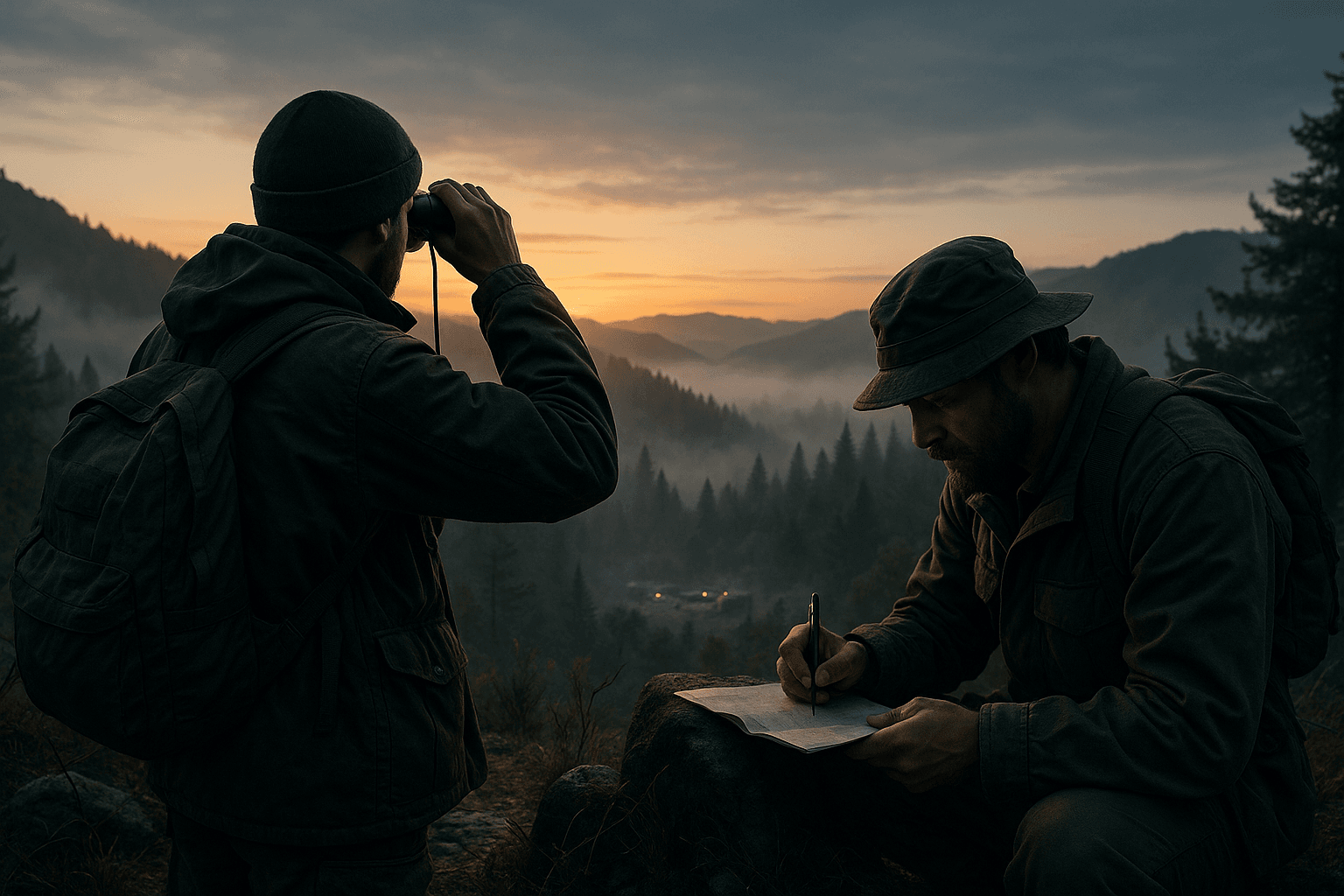
The Art of Reconnaissance in Guerrilla Warfare Reconnaissance is the heartbeat of guerrilla warfare. A resistance force can endure shortages of weapons, ammunition, or equipment — but never a shortage of intelligence. Knowing when to strike, when to disappear, and how to read the enemy’s movements separates survival from annihilation. In irregular warfare, reconnaissance is