

The Indo-Pacific has emerged as one of the most contested strategic environments of the 21st century, and not through conventional military confrontation but through the persistent, low-visibility competition that defines hybrid warfare. From maritime militia operations in the South China Sea to cyber intrusions targeting critical infrastructure across Southeast Asia, the tools of irregular conflict are reshaping the region’s security architecture in ways that conventional deterrence alone cannot address.
Australia, positioned at the intersection of Indo-Pacific geography and Western alliance networks, has responded with one of the most significant defence reorientations in its modern history. This article examines how Canberra is adapting its force posture, institutional frameworks, and coalition partnerships to confront a threat environment where the distinction between war and peace has all but dissolved.
Since this article was first published, Australia’s defence landscape has shifted substantially. The 2024 National Defence Strategy (NDS) formally adopted a “strategy of denial” as Australia’s top defence priority, with deterrence elevated above all other objectives for the first time. The 2026 National Defence Strategy and Integrated Investment Program were released on 16 April 2026, committing defence spending to rise to 3 per cent of GDP by 2033 under the NATO methodology, funded by a $425 billion Integrated Investment Program over the decade, with $14 billion in new money over four years and $53 billion over ten. The 2026 strategy retains the strategy of denial as the cornerstone of Defence planning. ASPI analysts have warned that Australia faces a window of strategic risk through the early 2030s, since the first AUKUS Virginia-class submarines won’t arrive until 2032. In response, a major debate has emerged around unconventional deterrence, with David Kilcullen and colleagues proposing that Australia adopt resistance warfare, guerrilla operations, and sabotage concepts to bridge the capability gap. Meanwhile, AUKUS Pillar II has drawn criticism for slow delivery, though recent “Maritime Big Play” exercises demonstrated progress in electronic warfare and autonomous systems. The first AUKUS deep space radar site in Western Australia is planned to be operational in 2026.
Sources: Australian Minister for Defence, ASPI, CFR, War on the Rocks, Janes, UK House of Commons Library
Defining the Threat Environment in the Indo-Pacific
In the 21st century, the nature of conflict has evolved beyond conventional battlefields and traditional warfare. The Indo-Pacific, stretching from the eastern coast of Africa to the western shores of the Americas, has become one of the most contested regions on the planet, not just in terms of naval power or economic influence, but as a key arena for irregular and hybrid warfare.
Irregular warfare refers to conflicts involving state or non-state actors that employ asymmetric methods such as insurgency, sabotage, subversion, and psychological operations, to achieve their political objectives. Hybrid warfare blends conventional military force with irregular tactics and non-military means, such as cyber attacks, economic coercion, disinformation, and proxy militias, to destabilize adversaries below the threshold of open war.
The Indo-Pacific as a Hybrid Battleground
The Indo-Pacific’s strategic geography, home to 60% of the world’s population and some of its most vital sea lanes, has made it a natural focal point for competition between global and regional powers. This is especially evident in the emergence of “gray zone” activity, meaning hostile actions that fall short of war but seek to erode adversary strength, legitimacy, or cohesion.
China’s maritime strategy represents one of the most visible manifestations of hybrid warfare in the region. The People’s Armed Forces Maritime Militia (PAFMM), a fleet of ostensibly civilian fishing vessels, engages in coordinated provocations, blockades, and surveillance in disputed waters of the South and East China Seas, operating alongside the Chinese Coast Guard and Navy in a layered sovereignty campaign. States like China and North Korea have been repeatedly linked to cyber intrusions across the Indo-Pacific, targeting everything from electoral systems in Australia to logistics systems in Japan and Indonesia. In the Philippines and Myanmar, state and non-state actors exploit social media to manipulate ethnic and sectarian narratives, while irregular groups utilize encrypted platforms to coordinate attacks and influence public perception. Undermining port networks, submarine cables, and electrical grids has become a priority for hybrid actors, as demonstrated by suspected sabotage of undersea cables near Taiwan, showing how infrastructure can be silently degraded to pressure adversaries economically and psychologically.
A Region Under Pressure
The Indo-Pacific is a confluence of vulnerabilities: fragmented defense partnerships, uneven state capacity across ASEAN, strategic distrust between major and minor powers, overlapping claims in disputed maritime zones, and high dependency on critical infrastructure with poor resilience. These fault lines are ripe for exploitation by both state adversaries and transnational actors who understand that destabilization doesn’t require tanks on a border, but rather the disruption of narrative, legitimacy, or societal trust.
In this environment, irregular and hybrid warfare thrive not in the absence of order, but precisely within its gray seams.
Australia’s Hybrid Warfare Posture in the Indo-Pacific
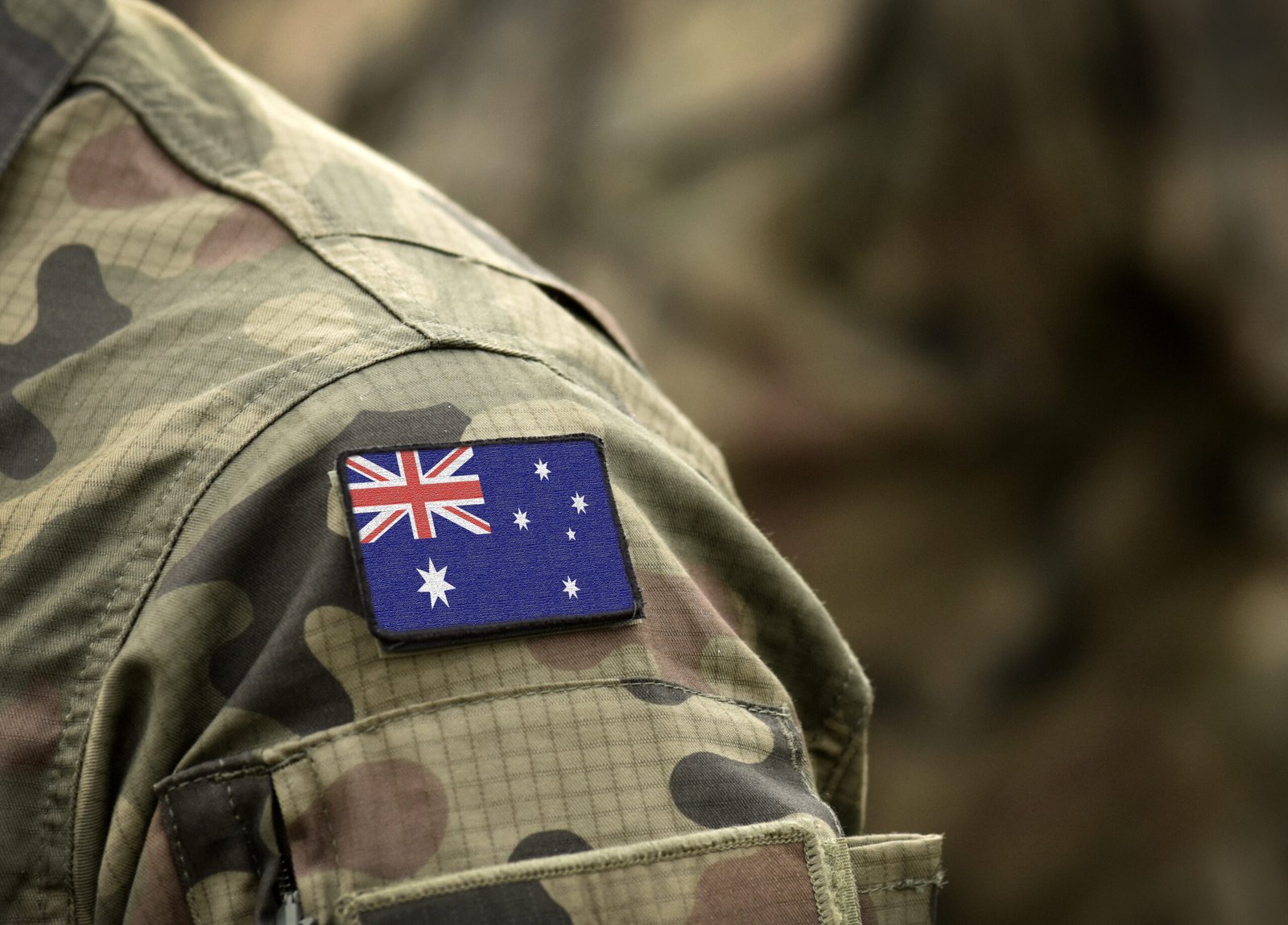
As the strategic tide shifts in the Indo-Pacific, Australia has stepped forward to reshape its defense posture, no longer as a regional junior partner but as a frontline contributor to collective security. This shift has been guided by a recognition that conventional deterrence alone is insufficient in the age of hybrid threats. From the restructuring of its armed forces to its role in multinational partnerships, Australia has begun to align its capabilities and strategy to meet the irregular challenge head-on.
Strategic Realignment: From Land Power to Indo-Pacific Posture
The 2023 Defence Strategic Review (DSR), commissioned by the Albanese government, assessed force posture and strategic risks amid rapid technological change and growing competition. The review explicitly noted the erosion of the ten-year conflict warning time, a long-standing planning assumption, and emphasized the urgent need to prepare for both high-end warfare and non-linear, irregular competition across multiple domains. The subsequent 2024 National Defence Strategy formalized these shifts, adopting a “strategy of denial” as Australia’s top defence priority.
Key takeaways relevant to irregular and hybrid warfare include a shift toward littoral operations with the Australian Army tasked to support operations in archipelagic environments, increased emphasis on long-range strike, cyber, and electronic warfare, strengthening of the Joint Cyber Command and integration of information warfare cells within the force structure, and the 2026 National Defence Strategy, released on 16 April 2026, which consolidated Australia’s response to irregular threats across all domains and set the 3 per cent of GDP by 2033 funding trajectory behind it.
This is a clear doctrinal acknowledgment: future conflict may begin not with missiles, but with misinformation, cyber intrusion, and covert influence.
AUKUS and the Technology Frontline
Perhaps the most ambitious platform for Australia’s modernization is the AUKUS agreement, a trilateral partnership with the United States and the United Kingdom that extends well beyond submarines. While media focus has centered on Australia’s acquisition of nuclear-powered submarines under Pillar I, the often-overlooked Pillar II includes deep collaboration on cyber capabilities, quantum computing, autonomous systems, artificial intelligence, hypersonic and counter-hypersonic capabilities, electronic warfare, and information sharing.
These tools are not just force multipliers. They are vital in hybrid scenarios where speed, perception management, and domain integration define success. AUKUS also grants Australia a seat at the table in shaping the ethical, tactical, and operational norms around these emerging capabilities. However, Pillar II has faced criticism for slow delivery. A June 2025 analysis in War on the Rocks assessed that the initiative was “failing in its mission,” lacking clarity of purpose and producing little tangible capability four years after launch. Progress is nonetheless visible: the latest “Maritime Big Play” exercise in late 2025 demonstrated Australian-developed electronic warfare systems alongside UK and US capabilities, and the first AUKUS deep space radar site in Western Australia is planned to be operational in 2026.
Multi-Domain Integration and Force Multiplication
Australia’s military modernization emphasizes interoperability and agility. Recognizing its relatively modest force size compared to regional powers, the Australian Defence Force (ADF) has invested in precision-strike, distributed lethality, and digital integration. The Ghost Bat program (formerly Loyal Wingman), a joint AI-enabled drone project with Boeing, is designed to support manned-unmanned teaming in contested airspace. The LAND 400 and LAND 8113 programs aim to equip Army units with mobile, protected fire support and strike systems suited to Pacific operations. Recent institutional reforms have established unified commands for both offensive and defensive cyber and space-based intelligence, surveillance, and reconnaissance, reflecting a hybrid domain awareness.
Australia’s posture no longer assumes the tyranny of distance protects the homeland. Instead, it assumes networks, systems, and legitimacy must be defended well before physical borders are breached.
Coalition Building and Security Ecosystems
Australia’s leadership also derives from its deepening web of defense and security partnerships. The Malabar Naval Exercises, conducted among the U.S., India, Japan, and Australia, showcase high-end maritime coordination. Talisman Sabre, hosted biennially with the U.S., includes over 13 allied nations and now integrates cyber-electromagnetic activities. Indo-Pacific Endeavour, Australia’s flagship defense diplomacy deployment across Southeast Asia and the Pacific, is designed to foster regional confidence and interoperability.
Beyond exercises, Australia maintains an intelligence edge through its collaboration with the Five Eyes alliance and the UKUSA Agreement, giving it unmatched access to strategic signals intelligence, which is essential for identifying and countering covert and irregular threats across the region.
Countering Foreign Interference and Cyber-Enabled Threats
Among the Indo-Pacific democracies, few have confronted foreign interference and cyber-enabled hybrid threats as systematically as Australia. Its experience since the mid-2010s, spanning espionage, disinformation and economic coercion, has shaped a proactive, often pioneering response. While Australia lacks the scale of larger powers, it has developed a robust legal and institutional framework that other liberal democracies increasingly look to as a model.
A Wake-Up Call: From Passive Posture to Legal Reform
Australia’s journey toward confronting foreign interference began with a series of high-profile warnings and political incidents in the mid-to-late 2010s. The Australian Security Intelligence Organisation (ASIO), in public statements and classified assessments, identified a surge in covert influence operations targeting academia, politics, and business.
By 2018, the federal government passed a sweeping package of laws aimed at foreign interference, espionage, and transparency. The Foreign Influence Transparency Scheme (FITS) requires individuals and entities working on behalf of foreign principals to register with the Attorney-General’s Department. Expanded definitions of espionage, sabotage, and treason criminalize a broader array of covert political and technological transfers. Additional laws empower security agencies to monitor and disrupt cyber operations and data exfiltration attempts from foreign intelligence actors.
These reforms were not theoretical. They were triggered in part by detailed revelations about attempted political donations by proxies for foreign states, efforts to sway parliamentary decision-making, and organized campaigns to suppress dissenting diaspora voices in Australia.
ASIO and the Changing Threat Profile
ASIO has evolved to meet the complexity of the hybrid threat landscape. The organization now prioritizes “insider threats,” clandestine influence networks, and online radicalization pipelines. In 2023, Director-General Mike Burgess warned publicly that foreign intelligence services were targeting Australian government employees, journalists, and business leaders using social engineering, data harvesting, and digital blackmail.
One significant challenge is that interference often occurs in the gray zone, in activities that are deeply harmful but fall below the legal threshold for a response involving the use of armed force. As such, ASIO and allied agencies have focused on improving left-of-boom indicators such as predictive modeling, behavioral analysis and advanced network mapping, to detect interference before it metastasizes.
Cyber-Enabled Warfare: From Defense to Deterrence
Australia’s recognition of cyberspace as a warfighting domain has led to the development of both defensive and offensive capabilities. The Australian Signals Directorate (ASD) has expanded its mission to include offensive cyber operations authorized by the government, designed to pre-empt or disrupt adversarial planning across the Indo-Pacific. The Cyber Enhanced Situational Awareness and Response (CESAR) package provides threat intelligence to industry and local governments. Investment in public-private partnerships, particularly in the energy, finance, and telecommunications sectors, aims to protect national critical infrastructure from sabotage or ransomware threats.
The ASD’s “hack back” mandate, granted under classified directives, has reportedly been used to dismantle foreign disinformation nodes and disrupt malware delivery networks attributed to both state and state-tolerated actors. Australia’s cyber doctrine now recognizes that in the age of hybrid warfare, digital sovereignty is as critical as territorial sovereignty.
Public Education and Civil Resilience
Countering hybrid threats also requires societal awareness. The Australian government has launched several initiatives to raise public resilience against disinformation and digital manipulation, including the “Stop and Consider” campaign against spreading unverified claims online, collaboration with major platforms to flag foreign-sponsored content and enhance algorithmic accountability, and university partnerships supporting long-term studies on trust, news literacy, and foreign influence. These efforts recognize that while the military and intelligence services serve as a shield, civil society remains the frontline in resisting psychological and ideological subversion.
Regional Challenges and Constraints
Australia has made clear progress in building capabilities to counter hybrid and irregular threats. However, it operates in a region defined by complexity, competing narratives, and structural constraints. Internal resource limitations and diplomatic balancing acts remain persistent challenges.
Strategic Balancing: China, the U.S., and the Tightrope of Influence
Perhaps the most enduring challenge for Australia is its dual dependency: a security reliance on the United States and an economic interdependence with China. China remains Australia’s largest trading partner, accounting for nearly 30% of Australia’s exports, primarily iron ore, coal, and agricultural products. At the same time, the U.S. is Australia’s closest strategic ally under the ANZUS Treaty, and military interoperability with American forces underpins much of Australia’s deterrence posture.
This duality became sharply apparent during periods of geopolitical friction. In 2020 to 2021, following Canberra’s call for an independent inquiry into the origins of COVID-19, Beijing imposed a raft of informal trade sanctions. Simultaneously, Australia deepened defense ties with Washington through AUKUS and regional Quad cooperation. This highlights a broader challenge: asserting sovereignty and defending liberal norms without appearing to form a containment bloc. Many Southeast Asian nations judge Australia’s credibility not just by its capabilities, but by its ability to avoid securitized diplomacy and maintain inclusive, non-hegemonic regional engagement.
Military Capacity vs. Strategic Ambition
The DSR and NDS outlined ambitious goals, but Australia’s defense capacity remains stretched. Personnel shortages persist. As of 2024 the ADF was still thousands of personnel short of its targeted end strength. The acquisition of nuclear-powered submarines under AUKUS is projected to take decades, leaving a capability gap in undersea deterrence that ASPI analysts have described as a “window of strategic risk” through the early 2030s. Programs to field long-range strike and autonomous systems are in their early stages, and Australia’s defense industry remains heavily reliant on foreign suppliers, particularly for advanced electronics and missile components.
These constraints focus Australia’s strategic calculus on coalition integration, asymmetric capabilities, and force-multiplying technologies rather than mass or dominance.
Regional Trust Deficits and Strategic Messaging
Despite close partnerships with countries like Japan, India, and the U.S., Australia’s efforts to expand security cooperation in the Pacific Islands and Southeast Asia have sometimes faced skepticism or resistance. Pacific Island leaders have raised concerns about militarization and climate security imbalance, suggesting Australia’s defense diplomacy may overshadow other urgent regional priorities. ASEAN states, while receptive to joint training and capacity-building initiatives, often view AUKUS and Quad initiatives with caution, wary of being drawn into a great-power confrontation.
To succeed, Australia must navigate sensitive diplomatic terrain by expanding humanitarian and disaster response missions as a soft-power lever, deepening language and cultural literacy within defense and diplomacy communities, and enhancing regional capacity-building programs in cyber defense, maritime domain awareness, and counter-disinformation operations.

Civil-Military Friction and National Cohesion
Domestically, Australia faces its own civil-military friction points which may constrain the whole-of-nation approach necessary for countering hybrid threats. Foreign influence campaigns have occasionally intersected with polarizing debates over immigration, climate change, and national identity. While the ADF remains one of the most trusted institutions, public skepticism toward intelligence agencies and political decision-makers complicates unified messaging in times of crisis. The rise of alternative media and growing distrust in algorithmic feeds, particularly among Gen Z, has created both opportunities and vulnerabilities in information environments.
If hybrid warfare is as much about perception and trust as firepower, Australia’s domestic information resilience will be just as important as its external deterrence.
Strategic Projections and Future Directions
Australia’s approach to irregular and hybrid threats shows a nation rethinking its security role in an evolving region. The next decade will likely be defined not by one doctrine or platform, but by Australia’s ability to adapt to emerging forms of coercion and confrontation.
// Australia’s Hybrid Defence Toolkit: Current vs. Projected
Domain
Status (2026)
Projected (2030+)
Cyber (Offensive)
ASD “hack back” mandate active; CESAR threat sharing operational
Mature preemptive disruption capability; AI-assisted threat detection
Undersea
Collins-class aging; Virginia-class rotations begin 2027; AURAS trials underway
First Virginia-class delivery ~2032; SSN-AUKUS ~2040s; autonomous UUV fleet
Autonomous/AI
Ghost Bat in testing; AUKUS AI workstream active but slow to deliver
Manned-unmanned teaming operational; AI-enabled ISR network
Space/ISR
Deep space radar (WA) operational 2026; Space Command established
Three-site global radar network; real-time hybrid threat detection
Info Warfare
Information cells integrated; counter-disinfo partnerships active; no centralized command
Dedicated information warfare command; AI narrative analysis; regional coordination hub
Proposal: An Indo-Pacific Hybrid Threats Centre
One major regional gap is the absence of a multilateral framework focused on detecting and countering hybrid threats. Europe has such a mechanism through the EU Hybrid Fusion Cell and the Centre of Excellence in Helsinki. Australia is well-positioned to propose or co-lead an Indo-Pacific equivalent, a Hybrid Threats Centre involving ASEAN members, Pacific Island states, and key Quad and AUKUS partners. Such a center could serve as an early warning node for disinformation, cyber intrusions, and infrastructure sabotage, provide training modules and tabletop exercises on detecting and mitigating irregular warfare, host a rotating fellowship or liaison program for defense and civil society professionals, and develop a library of best practices for countering gray zone tactics without escalating to kinetic conflict. Anchored in Sydney, Brisbane, or Singapore, such a center could become the backbone of regional resilience against coercive non-kinetic threats.
The Unconventional Deterrence Debate
A significant new strand of Australian strategic thinking has emerged since this article’s original publication. In an October 2025 ASPI paper, David Kilcullen and colleagues argued that Australia must adopt unconventional deterrence concepts to bridge the capability gap before AUKUS submarines arrive. Their proposal encompasses resistance warfare, guerrilla operations, unarmed and armed propaganda, subversion, and sabotage, drawing directly on lessons from Ukrainian special operations forces’ support to resistance concepts before and during the current conflict. This represents a doctrinal shift: acknowledging that a 2027 deterrence problem cannot be solved with a 2032 deterrent capability, and that irregular methods may be the only credible asymmetric option available in the interim.
The Guerrilla Tactical Triad sets out the ambush, raid and sabotage fundamentals that sit underneath the unconventional deterrence proposal above, which is the doctrinal ground Canberra would have to occupy to make resistance warfare a credible bridge to 2032.
View on Amazon →Expanding Strategic Communication and Influence
One of the lesser-developed areas of Australia’s hybrid toolkit is influence and counter-narrative operations. While the U.S. and UK have well-resourced strategic communication capabilities, Australia has typically outsourced or under-prioritized the influence domain. Future projections call for a centralized strategic communications cell to coordinate across DFAT, ADF, ASD, and the intelligence community, investments in AI-driven narrative analysis and social media trend mapping, and training for military and civilian spokespersons in counter-disinformation and regional narrative sensitivity. In the Indo-Pacific, where influence is often exercised subtly, through commercial incentives, cultural diplomacy or diasporic mobilization, Australia will need to compete not with volume, but with precision and cultural fluency.
Building Norms for Hybrid Warfare Restraint
While much of the focus has been on capability development, Australia is also poised to play a leading role in setting norms. As a middle power with credibility across the liberal international order and regional forums like ASEAN, Australia can advocate for regional non-aggression pacts on infrastructure targeting, promote joint statements on cyber sovereignty and restraint, and lead in the creation of legal frameworks to define gray zone thresholds and response legitimacy. This is soft power, but not passive power. It is the shaping of a rules-based environment that blunts the effectiveness of hybrid coercion without requiring continuous escalation.
Conclusion: Australia at the Frontline of Hybrid Deterrence
As the Indo-Pacific becomes the epicenter of strategic friction, irregular and hybrid warfare are no longer peripheral considerations. They are core challenges to regional stability. In this environment, Australia’s evolution from a traditionally reactive middle power to a proactive stakeholder in hybrid warfare marks one of the most consequential strategic shifts in the region’s security architecture.
Through its investments in cyber capabilities, maritime power projection, and legal frameworks against foreign interference, Australia is laying the groundwork for a new form of deterrence that is anticipatory, layered and multi-domain.
Yet leadership in this arena is not guaranteed. Australia must overcome internal constraints, strengthen its messaging architecture, and foster regional trust and confidence. Its credibility will hinge not only on its capabilities but on its restraint, reliability, and vision for a free and resilient Indo-Pacific.
In an era when battles may unfold over submarine cables, mobile networks, or public perception, Australia’s frontlines are no longer just physical. They are infrastructural, informational and institutional.
This analysis draws on publications from the Australian Strategic Policy Institute, the Council on Foreign Relations, the War on the Rocks, Janes, the UK House of Commons Library, and the United States Studies Centre. Additional context from the Australian Department of Defence Strategic Review, the Australian Signals Directorate Cyber Threat Reports, the Lowy Institute, CSIS, and the European Centre of Excellence for Countering Hybrid Threats (Hybrid CoE Helsinki).
// Related Reading on The Resistance Hub
Sabotage in Hybrid Warfare
When sabotage becomes a tool of state competition, the blurring line between peace and conflict.
Undersea Sabotage
How submarine cables and seabed infrastructure have become the new frontline in hybrid conflict.
Weaponization of Information
How disinformation, deepfakes, and narrative manipulation are reshaping the information battleground.
Protecting Critical Infrastructure
Why infrastructure defense is the first line of hybrid deterrence, and how to harden it.
// Further Reading
Hybrid Warfare: Fighting Complex Opponents from the Ancient World to the Present. Williamson Murray and Peter Mansoor trace hybrid tactics from antiquity to the modern gray zone, providing essential context for understanding the blend of conventional and irregular methods reshaping the Indo-Pacific.
Russian “Hybrid Warfare”: Resurgence and Politicization. Ofer Fridman dissects the concept’s origins and modern application, offering a critical lens on how hybrid warfare doctrine is understood, and misunderstood, by Western strategists.
