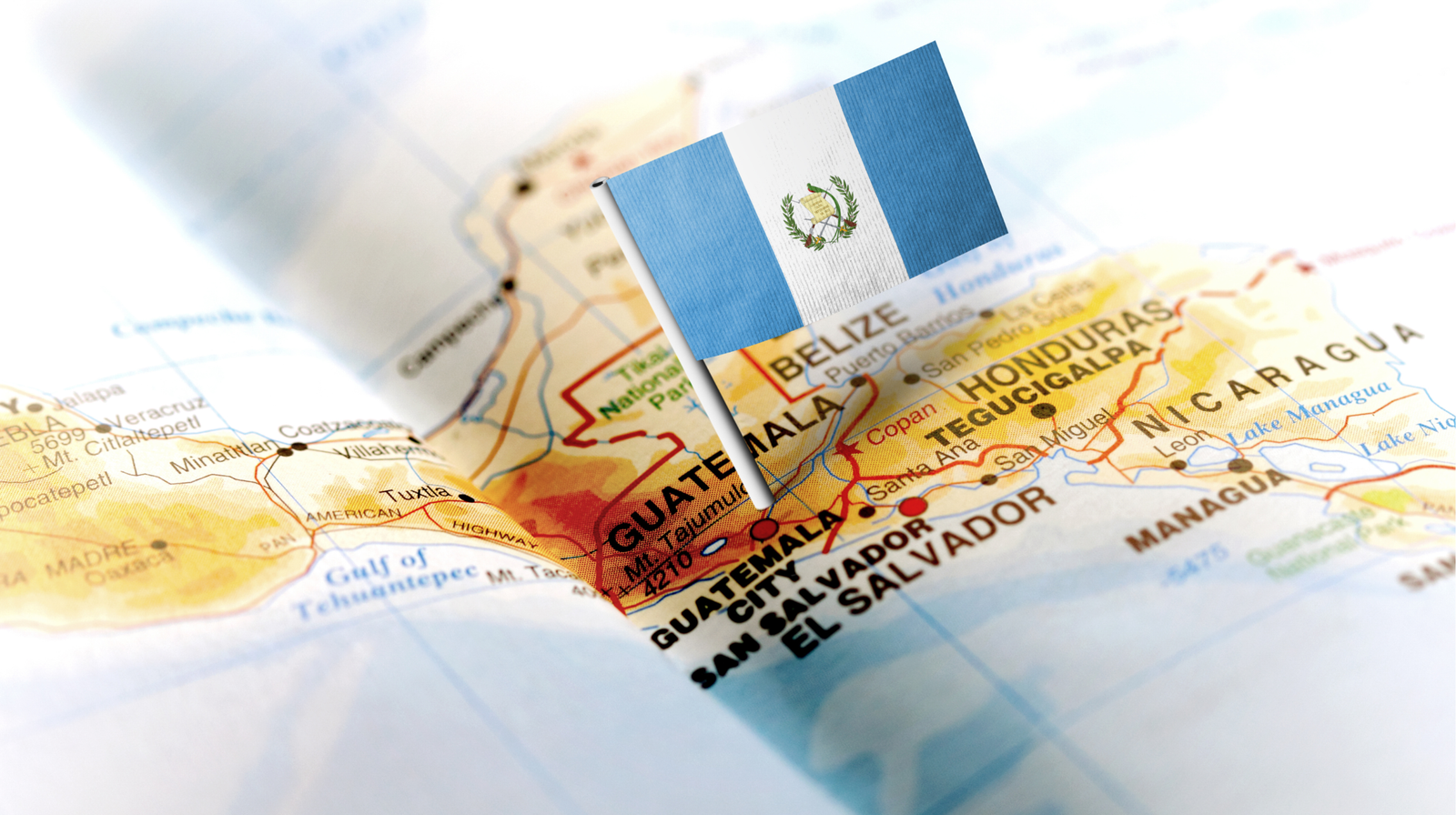
The Guatemalan decade of 1944 to 1954 sits in the small category of cases that the irregular warfare literature returns to over and over: a popular revolution, a reformist civilian government, an agrarian reform law, a foreign-owned corporation as the political fulcrum, and a covert action that ended the experiment. The ARIS case study Guatemala 1944–1954, originally published by the Special Operations Research Office at American University in 1964 and reissued in revised form by US Army Special Operations Command, is the foundational primary source for this story. Its purpose was practical: to give US doctrine writers and officers a structured account of how communist political influence took root inside a constitutional government, and what role the Guatemalan military played as that influence grew.
Reading it in 2026, the case study is just as useful for the questions it does not directly ask. How does an outside power use a domestic corporation as the trigger for foreign-policy action? When does economic nationalism cross the line from reform to a security threat in the eyes of a hegemon? Why did the Guatemalan officer corps, which had created the revolution in the first place, turn against the elected president it had installed? The full ARIS PDF lives on the ARIS resource page; this article distills the document and connects its findings to the present.
Second installment of TRH’s bi-weekly walkthrough of the ARIS case studies. Article 1 covered counter-unconventional warfare and military occupation; the next article in the series will cover the Patriot Insurgency of 1763 to 1789, scheduled for the week of July 4.
The setting: a caudillo, a revolution, and four phases
General Jorge Ubico had ruled Guatemala for thirteen years when intellectuals, students, and lawyers began demanding political reform in 1944. Ubico’s response was a state of emergency. Public disorder followed, and on June 29 the army accepted his resignation. The case study divides what came next into four phases: a period of general unrest, a period of military rule under General Frederico Ponce Vaides, a planning phase that produced a new constitution, and a constitutional phase that began with the inauguration of Juan José Arévalo in March 1945.
Two officers stand at the center of the second coup that ousted Ponce in October 1944. Captain Jacobo Arbenz Guzmán had been fired from his teaching post at Guatemala’s “West Point” and traveled to El Salvador to plan the revolt. Major Francisco Javier Arana, an army tank commander popular with junior officers, joined Arbenz and the civilian organizers. The October coup took two days. The junta that emerged consisted of Arana, Arbenz, and the civilian Jorge Toriello Garrido. From the start the revolution was a partnership between reformist civilians and reformist officers, and the durability of that partnership would determine the outcome a decade later.
Arévalo, Arbenz, and the rise of the labor movement
Arévalo took office in 1945 with what the case study calls an ideology of “spiritual socialism.” The early reforms were structural: a Social Security Institute, a labor code, an electoral law. Implementation was uneven. The bureaucracy was inexperienced. Tax revenue was thin. Within weeks of taking office Arévalo discovered a plot against him and was forced to suspend some of the constitutional protections his government had just enacted. The pattern of conspiracy followed by emergency decree would recur throughout the decade.
The political fault line of the second half of the decade ran between Arana and Arbenz. Arana, as Chief of the Armed Forces, was the strongest military figure in the country and the natural candidate of the conservatives and moderates who had helped overthrow Ubico but had not signed up for a leftward turn. Arbenz drew his support from the labor movement, the parties of the left, and a faction within the officer corps. In July 1949 Arana was assassinated. Arana’s supporters in the army revolted; an Arbenz-aligned faction backed by organized labor put the revolt down within a week. The official record never definitively connected the assassination to the government, but the political beneficiary of Arana’s death was unambiguous, and Arbenz emerged as Arévalo’s successor.
Both Arévalo and Arbenz pursued what the case study describes as a deliberate strategy of “democratizing” the army by purging officers who would not support the government and rewarding those who would. The rank and file, drawn primarily from the indigenous population, were politically detached. Disorders in 1950 forced Arévalo to call on the military and briefly hand power to the Chief of the Armed Forces; the military restored order and returned the government to civilian control. By the time Arbenz was inaugurated in March 1951, the army was no longer the reliably independent institution it had been a decade earlier, but it was also not yet the loyal instrument the new president needed.
United Fruit and the agrarian reform law
By the early 1950s the Arbenz government’s economic program had a clear target. The United Fruit Company, an American corporation reporting nearly $600 million in assets in 1953, was the dominant private actor in the Guatemalan economy. It owned two large tracts of agricultural land on the Pacific and Atlantic coasts. Through subsidiaries it controlled the International Railways of Central America (which owned 580 of the 732 miles of track in the country), the Tropical Radio and Telegraph Company, and the Empresa Electra, which supplied the company’s own electrical power. The port of Puerto Barrios on the Caribbean was operated almost entirely by United Fruit. Coffee accounted for roughly 80 percent of Guatemala’s exports; bananas accounted for another 10 percent, and the company employed about fifteen thousand banana workers directly.
The case study takes some care not to caricature United Fruit. Wages were comparatively high. Workers had access to company schools, hospitals, malaria control, retirement benefits, and subsidized commissaries. The case study calls the company “in some ways the model North American employer in Latin America.” The other side of the ledger was just as real: the seasonal nature of banana work meant low annual incomes, the Panama disease forced constant relocation of operations, the company had broken strikes brutally in the 1920s, it had enforced an explicit racial code, and unlike some Guatemalan landowners it had not participated in any meaningful land redistribution program.
The 1952 Agrarian Reform Law was the inflection point. The law authorized expropriation of uncultivated land from large estates with compensation set by the company’s own tax declarations of the property’s value. United Fruit’s tax declarations had been low for decades. The compensation was therefore low. The company called the expropriation confiscation, the US embassy accepted that framing, and the law became the political fulcrum that converted a land-reform dispute into a Cold War security file.
The Communist Party in Guatemala: small, well-placed, and overstated
One of the most-cited claims in the case study is also the most measured. The Guatemalan Communist Party, even at its peak in the early 1950s, had no more than about 4,000 card-carrying members. The membership was concentrated among middle-class professionals, students, urban workers, and rural laborers. What made the party consequential was not its size but its placement: with the help of Arévalo and Arbenz, party members and sympathizers obtained senior positions in the government civil service, and the party came to dominate the urban and rural labor movement that counted nearly 300,000 adherents.
The case study is careful to note that the party was not monolithic. It split repeatedly on ideological and organizational questions, mirroring the wider instability of Guatemalan politics. Only at the end of the Arbenz period did the National Democratic Front bring the parties of the left into a stable coalition, and even then the unity was thin. The case study’s assessment of why the party rose at all is sociological. Quoting the political scientist Kalman Silvert, the authors describe communism in Guatemala as the predictable product of an underdeveloped society “beginning to budge out of [its] social apathy and cast about not only for enemies to excoriate, but also philosophies to guide them.” That framing matters because it places the rise of the party inside a normal pattern of post-traditional political mobilization rather than an exotic foreign import. Resistance mobilization theory has refined that observation since 1964 but has not displaced it.
Why the army would not defend Arbenz
The defeat of the Arbenz government in June 1954 is often described as a CIA-backed coup. The case study’s contribution is to show why the coup did not require a Guatemalan military to defeat. It required only a military that would not fight for the elected president, and that condition was already in place when Castillo Armas’s small “Liberation Army” crossed the border from Honduras.
The case study lists the proximate causes. Officers feared that Arbenz had elevated the interests of the Communists above the interests of the army. They believed communism in Guatemala had jeopardized national interests and increased international tension. The agrarian reform program had disrupted them. When Arbenz ordered the army to arm and train 5,000 workers as a “people’s militia,” officers read the order as a plan to replace them with politically-aligned labor leaders, and as the prelude to the physical elimination of the officer corps. There were other reasons too. Some officers resented the assassination of Arana and the purge of his faction that had followed. Others calculated that their personal prospects would improve if Arbenz were overthrown. The General Staff recommended that Arbenz retract and moderate. He refused. They demanded his resignation. He gave it.
The case study lists five factors that defined the decade and pre-positioned the collapse: the second coup of 1944, the rise and assassination of Arana, the political mobilization of urban and rural labor, the formation of the National Democratic Front, and the failure of Arbenz’s policies for handling the military. The five together describe a revolution that succeeded in mobilizing society faster than it could institutionalize the coalition that started it.
The aftermath: Castillo Armas and the long shadow
Castillo Armas became head of a three-man junta on July 8, 1954. A September referendum returned him 99 percent of the vote. He served until his assassination in July 1957. The new government’s first acts targeted the agrarian reform: parts of the law were declared unconstitutional, the program was suspended, 120 plantations transferred to peasants were reclaimed, and a retroactive freeze blocked late-stage transfers Arbenz supporters had made when the political collapse became visible. The Guatemalan Labor Party was outlawed. A government list of suspected Communists exceeded 70,000 names by November 1954. Many of those on the list were barred from public office or imprisoned. Some went into exile.
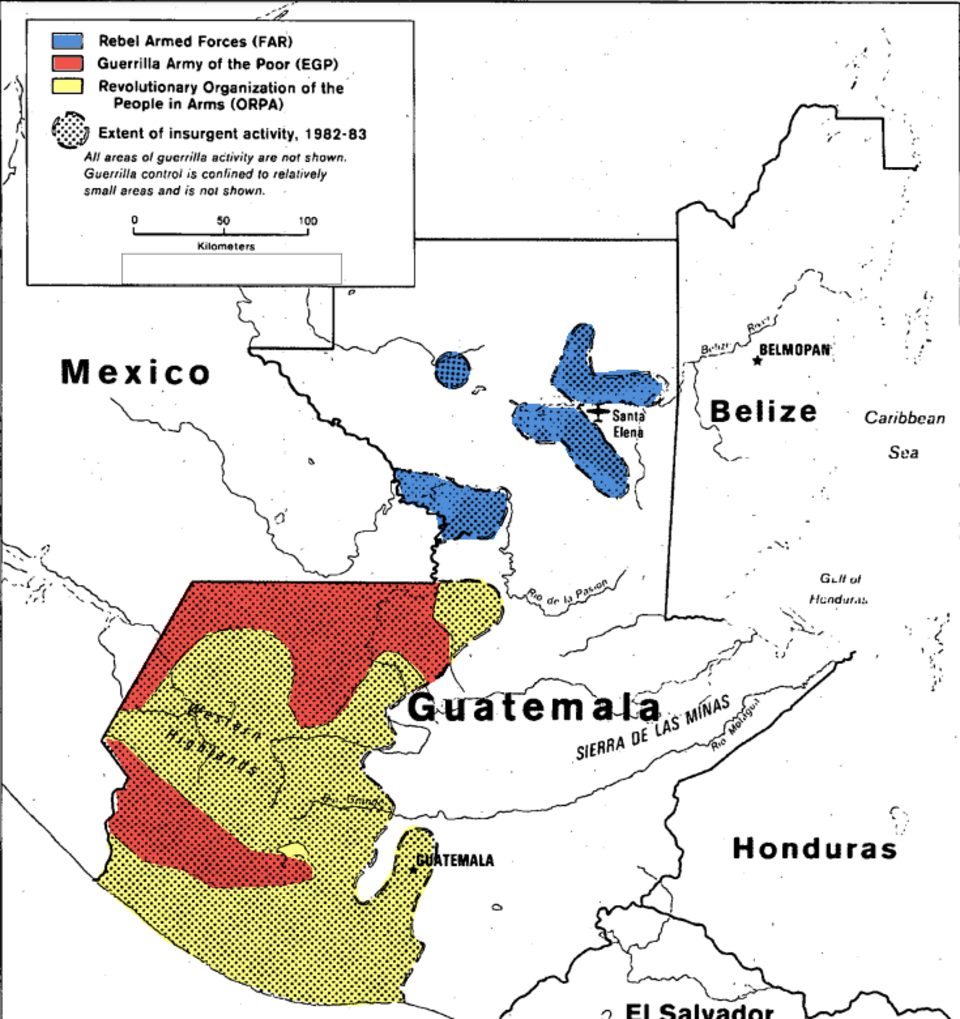
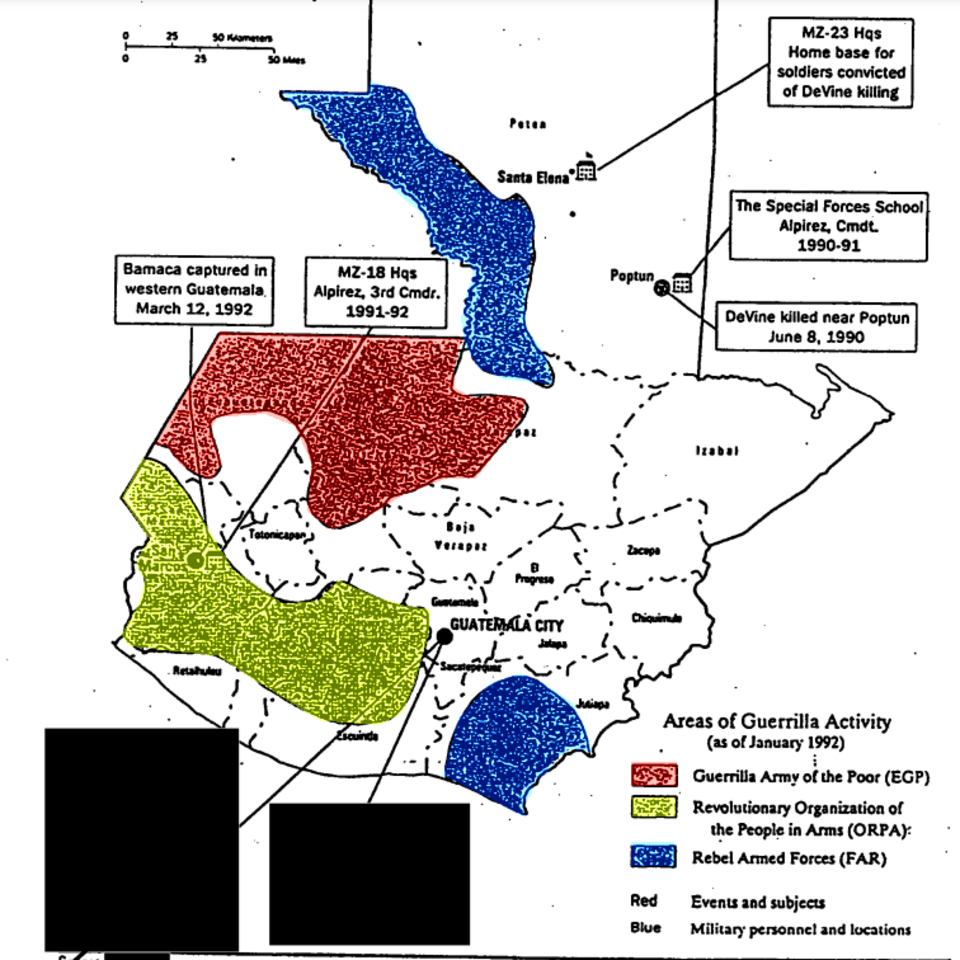
The case study, which closes its narrative in the early 1960s, did not yet know what would follow. The longer history is grim. The 1954 reversal opened a thirty-six-year civil war that ended only with the 1996 peace accords. A truth commission published in 1999 attributed the great majority of the war’s roughly 200,000 deaths and disappearances to Guatemalan state forces. The case study’s analytic framing of 1944 to 1954 as a closed decade is therefore incomplete in a way that the document itself signals: the Epilogue notes that the Communist Party was not eliminated, only set back, and that anti-Communist decrees in the 1960s under General Peralta had reactivated the underground rather than ending it. What had been a constitutional dispute over land, labor, and corporate concession was now a counterinsurgency.
Why this case still matters
Three patterns from Guatemala 1944 to 1954 recur in case studies separated from this one by oceans and decades. The first is the use of a foreign-owned corporation as the political bridge between domestic reform and great-power security policy. The Arbenz government’s expropriation of United Fruit assets at the company’s declared tax value was procedurally lawful and politically catastrophic. The second is the fragility of civil-military reformist coalitions when the reform program threatens institutional officer interests. The army that made the 1944 revolution was not the same army that refused to defend Arbenz a decade later, but it was the same officer corps. The third is the asymmetry between the size of an organized cadre and its policy impact when that cadre operates inside permissive structures. Four thousand party members who reach the senior civil service and dominate a 300,000-member labor movement matter more than four thousand party members at the margins of a system.
For readers tracking irregular and hybrid threats today, the Guatemala file is also a reminder that the toolkit of state-on-state coercion through proxies, propaganda, and economic leverage is older than the post-Cold War vocabulary that describes it. The instruments have changed; the problem has not. For comparative material, see TRH on state and insurgent strategic competition for governance and our overview of the major counterinsurgency thinkers whose work runs parallel to the ARIS canon. The earlier article in this series, on counter-unconventional warfare and military occupation, sits on the same resource page as the Guatemala study.
Further reading
Related Articles on The Resistance Hub
Recommended Reading
- Masters of Resistance — The Distillery Press anthology of foundational thinkers behind modern unconventional warfare and resistance doctrine.
- The Guerrilla Tactical Triad — Distillery Press treatment of the operational logic that connects the Guatemalan case to the wider Cold War insurgent literature.
- OSS: Combined & Remastered — The canonical OSS field manuals on simple sabotage, intelligence, and underground organization.
The full ARIS study, Case Studies in Insurgency and Revolutionary Warfare: Guatemala 1944–1954 (revised edition, USASOC), is available on the ARIS resource page alongside the rest of the case study collection.
