
Latest posts
Breaking Free: How the Baltic States Disconnected from Russia’s Power Grid and What It Means for Security
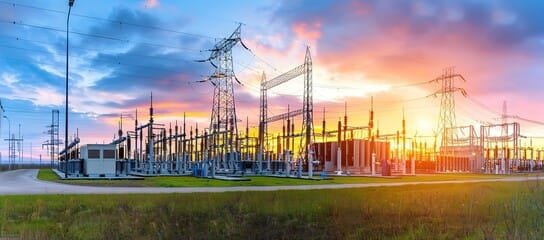
This week, the Baltic states of Estonia, Latvia, and Lithuania achieved a long-anticipated milestone: they disconnected from the Russian-controlled BRELL power grid, marking a decisive break from Moscow’s energy infrastructure influence. This move is not just about electricity — it is a strategic shift reinforcing the region’s security, independence, and resilience against hybrid threats. Russia
Irregular Warfare Solutions for Wildfire Response

A Fire on Raven Ridge: A Case for Decentralized Wildfire Response The late summer sun hung low over Raven Ridge, casting long shadows across the dry brushland. It had been an unusually hot season, and the ridge—a well-known fire-prone area at the edge of the Wildland-Urban Interface (WUI)—had become a tinderbox. Around 3:12 PM, a
Protecting Critical Infrastructure from Sabotage

As the boundaries between peace and conflict blur in the era of grey-zone and hybrid competition, protecting critical infrastructure has become one of the defining security challenges of the 21st century. Systems such as power grids, transportation networks, communication channels, water supplies, and energy pipelines form the backbone of modern society. They support economic stability,
Undersea Sabotage: The Hidden Threat to Global Infrastructure

The ocean floor carries the connective tissue of modern civilization. Roughly 97 percent of all intercontinental data travels through undersea fiber-optic cables — not satellites — while subsea pipelines and power interconnectors supply energy across national borders. These systems support an estimated $10 trillion in daily financial transactions. They are also extraordinarily vulnerable. Since Russia’s
Operation Gunnerside: The Mission That Changed the Course of World War II
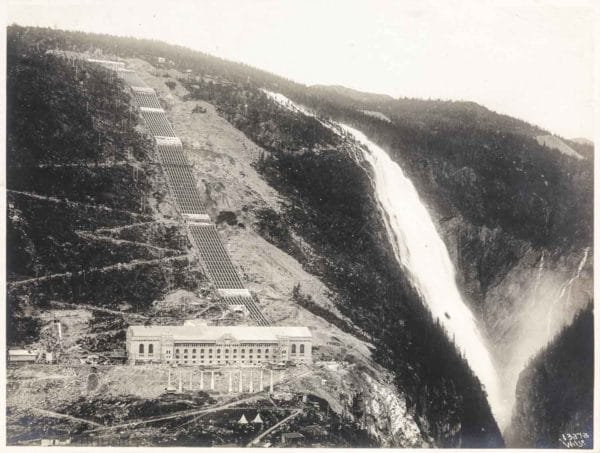
Operation Gunnerside stands as one of the most consequential acts of sabotage in the history of warfare. On the night of February 27–28, 1943, nine Norwegian commandos infiltrated the heavily guarded Vemork hydroelectric plant in Telemark, Norway, and destroyed the sole industrial-scale facility producing heavy water for Nazi Germany’s nuclear weapons program — without firing