Moe Gyo is a writer and consultant working with ethnic organizations in Myanmar. Writing from the Thai–Myanmar borderlands, he draws on years of direct engagement with communities shaped by conflict and disrupted health systems. His work captures firsthand how resilience and informal support networks develop under prolonged irregular warfare. His writing has appeared in the Small Wars Journal and the Journal of Special Operations Medicine, among others.
The history of revolutionary warfare in the twentieth century is often framed through the intellectual contributions of major theorists who sought to transform asymmetrical struggle into a coherent military doctrine. Among these figures, Mao Zedong articulated the foundational theory of protracted People’s War, integrating politics, society, and military action into a unified framework. Yet theory alone does not guarantee success; it must be translated into practice under the pressures of real conflict, adaptive enemies, and shifting geopolitical constraints.
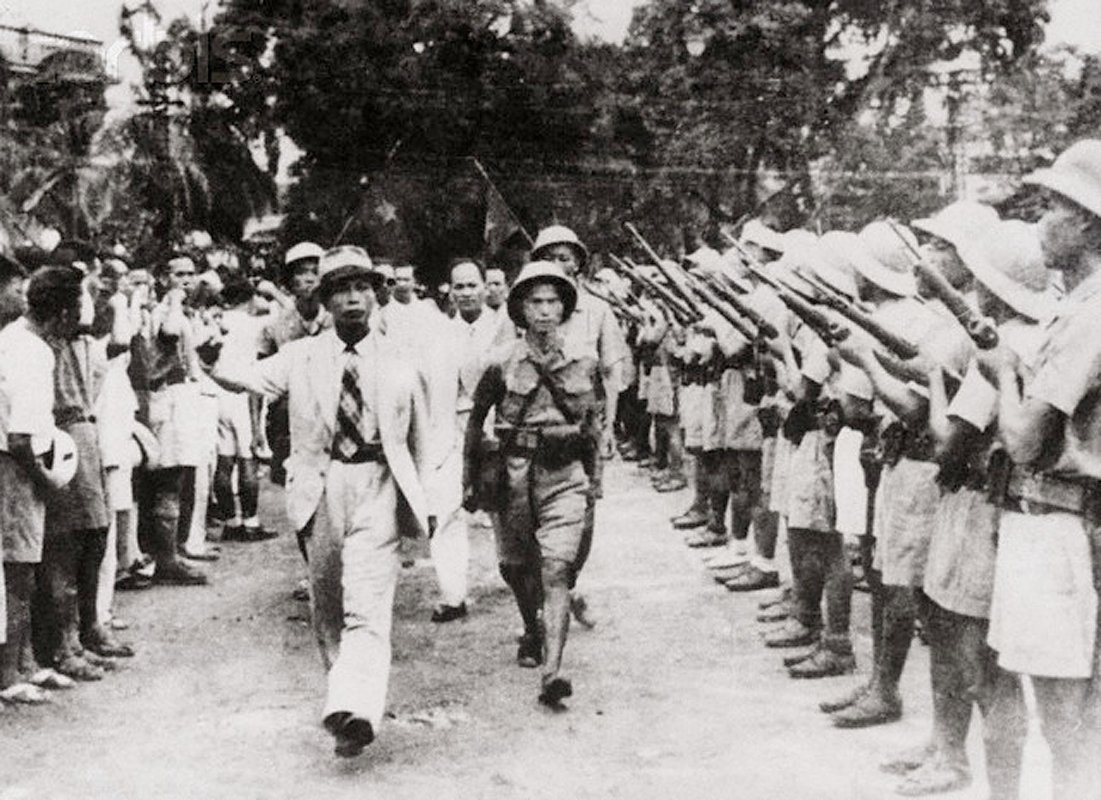
It was Võ Nguyên Giáp who demonstrated that such a theory could endure these pressures. More than a practitioner, Giáp emerged as the architect of its operational form, transforming Maoist doctrine into a distinct and adaptive system suited to the conditions of Vietnam. His achievement was not simply victory in war, but the construction of a resilient structure of revolutionary warfare capable of sustained conflict.
Giáp should therefore be understood not merely as a commander, but as the figure who operationalized and systematized People’s War. His contribution lay in transforming abstract theory into a dynamic and adaptive system, bridging the gap between doctrine and its realization under the conditions of modern war. The real mechanics of that system are how village militias, guerrilla units, and main-force formations were integrated into a cohesive and resilient structure capable of enduring prolonged conflict.
Giáp and the Operational Transformation of People’s War
Giáp transformed Maoist principles into a flexible and adaptive operational system. Mao’s model of protracted war outlined a broadly sequential progression, from strategic defensive, to stalemate, and then to strategic offensive, in which guerrilla warfare gradually gave way to conventional operations. Giáp reinterpreted this framework, treating it less as a rigid sequence and more as a set of overlapping possibilities.
One key difference was his willingness to employ main-force units earlier and more flexibly than Maoist orthodoxy prescribed. Rather than waiting for a decisive shift in the balance of power, Giáp used conventional forces opportunistically, integrating them into an ongoing guerrilla struggle. This allowed him to exploit fleeting advantages and impose pressure on the enemy across multiple levels simultaneously.
Equally significant was his emphasis on system integration. Where Mao provided a powerful theoretical synthesis of political and military struggle, Giáp built a concrete structure that linked village militias, guerrilla units, and regular forces into a coordinated network. This was not merely an application of doctrine but its institutionalization. Intelligence flows, logistical support, and command relationships were organized in a way that allowed the system to function continuously under stress.
Giáp also adapted Maoist ideas to the specific social and geographical conditions of Vietnam. The dense population, strong village identities, and challenging terrain required a deeper embedding of military activity within civilian life. As a result, his system placed greater emphasis on local autonomy and decentralized resilience than the more centrally directed model often associated with Mao’s campaigns.
In his influential work People’s War, People’s Army, Giáp codified many of these principles, presenting revolutionary warfare as a comprehensive system rooted in mass mobilization, political cohesion, and the integration of military and civilian efforts. The text serves not only as a reflection on the Vietnamese experience but also as a practical guide to the organization and conduct of protracted war.
In this sense, Giáp did not simply follow Mao; he operationalized him. He translated abstract principles into a living system capable of adaptation, survival, and sustained effectiveness in real-world conditions. His achievement demonstrates that the success of revolutionary warfare depends not only on sound theory but on the ability to reinterpret and apply it dynamically.
Rather than adhering rigidly to sequential stages, Giáp translated theory into a set of continuously interacting components. Village militias, guerrilla units, and main-force formations were not simply phases of development but coexisting elements within a unified structure. This transformation allowed revolutionary warfare to function not as a linear progression but as a dynamic system capable of adapting to changing conditions while maintaining strategic coherence.
Beyond Mao and Che: Reassessing Giáp’s Theoretical Contribution
Despite his substantial contributions, Võ Nguyên Giáp’s role as a military thinker has often been overshadowed by the more widely recognized figures of Mao Zedong and Che Guevara. Mao’s status as the originator of protracted people’s war established him as the central intellectual authority in revolutionary warfare. While Guevara’s writings and personal example inspired insurgents globally, he did not significantly advance the theoretical foundations, organizational principles, or practical systems of revolutionary warfare in the way Giáp did. In contrast to Mao and Che, Giáp has frequently been remembered more as a practitioner and commander than as a theorist in his own right.
This imbalance obscures the extent of Giáp’s conceptual innovation. While Mao provided the foundational framework and Guevara popularized a more inspirational form of insurgency, Giáp developed a deeply integrated system that demonstrated how revolutionary warfare could function as a sustained, adaptive structure rooted in society. His emphasis on coordination across multiple levels of force, the institutionalization of civilian participation, and the flexible use of conventional units represented significant theoretical advances, even if they were not always codified in abstract form.
The relative marginalization of Giáp’s ideas reflects broader patterns in how revolutionary theory is transmitted and remembered. Texts that present clear, universalizable doctrines often achieve wider circulation than those grounded in specific historical contexts. Yet Giáp’s work, particularly as expressed in People’s War, People’s Army, offers precisely this missing link between theory and application. Recognizing his contributions not only corrects an imbalance in the historiography of revolutionary warfare but also deepens our understanding of how such wars are actually fought and sustained.
War as an Integrated Social System
At the heart of Giáp’s approach was a fundamental recognition: revolutionary war could not be sustained solely by military organization, nor could it rely exclusively on ideological fervor. It required an integrated system rooted in society itself. In his writings, particularly People’s War, People’s Army, Giáp emphasized that the strength of a revolutionary movement derived from its ability to mobilize the entire population. War was not an isolated activity conducted by professional soldiers; it was a collective endeavor in which civilians, fighters, and political cadres all played essential roles. This concept transformed the battlefield from a defined geographic space into a social environment in which every village, road, and field could become a site of resistance.
Village Militias: The Foundation of Distributed Resistance
The foundation of Giáp’s system lay in the village-level forces: part-time fighters who remained embedded within their communities. These local militias were not separate from civilian life; they were indistinguishable from it. Farmers by day, they became defenders and operatives by night. Their responsibilities extended far beyond combat. They gathered intelligence, tracked enemy movements, maintained supply networks, and reinforced the political legitimacy of the revolutionary movement. By institutionalizing resistance at the grassroots level, Giáp ensured that the insurgency could not be easily dismantled. Any attempt to destroy it would require the systematic disruption of entire communities, a task that was not only logistically difficult but also politically costly for any occupying force. In systemic terms, these forces formed the foundation layer of Giáp’s model, embedding resistance within society itself.
This integration of military and civilian roles created a form of distributed resilience. Unlike conventional armies, which depend on centralized command structures and fixed supply lines, Giáp’s village forces operated as a decentralized network. Each village functioned as a node capable of sustaining itself and contributing to the larger struggle. If one node was compromised, others could continue functioning. This redundancy made the system highly resistant to disruption. Moreover, it allowed the revolutionary movement to maintain continuity even under intense pressure, as the loss of territory did not equate to the loss of capacity.
Taken together, the elements of Giáp’s approach reveal a deeper level of innovation: the construction of a resilient system of warfare rather than a collection of tactics. The integration of village militias, mobile guerrilla units, and main-force formations created a layered structure in which each component reinforced the others. Local forces ensured persistence, guerrillas enabled mobility and disruption, and main-force units provided the capacity for decisive engagement.
This system was designed for endurance under pressure. Its decentralized nature allowed it to absorb losses without collapse, while its internal coordination ensured that localized actions contributed to broader strategic objectives. In this sense, Giáp’s achievement was not simply the refinement of guerrilla warfare but the creation of an adaptive, self-sustaining model of conflict capable of confronting materially superior adversaries over extended periods.
A remastered collection of foundational revolutionary warfare texts, restoring the primary works that shaped protracted People’s War and modern insurgency theory for a new generation of readers and practitioners.
View on Amazon →Regional Guerrilla Forces: The Mobile Operational Layer
Above the village militias operated regional guerrilla units. These forces represented a crucial intermediate layer in Giáp’s system, bridging the gap between localized resistance and larger-scale operations. Unlike village fighters, who were tied to specific communities, guerrilla units possessed greater mobility and operational flexibility. They could move across regions, conduct coordinated attacks, and exploit opportunities beyond the immediate vicinity of any single village. Their tactics were designed to offset the technological and numerical advantages of the enemy. Ambushes, hit-and-run attacks, sabotage, and interdiction of supply lines became their primary methods. Within the broader structure, guerrilla units functioned as the connective tissue linking local persistence to wider operational mobility.
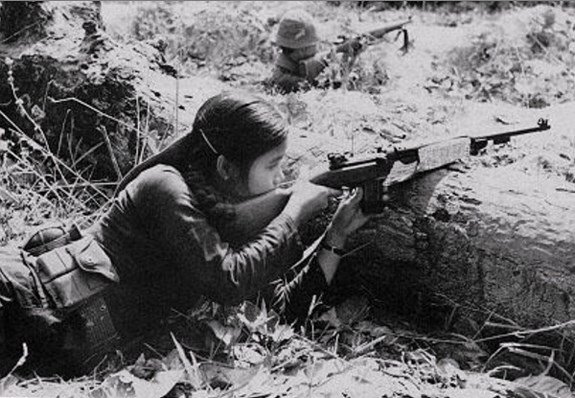
What distinguished Giáp’s use of guerrilla forces was not merely their tactical role but their integration into a broader system. Intelligence flowed upward from village militias, providing guerrilla units with detailed knowledge of enemy movements and vulnerabilities. In turn, guerrillas offered protection and coordination to local forces, ensuring that village-level resistance could continue operating effectively. This bidirectional relationship created a feedback loop in which information and support circulated continuously. The result was a dynamic and adaptive network capable of responding to changing conditions on the ground. These principles continue to shape contemporary guerrilla warfare.
Main-Force Units: Flexible Conventional Power
At the highest level of Giáp’s system were the main-force units: regular military formations trained and equipped for sustained combat. In classical Maoist theory, such forces were typically associated with the final phase of revolutionary war. Giáp, however, redefined their role, employing them as a flexible instrument throughout the conflict rather than reserving them for a decisive end stage. This allowed him to integrate conventional and unconventional warfare in a way that amplified the effectiveness of both. This flexibility highlights Giáp’s departure from rigid doctrine, positioning conventional forces as an integrated component of an ongoing system rather than a final stage.
Multi-Level Warfare and the Dynamics of Adaptation
By deploying main-force units selectively, Giáp was able to concentrate strength at decisive points without abandoning the dispersed nature of guerrilla operations. When conditions were favorable, these units could engage in large-scale battles, while guerrilla and village forces maintained pressure elsewhere. This created a persistent strategic dilemma for the enemy, forcing them to choose between concentration and dispersion, each carrying significant risks.
This ability to operate across multiple levels of warfare transformed revolutionary conflict into a fluid and multidimensional struggle. Rather than progressing through fixed stages, Giáp’s system allowed for continuous adjustment. Guerrilla, local, and conventional modes could coexist and reinforce one another, enabling the revolutionary movement to adapt to shifting conditions without losing coherence.
Time, Terrain, and Strategic Endurance
A cornerstone of Giáp’s adaptation was his strategic use of time. Unable to match the material capabilities of his adversaries, he deliberately prolonged the conflict to erode enemy will and capacity, embedding the war effort within civilian society to ensure long-term sustainability. As the enemy faced mounting costs and declining morale, the revolutionary movement gained endurance.
Equally important was the integration of political and military objectives. Giáp recognized that revolutionary warfare was ultimately a contest for legitimacy: battlefield victories alone were insufficient. Political authority, governance, and popular mobilization had to operate in tandem with combat operations, creating a system in which military success reinforced political influence at every level.
Terrain and strategic adaptation further amplified this system. Vietnam’s dense jungles, mountains, and river networks favored mobility, concealment, and decentralized operations. Giáp’s innovation lay not merely in exploiting geography but in aligning strategy with both environmental and social realities, allowing forces to operate flexibly and sustainably. The same patterns of terrain-embedded resistance are visible today in the ethnic resistance organizations of Myanmar.
Finally, resilience, discipline, and organization underpinned the system’s effectiveness. Decentralized operations were coordinated through clear communication, political cohesion, and robust logistical networks, ensuring that village militias, guerrilla units, and main forces functioned as an integrated, adaptive structure capable of sustaining protracted conflict.
The operational lessons of time, terrain, and integrated strategy reveal more than effective tactics; they illustrate a fundamental rethinking of what constitutes military power. By embedding combat within society, leveraging decentralized networks, and sustaining operations over prolonged periods, Giáp demonstrated that strength is not measured solely by technology or firepower but by adaptability, cohesion, and systemic resilience.
This perspective reshapes our understanding of revolutionary warfare and cements Giáp’s legacy as a military thinker whose contributions extend beyond battlefield victories.
Rethinking Military Power: System over Firepower
Giáp’s approach fundamentally challenged conventional assumptions about military power. He demonstrated that strength in protracted conflict derives as much from systemic cohesion, civilian integration, and operational flexibility as from weapons, numbers, or technology. By operationalizing theory into practice, Giáp expanded the conceptual boundaries of revolutionary warfare, showing that multi-layered, networked operations linking village militias, guerrilla forces, and main units could produce strategic effects far greater than the sum of their material resources.
This rethinking of military power resonates with modern concepts such as network-centric warfare, hybrid operations, and protracted conflict, making his insights relevant not only historically but for contemporary military studies. Beyond battlefield victories, Giáp’s legacy lies in his ability to synthesize theory, practice, and socio-political integration into a coherent operational system, securing his place not merely as a commander but as a military thinker whose methods continue to shape the study of irregular and protracted warfare. He stands among the most influential thinkers in counterinsurgency and revolutionary theory.
Operationalizing People’s War: From Theory to System
Võ Nguyên Giáp’s real contribution was the translation of abstract doctrine into a durable, adaptive operational system. By embedding warfare within society, he constructed a multi-layered framework that integrated village militias, regional guerrilla units, and main-force formations into a cohesive, resilient structure capable of enduring sustained pressure and setbacks.
In this system, tactical actions were not ends in themselves but components of a long-term strategy combining combat operations with intelligence, governance, and political mobilization. Continuous feedback and adaptation ensured that each level, from local militias to main units, was mutually reinforcing, allowing revolutionary forces to remain cohesive even against superior adversaries.
Through this approach, Giáp transformed abstract Maoist principles into a living, adaptive framework of war, demonstrating that organizational design, systemic integration, and social embedding could create strategic effects disproportionate to material resources. By linking theory, practice, and social structures, Giáp emerged not merely as a commander but as the architect of operational People’s War, whose lessons on resilience, adaptability, and system design remain essential for understanding protracted and irregular conflict.
From Doctrine to System: Giáp’s Enduring Legacy
Võ Nguyên Giáp’s enduring significance lies not simply in his battlefield victories but in his ability to transform revolutionary theory into a resilient, adaptive operational system. Whereas Mao Zedong provided the intellectual foundations of People’s War and Che Guevara offered an iconic model of insurgency, Giáp demonstrated how these principles could be applied, scaled, and sustained under the pressures of prolonged conflict.
By embedding warfare within social structures, integrating village militias, guerrilla units, and main-force formations, and emphasizing continuous feedback and adaptation, Giáp created a system capable of absorbing pressure, surviving setbacks, and achieving strategic coherence against materially superior foes. His approach reveals that military effectiveness in revolutionary war depends as much on organization, social integration, and strategic endurance as on weapons or conventional force.
Ultimately, Giáp should be recognized not merely as a commander but as the architect of operational People’s War, whose innovations in system design, multi-level coordination, and adaptive strategy continue to inform the study of protracted and irregular conflict. His legacy demonstrates that the true measure of military genius lies not only in victories on the battlefield but in the creation of systems capable of enduring, evolving, and sustaining revolutionary struggle over time.
Vo Nguyen Giap sits inside a wider argument about how revolutionary warfare is built, transferred and, sometimes, mythologised.
- Revolutionary Warfare in Three Visions, which sets Giap beside Mao and Guevara.
- Mao Zedong, on the protracted-war model Giap inherited and rebuilt as an operating system.
- Beyond Cuba: the limits of revolutionary transferability, on what happens when the social foundation Giap depended on is absent.
- The Most Influential Thinkers in Counterinsurgency Theory, for the doctrine written in response.
- Irregular Warfare and Resistance Glossary, for people’s war, main force, and the other terms used here.
