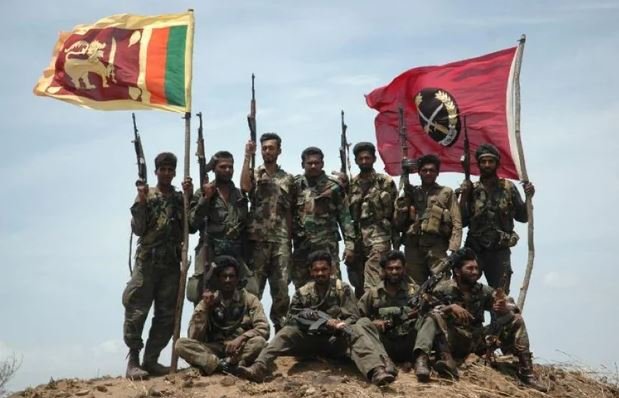
Sri Lanka’s civil war is the rare modern case where a separatist insurgency was brought to a definitive military end. The Liberation Tigers of Tamil Eelam, known internationally as the Tamil Tigers, ran one of the most capable insurgent organizations of the late twentieth century. They fielded a conventional army, a navy, an air wing, a domestic intelligence service, an international fundraising apparatus, and a parallel state across the Vanni in northern Sri Lanka. In May 2009, the Sri Lankan armed forces destroyed the LTTE in a final operation in Mullaitivu District. The group’s founder Velupillai Prabhakaran was killed, the central command was eliminated, and twenty-six years of open war that had begun with the Black July riots of 1983 came to an end.
The ARIS case study Sri Lanka 1976 to 2009, published by US Army Special Operations Command and authored at the Johns Hopkins University Applied Physics Laboratory, is the standard unclassified treatment of how the conflict began, how the LTTE built itself, what the parallel Janatha Vimukthi Peramuna communist insurgency contributed to the picture, why Indian intervention failed, and what the 2009 outcome means for the rest of the irregular warfare literature. Paul J. Tompkins Jr. served as USASOC project lead, Guillermo Pinczuk as editor, with Pinczuk, Mike Deane, and Jesse Kirkpatrick as contributing authors. The full PDF lives on the ARIS resource page; this article distills its core arguments.
Part of TRH’s walkthrough of the ARIS case studies. Earlier articles covered counter-unconventional warfare, Guatemala 1944 to 1954, the Patriot Insurgency, and Algeria 1954 to 1962. The next case study in the series will be Colombia 1964 to 2009.
The two insurgencies, in brief
The case study treats Sri Lanka as a country bedeviled in the late 1980s by two simultaneous insurgencies that originated in different communities and pursued different objectives. The Janatha Vimukthi Peramuna, or JVP, was a Sinhalese-Buddhist Marxist movement that first attempted to seize the state in 1971, an uprising in which roughly 6,000 of its members were killed, and tried again in the late 1980s with a campaign of assassination, economic sabotage, and pressure on government workers. The Liberation Tigers of Tamil Eelam, or LTTE, was an ethnic Tamil separatist movement founded by Velupillai Prabhakaran in 1976 with the objective of carving an independent Tamil state, Eelam, out of the north and east of the island.
The JVP came close to succeeding. In November 1988 it paralyzed transport across the island and shut down banking, telecommunications, and postal services; the army was called in to run buses and distribute fuel while the navy operated the port of Colombo. It then overplayed its hand in August 1989 by issuing a death threat against the family members of armed forces personnel, warning that relatives would be killed unless the security forces stood down. The case study reads this as a strategic miscalculation that turned the only institution still holding the state together against the movement. The government’s counter-campaign ran through paramilitary death squads operating outside the formal chain of command, with names like the Black Cats, Scorpion, Eagle, and Yellow Cats. Rohana Wijeweera was captured in November 1989 and killed shortly afterward, and most of the JVP’s top leadership was gone by January 1990.
The LTTE took twenty-six years and four distinct phases of open warfare, which the literature numbers as the Eelam Wars: the first from 1983 to 1987, the second from 1990 to 1995, the third from 1995 to 2002, and the fourth from 2006 to 2009. Defeating it required a complete reconstruction of the Sri Lankan military and a government willing to absorb the loss of Western military assistance in order to finish the job. The two cases sit inside the same ARIS volume because they illustrate how a single state can produce two qualitatively different insurgencies with different ideological registers, recruitment pools, and operational signatures, and what it takes to defeat each.
The catalyst: language, religion, and majoritarian electoral arithmetic
The case study locates the origin of the Tamil insurgency in a sequence of post-independence political decisions that converted ethnic difference into a security problem. Ceylon achieved independence from Britain in 1948 through cooperation between Sinhalese and Tamil elites. The political system the British left behind did not include communal representation that would have guaranteed Tamil minorities a fixed bloc of legislative seats above their percentage of the population. Inside an electoral system based on simple majoritarianism, with a Sinhalese-Buddhist population accounting for roughly three-quarters of the country, the math drove politicians toward chauvinist platforms.
Two inflection points carried the country across the threshold from manageable ethnic tension to existential conflict. The Sinhala Only Act of 1956 made Sinhala the sole official language, beginning the de-Tamilization of a civil service that had historically employed Tamils at rates well above their share of the population. The 1972 constitution made that shift permanent, designating Sinhala the sole official language of the republic and elevating the status of Buddhism.
Running alongside the constitution, and analytically separate from it, was a set of education policies adopted in the aftermath of the 1971 JVP uprising. The government read that insurrection as a product of educated Sinhalese unemployment and moved to correct it. It introduced a district quota system to raise university enrollment from rural areas, and a standardization scheme under which the number of candidates qualifying in each language was set proportional to the number sitting the exam in that language. The practical effect was that Tamil students had to score higher for the same place. The qualifying mark for a medical faculty was 250 out of 400 for Tamil candidates against 229 for Sinhalese. Tamil representation in science-based university faculties fell from 35.3 percent in 1970 to nineteen percent in 1974. The policies were a domestic response to a Sinhalese insurgency; their side effect was to demoralize a generation of Tamil graduates and supply the recruiting pool the LTTE would draw on a few years later.
The case study calls this dynamic path dependency. By the time the Sri Lankan government in the late 1980s began offering devolution and local autonomy concessions that might have satisfied Tamil demands two decades earlier, the war had acquired its own momentum, the LTTE had eliminated rival Tamil militant groups, and only Eelam would do. For the broader pattern of how repression and electoral architecture interact with mobilization, see TRH on the repression-mobilization cycle.
The LTTE as a state-building insurgency
The case study’s structural analysis of the LTTE is what makes the volume useful well beyond the specifics of Sri Lanka. Prabhakaran built an organization that the literature usually struggles to classify: it was simultaneously a guerrilla movement, a conventional military force, and a parallel state. By the late 1990s the LTTE controlled territory across the Vanni in northern Sri Lanka, ran civil administration, operated a court system, collected taxes in cash, in kind, and through customs duties, issued identity documents, and policed its zone. Its growth tracks the political shocks precisely: fewer than five members in 1974, roughly thirty-three on the eve of the July 1983 riots, 2,500 by 1986, down to 1,500 in 1989 after taking losses from the Indian Peacekeeping Force, then 4,000 by 1990, 14,000 in 1997, and 20,000 by 2003.
The Sea Tigers and the Air Tigers
The Sea Tigers were an asymmetric naval force capable of engaging Sri Lankan navy patrol craft, and they ran the international smuggling logistics that financed the war. One analyst quoted in the study calls them the most formidable nonstate navy in the world. For speed and maneuverability they used fiberglass boats fitted with penetration rods designed to puncture a target hull and amplify the shock wave of the explosion; roughly forty such suicide assaults were carried out between 1990 and 2004. The Sri Lankan navy eventually copied the tactics in order to counter them. The Air Tigers are the rarer capability. The LTTE had smuggled four light aircraft onto the island before the wing conducted its first confirmed strike in 2007, against a military base adjacent to Colombo International Airport, and it carried out further air raids during the closing campaign.
The Black Tigers and the cyanide capsule
Two organizational features mark the LTTE in the comparative literature. The first is the suicide capability. The Black Tigers, a dedicated unit dating to 1987 and handpicked by Prabhakaran personally, were held in near-mythical esteem inside the organization and were employed against military, political, and economic targets on land, at sea, and in the air. Women made up roughly a third of their ranks. The list of suspected LTTE assassinations includes former Indian Prime Minister Rajiv Gandhi in 1991, Sri Lankan President Ranasinghe Premadasa in 1993, Ministers Lalith Athulathmudali and Ranjan Wijeratne, the Tamil political leaders Appapillai Amirthalingam and Neelan Thiruchelvam, and Foreign Minister Lakshman Kadirgamar in 2005. There was also a 1999 attempt on President Chandrika Kumaratunga and a December 2006 attempt on Gotabhaya Rajapaksa. The case study is careful on attribution: the LTTE explicitly denied killing Premadasa and denied involvement in Kadirgamar’s death, where investigations produced little credible evidence. Kadirgamar mattered because he was an ethnic Tamil and a harsh LTTE critic who was central to getting the group listed as a terrorist organization in the United States in October 1997 and later in the United Kingdom, a legal step that severely hampered its ability to raise money abroad.
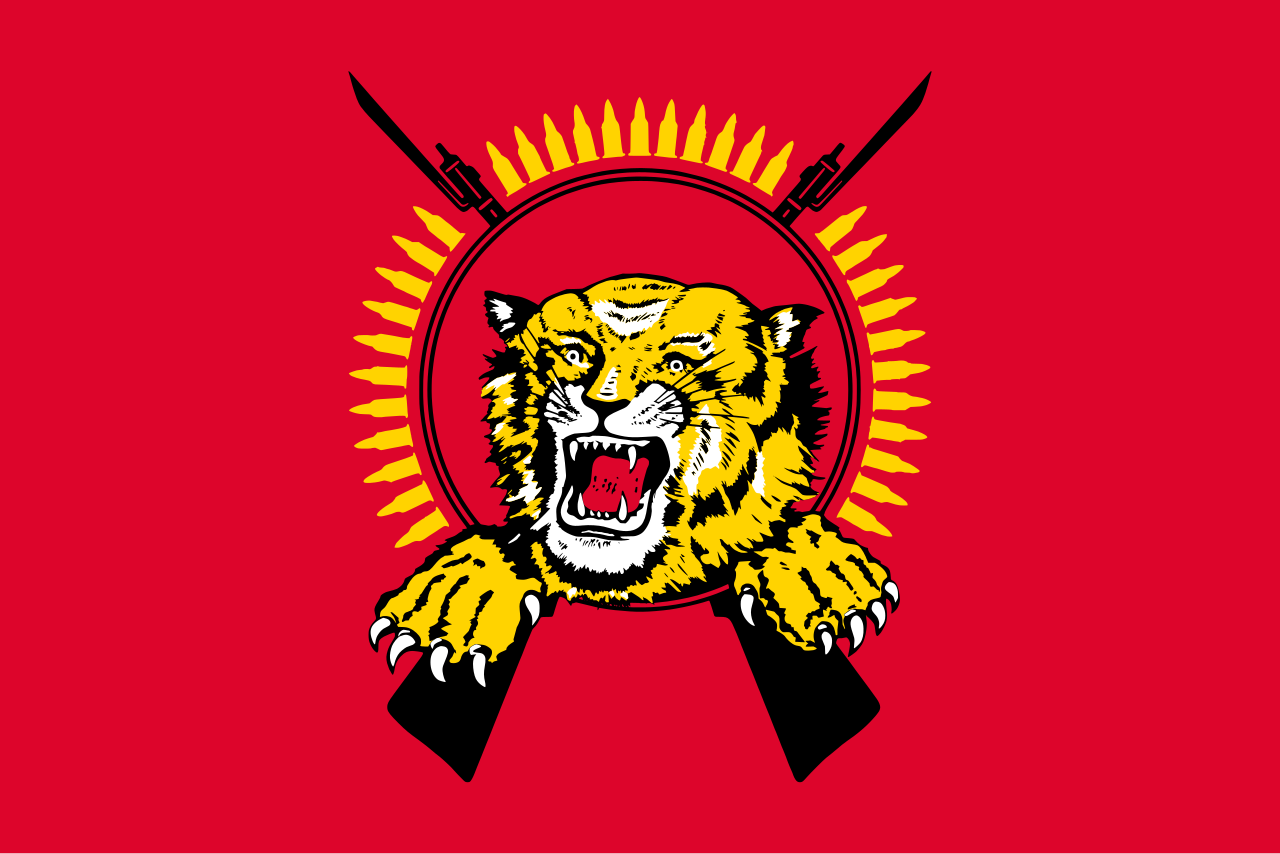
The second feature is the cyanide capsule, worn in a vial around the neck by cadres and used to prevent capture. The combination of the two practices made the LTTE one of the most operationally disciplined insurgent organizations ever studied. For broader analytical context, see TRH on the major counterinsurgency thinkers whose frameworks anticipated some of these dynamics.
The other side of the ledger
Operational discipline is not the same as restraint, and the case study does not present it as such. In 1990 the LTTE expelled roughly 70,000 Muslim residents from the north, which the study describes plainly as an act of ethnic cleansing. As its manpower depleted, it turned to forcible conscription of male and female teenagers and, according to United Nations officials and the University Teachers for Human Rights in Jaffna, of children as young as nine or ten. Children brought into the organization were known as Tiger Cubs and received military training in India from the age of sixteen. In the final phase it drove the civilian population of the Vanni ahead of its own retreating formations, calculating that the Sri Lankan military would hold its artillery and that the international community would force a halt. Any assessment of the LTTE as a governance actor has to carry these entries alongside the courts and the tax system.
Why Indian intervention failed
India’s role in the conflict is the case study’s most useful contribution to the comparative literature on external intervention in civil wars. Through the early and mid-1980s, Indian intelligence trained and equipped Tamil militant groups, including the LTTE, in camps in Tamil Nadu. The Indo-Lanka Accord of July 1987 reversed that posture; it deployed the Indian Peacekeeping Force to disarm the militants New Delhi had previously backed and impose a settlement that would devolve authority to Tamil-majority provinces while keeping Sri Lanka unitary. Indian troop numbers in Sri Lanka eventually exceeded 100,000. Under three years later the force withdrew, having failed to defeat the LTTE militarily and having alienated both the Tamil population it was supposed to protect and the Sinhalese majority who saw the operation as a violation of sovereignty. It also handed the JVP the nationalist grievance that powered its second uprising.
The case study attributes the IPKF failure to several factors. Indian troops trained for conventional war on the Pakistani border found themselves in an unfamiliar counterinsurgency operating environment. The terrain favored the LTTE. The intelligence picture was poor, because earlier sponsorship of the same group had not produced the kind of HUMINT network that effective counterinsurgency requires. The political objective shifted under New Delhi’s feet. Most importantly, India was simultaneously trying to preserve its own claim to regional hegemony and avoid setting a precedent that would energize separatist movements inside India itself, particularly in Punjab, Kashmir, and Tamil Nadu. The objective was incoherent and the operation reflected it. The 1991 assassination of Rajiv Gandhi, whom the LTTE feared would redeploy the IPKF if returned to office, was the strategic counter-move that closed Indian sponsorship permanently.
How the war ended: the Fourth Eelam War, 2006 to 2009
The Mahinda Rajapaksa government, elected in November 2005, ended the war with a strategy that ran against the prevailing counterinsurgency consensus of the period. Rajapaksa took office asserting that only a military solution and the elimination of the LTTE could end the ethnic conflict. The proximate trigger came in July 2006, when the LTTE closed the sluice gates of the Mavil Aru reservoir and cut the water supply to thousands of farmers and villagers in government-controlled areas. The government’s response ended the 2002 Norwegian-brokered cease-fire in practice and marked the formal start of the Fourth Eelam War; the government withdrew from the agreement formally in January 2008, and the Norwegian monitors left.
Four pillars of the campaign
The first was mass. The case study records that in 2005 the government incorporated a national military draft system that substantially increased the size of the army; by the April 2008 ground offensive the military fielded 160,000 well-equipped troops. The second was the exploitation of the 2004 Karuna split, in which the LTTE’s eastern commander defected and, in 2006, founded a pro-government Tamil militia, the Tamil Makkal Viduthalai Pulikal. Alongside it the government pacified most of the remaining non-LTTE Tamil militant groups with political deals and power-sharing agreements, which stripped the LTTE of any claim to be the sole Tamil vehicle. The third was sustained operational pressure on logistics and leadership, including the destruction of deep-water arms shipments at sea and the elimination of senior commanders. The fourth was a willingness to absorb the international cost. In December 2007 the United States suspended military aid over the government’s human rights record, and the campaign continued regardless.
The final phase
The eastern campaign concluded in July 2007 with the capture of Vakarai and government control of Eastern Sri Lanka. The northern campaign ran through 2008 and into 2009, compressing LTTE forces into shrinking pockets in Kilinochchi and Mullaitivu Districts. The outnumbered LTTE delayed the advance on several occasions with feigned retreats and ambushes, but it had never been a large force and could not replace casualties. In 2009 roughly 250,000 civilians were displaced. Rajapaksa declared victory on 16 May 2009; over the following days the deaths of Prabhakaran, his heir Charles Anthony, Sea Tiger commander Soosai, intelligence chief Pottu Amman, political chief B. Nadesan, and other senior figures were confirmed. Casualty estimates from the final weeks remain disputed and are the subject of ongoing international human-rights inquiries. Across all four Eelam Wars, United Nations figures cited in the study put the total dead at approximately 80,000 to 100,000, including some 23,000 Sri Lankan soldiers and police and some 27,000 Tamil combatants.
Masters of Resistance
The Distillery Press anthology of the foundational thinkers behind unconventional warfare and resistance doctrine. Series 1 of the collection, and the starting point for readers working through the theory that sits behind case studies like this one.
View on Amazon →What the Sri Lankan government achieved in 2009 was genuinely rare, and the reasons it is rare are the reasons the case still gets taught.
Why this case still matters
Three observations from the Sri Lankan case continue to shape contemporary debate about insurgency and counterinsurgency. The first is that decisive military victory against a capable insurgent organization is possible but expensive in lives, in domestic political legitimacy, and in international standing. The Rajapaksa government accepted those costs. Most governments facing similar insurgencies do not, and the result is the long inconclusive war that the comparative literature treats as the more typical outcome.
The second is that internal fracture in an insurgent organization is often the operational opening that lets a counterinsurgent campaign close. The Karuna split in 2004 mattered as much as any of the conventional military variables. The case study traces it to caste and regional cleavages between northern and eastern Tamils that the LTTE’s pan-Tamil ideology had never resolved internally. The same general pattern, where ethnic, religious, regional, or class fault lines inside an insurgency become the lever a counterinsurgent uses, appears across the comparative literature. For an adjacent case in TRH coverage, see the Karen National Union case study from neighboring Myanmar, where the same dynamic plays out across a different set of ethnic and political variables.
The third is that the political grievances that generated the insurgency rarely die with the organization that carried them. The case study, written before the most recent rounds of post-conflict politics, already noted that the underlying Tamil grievances over devolution, language, and citizenship status remained active even after 2009. Subsequent Sri Lankan governments have made limited progress on the Thirteenth Amendment provisions for provincial devolution. Tamil National Alliance results in northern provincial elections continued to express the political demands the LTTE had militarized. Definitive military defeat of an insurgent organization does not automatically resolve the political conditions that produced it. For a parallel case where a similar pattern is unfolding inside a hybrid-warfare context, see state and insurgent strategic competition for governance.
Further reading
The ARIS volume is the analytical spine, but the Sri Lankan war has produced an unusually strong secondary literature, particularly on the final phase and on the question of whether the outcome is replicable. The titles below are the ones worth the time.
Related Articles on The Resistance Hub
On the Sri Lankan War
- When Counterinsurgency Wins: Sri Lanka’s Defeat of the Tamil Tigers, Ahmed S. Hashim. The standard academic treatment of the 2006 to 2009 campaign and the closest scholarly companion to the ARIS volume.
- The Cage: The Fight for Sri Lanka and the Last Days of the Tamil Tigers, Gordon Weiss. A former UN official’s account of the final phase, and the reference point for the casualty dispute.
- Total Destruction of the Tamil Tigers: The Rare Victory of Sri Lanka’s Long War, Paul Moorcraft. The operational counterpoint to Weiss, written from close access to the Sri Lankan military.
- This Divided Island: Life, Death, and the Sri Lankan War, Samanth Subramanian. Reportage on what the war did to the society that fought it, and the best answer to the third observation above.
From The Distillery Press
- Masters of Resistance: The Distillery Press anthology of foundational thinkers behind modern unconventional warfare and resistance doctrine.
- The Guerrilla Tactical Triad: Distillery Press treatment of the operational logic that integrates ideology, organization, and irregular tactics.
- OSS: Combined & Remastered: The canonical OSS field manuals on simple sabotage, intelligence, and underground organization, distilled and annotated.
The full ARIS study, Case Studies in Insurgency and Revolutionary Warfare: Sri Lanka (1976 to 2009) (USASOC), is available on the ARIS resource page alongside the rest of the case study collection. For more on irregular warfare and resistance, listen to The Resistance Hub podcast on Spotify.
Also on Apple Podcasts and Amazon Music.
