
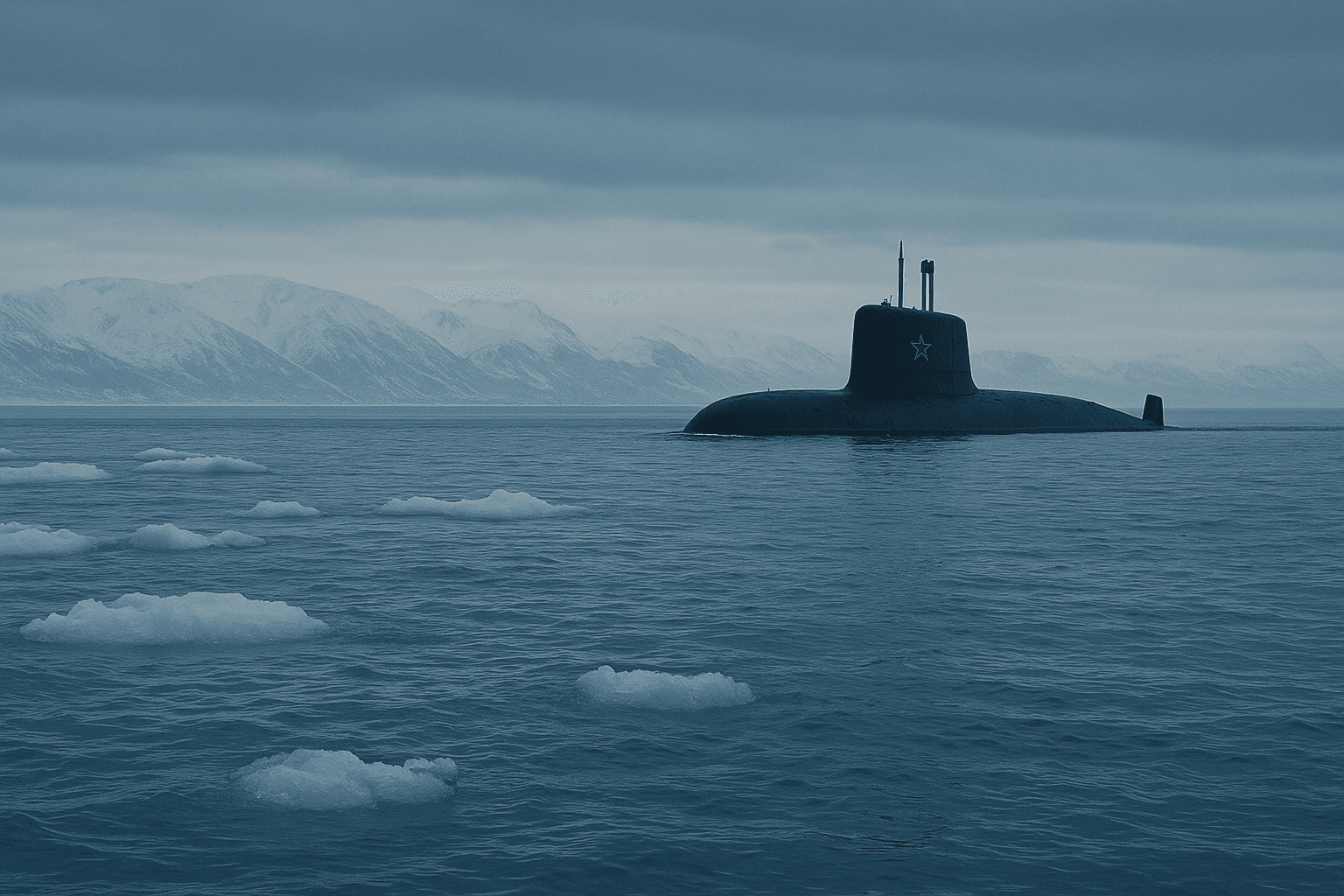
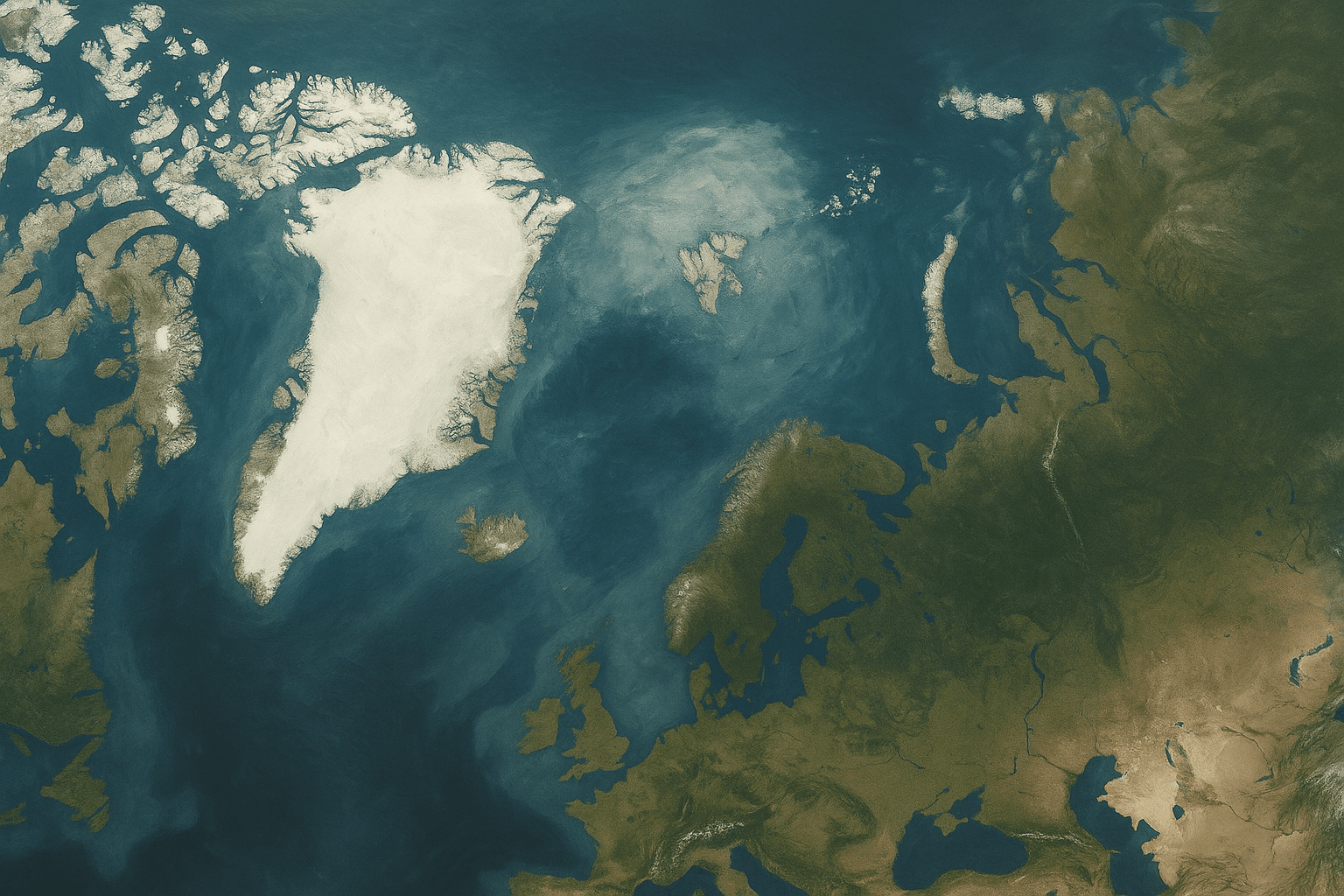
The Arctic was once dismissed as a frozen frontier. For centuries, thick ice and harsh conditions kept the region isolated from global competition. That insulation is disappearing. Climate change has reduced sea ice cover, making the High North more accessible than ever before.
New shipping routes such as the Northern Sea Route along Russia’s Siberian coast and the Northwest Passage across Canada are now navigable for longer periods each year. These corridors shorten the distance between Asia, Europe, and North America. For global trade and military mobility, that advantage is significant.
The Arctic also holds vast reserves of oil, natural gas, rare earth minerals, and fisheries. Control over these resources and the infrastructure that supports them has become a strategic priority. Russia views Arctic dominance as central to its great-power status. China, branding itself a “near-Arctic state,” has utilized research programs, shipping investments, and diplomatic pressure to assert its claim. NATO allies including Norway, Finland, Denmark (via Greenland) and Canada see the region as a defensive flank that cannot be ignored.
Yet this competition is not limited to icebreakers and submarines. Irregular warfare in the Arctic is already visible. Russia employs hybrid tactics such as electronic warfare, cyberattacks, and covert maritime activity. China blends scientific research with intelligence collection. Civilian actors are increasingly caught in the middle: fishing fleets, indigenous communities, and shipping firms.
The High North is no longer an untouched wilderness. It is a contested arena where sabotage, disinformation, and resilience matter as much as conventional military power. Understanding these irregular dynamics is essential to grasping the future of Arctic security.
Updated August 2026
Since this article was published, the Arctic has moved from a contested periphery to a central flashpoint in great-power competition. The developments below are current as of August 2026.
Greenland Crisis (2025 to 2026). The Trump administration sought to annex Greenland, threatening tariffs against Denmark and declining to rule out military force. Denmark launched Operation Arctic Endurance in January 2026, deploying allied troops from across Europe alongside Danish forces in the largest allied military presence in Greenland’s history, and had committed more than 88 billion Danish kroner, roughly 13.7 billion dollars, to defence and Arctic capability by 19 January 2026. Trump stepped back from the threat of force at the Davos World Economic Forum on 21 January 2026, but he remained vague on economic coercion, and Danish and Greenlandic officials publicly stated that the framework announced with NATO Secretary General Mark Rutte went no further than the pre-existing 1951 United States and Denmark defence treaty. Greenland has since moved to ban foreign political funding. The dispute has cooled rather than closed. CFR overview →
NATO Arctic Sentry (February 2026). NATO launched Arctic Sentry on 11 February 2026, a multi-domain enhanced vigilance activity led by Joint Force Command Norfolk, covering nine allies and focused on the Greenland, Iceland and United Kingdom gap. Sweden committed Gripen fighters to patrol Greenland on 12 February and Germany contributed four Eurofighter Typhoons. Denmark’s Operation Arctic Endurance was folded into the Arctic Sentry framework and continues through 2026. Exercise Cold Response 26 (9 to 19 March 2026) followed with 32,500 participants from 14 allied countries conducting land, air and naval operations across Norway and Finland. NATO Arctic security →
Baltic and Arctic Undersea Cable Escalation. The wave of suspected cable sabotage has intensified. In November 2024 the BCS East-West Interlink and C-Lion1 cables were severed and the Chinese vessel Yi Peng 3 was investigated. In December 2024 the Estlink 2 power cable between Finland and Estonia was damaged by the suspected Russian shadow fleet tanker Eagle S. On 31 December 2025 a Helsinki to Tallinn cable was cut and Finnish police seized the vessel Fitburg. NATO’s Baltic Sentry operation launched in January 2025 in direct response. Finland’s intelligence agency Supo offered a more careful assessment in March 2026, noting that cable damage, while increasing, is not automatically state-directed sabotage. TRH: Undersea Sabotage →
US Arctic Military Buildup. The U.S. Army published ATP 3-90.96 in February 2025, its first dedicated Arctic operations doctrine in years. The 11th Airborne Division, the Army’s only Arctic-capable division, has accelerated cold-weather training at Eielson Air Force Base, Alaska. NATO opened the Combined Air Operations Centre in Bodø, Norway in October 2025, and is establishing Forward Land Forces in Finland under Swedish lead.
Arctic Drone Gap. A February 2026 CEPA report and Defense News analysis warned that NATO faces a structural shortfall in Arctic-capable uncrewed systems. Russia is integrating drones for ISR, coastal defence cueing and one-way attack operations in the Arctic faster than the alliance can match. CEPA report →
Russia’s Hybrid Strategy in the High North
The Northern Fleet as a Strategic Anchor
Russia holds the largest and most capable military presence in the Arctic. The Northern Fleet, headquartered on the Kola Peninsula near Murmansk, is the centerpiece. It fields ballistic missile submarines, nuclear-powered icebreakers, and Arctic-trained brigades. For Moscow, the High North is both a shield for its nuclear deterrent and a lever of global influence.
GPS Jamming and Electronic Warfare
Russia’s most effective tools in the Arctic are hybrid operations that blur the line between peace and war. One such tool is GPS jamming. Pilots flying near Kirkenes in Norway or Ivalo in Finland have reported repeated signal losses, which have been traced back to Russian electronic warfare systems across the border. These disruptions test NATO’s resilience and remind local populations that Russia can interfere with civilian life at will.
Research Vessels and Seabed Mapping
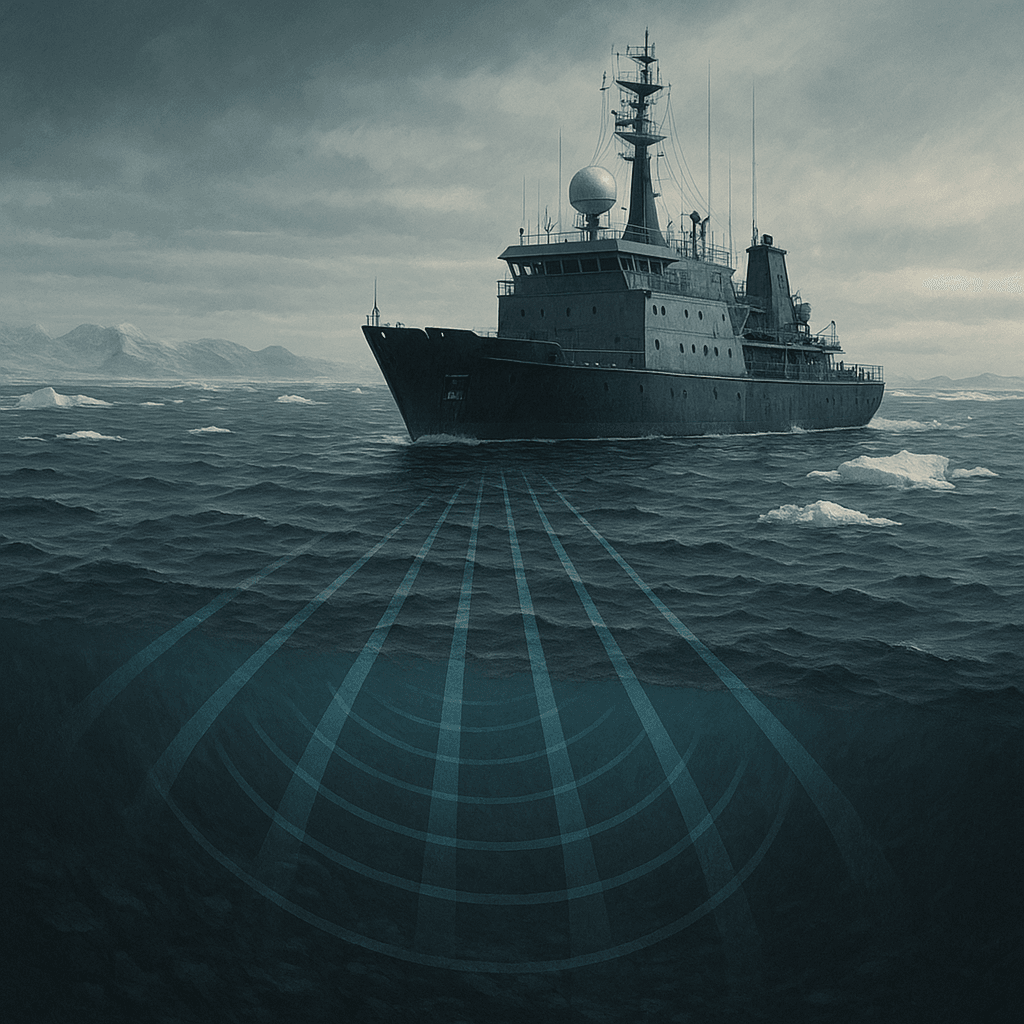
Maritime activity tells a similar story. Russian “research” vessels frequently appear along undersea cable and pipeline routes. Many carry unmanned submersibles and sonar equipment. Their purpose is not purely scientific. The 2022 severing of one of the two Svalbard undersea cables exposed how easily critical infrastructure can be targeted. Norway stopped short of assigning blame, but the incident fit Russia’s pattern of operating in the grey zone, using ambiguity and deniability to impose costs while avoiding open conflict.
Cyber Intrusions Against Critical Infrastructure
Cyber operations add another layer of pressure. Energy companies in Norway and satellite providers in Svalbard have faced intrusions linked to Russian state-backed groups. These attacks are rarely catastrophic. Instead, they probe defenses, gather intelligence, and foster doubt about the reliability of Arctic infrastructure. The pattern mirrors what Russia has deployed against Finnish rail infrastructure near NATO bases and German naval facilities.
Dual-Use Civilian Fleets
Even Russia’s civilian fleets are drawn into this strategy. Fishing trawlers and commercial ships are often tasked with surveillance roles, blurring the lines between commerce and state power. This dual-use model ensures Moscow maintains a constant presence under the cover of normal activity, a hallmark of Russia’s broader sabotage campaign across Europe.
Persistent Hybrid Pressure
Together, these measures represent a campaign of persistent hybrid pressure. By combining electronic warfare, covert mapping, cyber intrusions, and dual-use fleets, Russia maintains the Arctic’s instability. NATO is forced to second-guess every move, while Moscow enjoys freedom of action below the threshold of open conflict.
China’s Expanding Role as a “Near-Arctic State”
Framing the Arctic as a Global Commons
China has no Arctic coastline, but it has declared itself a “near-Arctic state.” Through official white papers and international forums, Beijing frames the Arctic as a global commons. This language positions China as a stakeholder in shipping routes and resources, even though geography says otherwise. The narrative challenges the sovereignty of Arctic nations by suggesting that no single group should control the region’s future.
The Polar Silk Road Strategy
Beijing advances its interests under the banner of the Polar Silk Road, an extension of its Belt and Road Initiative. Chinese companies invest in ports, LNG projects, and shipping along the Northern Sea Route. These moves create economic ties that also serve strategic purposes. Every port facility or shipping venture doubles as a potential logistics node for state activity, a form of subversion through economic influence.
Dual-Use Science and Intelligence
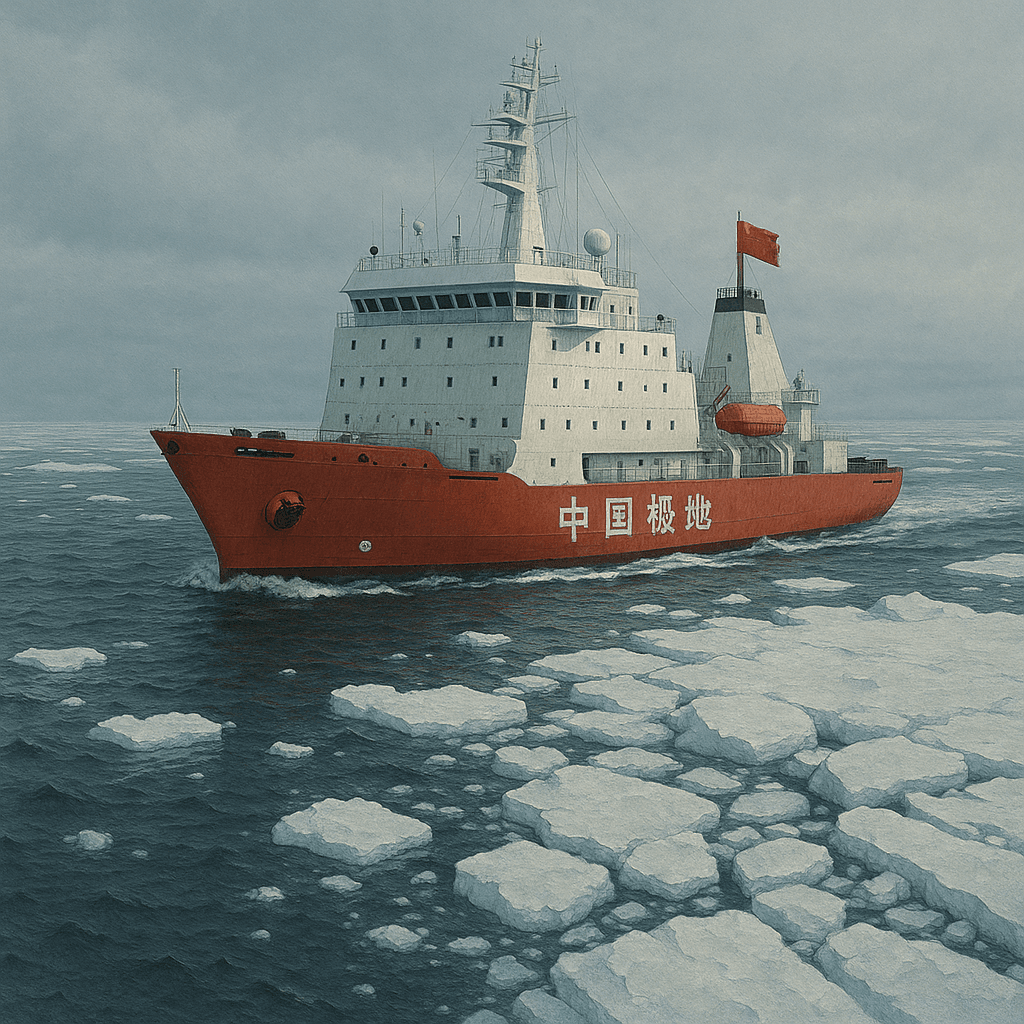
China relies heavily on scientific expeditions and Arctic research stations. Officially, these focus on climate monitoring and environmental studies. In practice, many have dual-use roles. Scientific data on ice conditions, seabed topography, and satellite coverage support both civilian navigation and military planning. Western analysts warn that research stations also provide cover for intelligence collection.
Expanding Maritime Presence
China’s shipping firms increasingly send vessels through Arctic waters during the summer thaw. These voyages are more than commercial tests. They signal intent and normalize Chinese presence in the region. By sailing under the flag of trade, Beijing builds experience and familiarity with Arctic conditions that military planners can later exploit.
Hybrid Pressure Without Bases
Unlike Russia, China lacks military bases in the Arctic. Instead, it leverages economic projects, scientific activity, and information campaigns. This softer approach still carries weight. By shaping global narratives and building commercial influence, Beijing gains footholds that can be converted into strategic leverage.
Strategic Targets: Svalbard, Greenland, and the Polar Express
Svalbard as a Critical Node
The most vulnerable Arctic asset today is the Svalbard Undersea Cable System. Two fiber-optic lines connect the Norwegian archipelago to the mainland. These links support the Longyearbyen satellite ground station, which relays data from polar-orbiting satellites used worldwide. In January 2022, one of the two cables was mysteriously severed. Norway avoided naming a culprit, but the event highlighted how easily Arctic infrastructure can be targeted. With one line down, Svalbard depended on a single connection, a stark reminder of how fragile redundancy can be.
Greenland’s Lifelines
Greenland is also bound to the outside world through fiber optics. The Greenland Connect and Greenland Connect North systems link the island to Iceland and Canada. These cables provide communications for local populations, but they also underpin NATO and U.S. operations at Thule Air Base and other sites. Their location in remote waters makes them difficult to secure. A single disruption could isolate Greenland from both civilian and military partners.
Near-Arctic Precedents
Incidents in the near-Arctic show the pattern already at work. The Balticconnector pipeline between Finland and Estonia was damaged in 2023, alongside unexplained cuts to undersea cables in the Baltic Sea. No actor claimed responsibility, but the events fit the profile of hybrid sabotage: deniable, disruptive, and calibrated to stay below the threshold of open war. These cases provide a template for what could unfold farther north.
Russia’s Polar Express Project
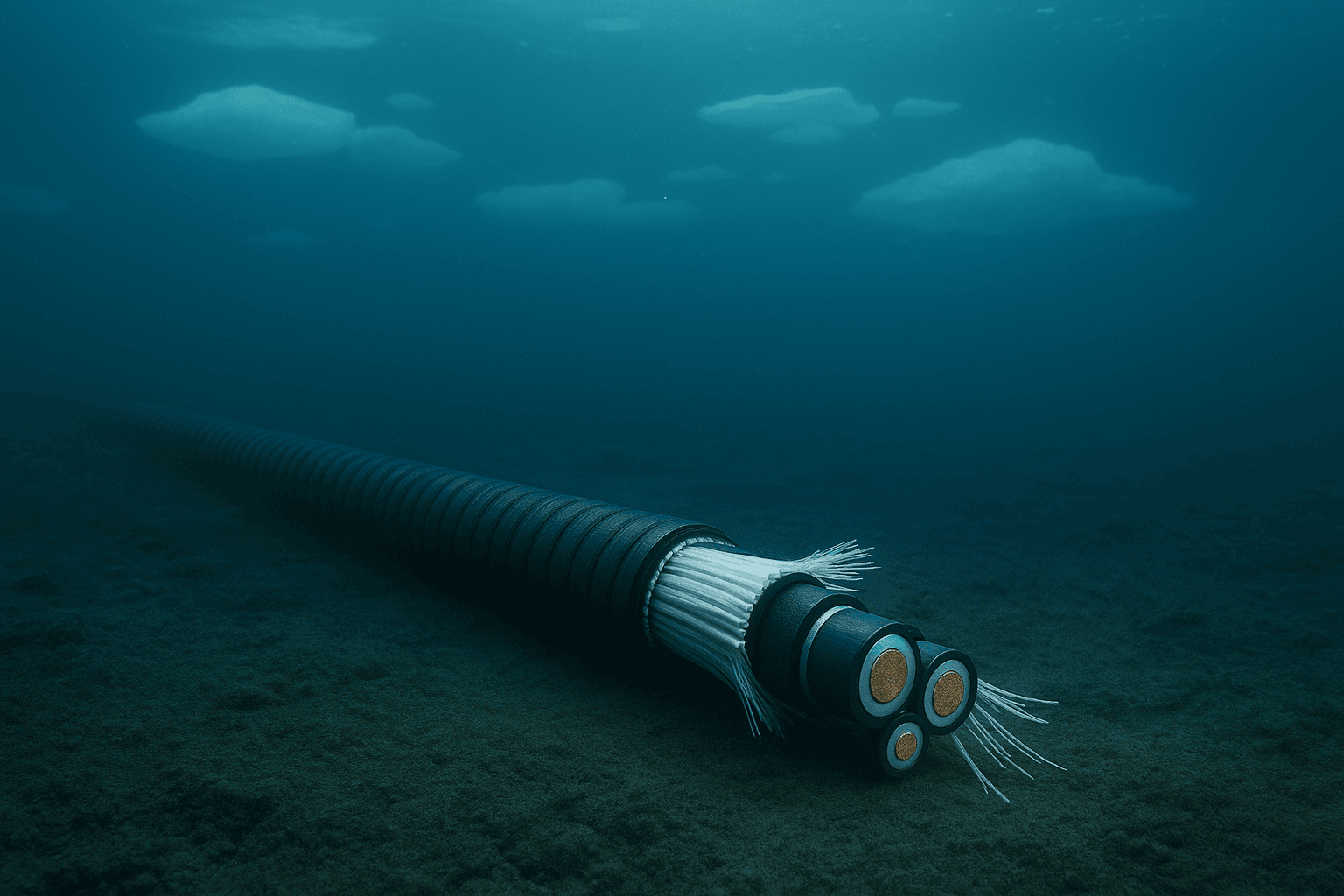
Looking forward, Russia is laying the Polar Express cable, a planned 12,650-kilometer system along the Northern Sea Route from Murmansk to Vladivostok. Moscow promotes the project as a secure domestic backbone. Yet its length and exposure create a paradox. The Polar Express enhances Russian control but also introduces a new target for sabotage. In conflict, adversaries would see this infrastructure as both a symbol and a vulnerability.
Infrastructure at the Edge of Security
The Arctic does not host dense networks of cables or pipelines under the central ice. Instead, its infrastructure is concentrated in chokepoints: Svalbard, Greenland, northern Norway, and the Russian Arctic coast. These sites combine strategic value with inherent fragility. They are where sabotage and hybrid operations are most likely to strike, not in the drifting pack ice but along the fragile edges where technology meets geography.
Arctic Hybrid Competition at a Glance
| Domain | Russia | China | NATO / West |
|---|---|---|---|
| Military Presence | Northern Fleet, Arctic brigades, nuclear icebreakers, new bases | No Arctic bases; 5+ icebreakers; joint exercises with Russia | Arctic Sentry (2026); Cold Response; CAOC Bodø; 11th Airborne; FLF Finland |
| Hybrid Tactics | GPS jamming, cyber intrusions, cable mapping, dual-use fleets, shadow fleet | Dual-use research stations, intelligence collection, narrative shaping | Lawfare (Svalbard Treaty, UNCLOS), information ops, Total Defense models |
| Economic Leverage | Northern Sea Route control; Svalbard mining rights; Polar Express cable | Polar Silk Road; port investment; LNG partnerships; mineral exploration | Sanctions enforcement; infrastructure investment; allied defense cooperation |
| Civil Dimension | Disinformation targeting indigenous communities; weaponized commercial presence | Global commons narrative; scientific diplomacy; commercial normalization | Civilian resilience training; coast guard dual-use; indigenous partnerships |
Sources: NATO Arctic Security · CEPA 2026 · CSIS Russia Arctic
Irish Trawlers and Arctic Civil Resistance
The Irish Fishing Boat Incident
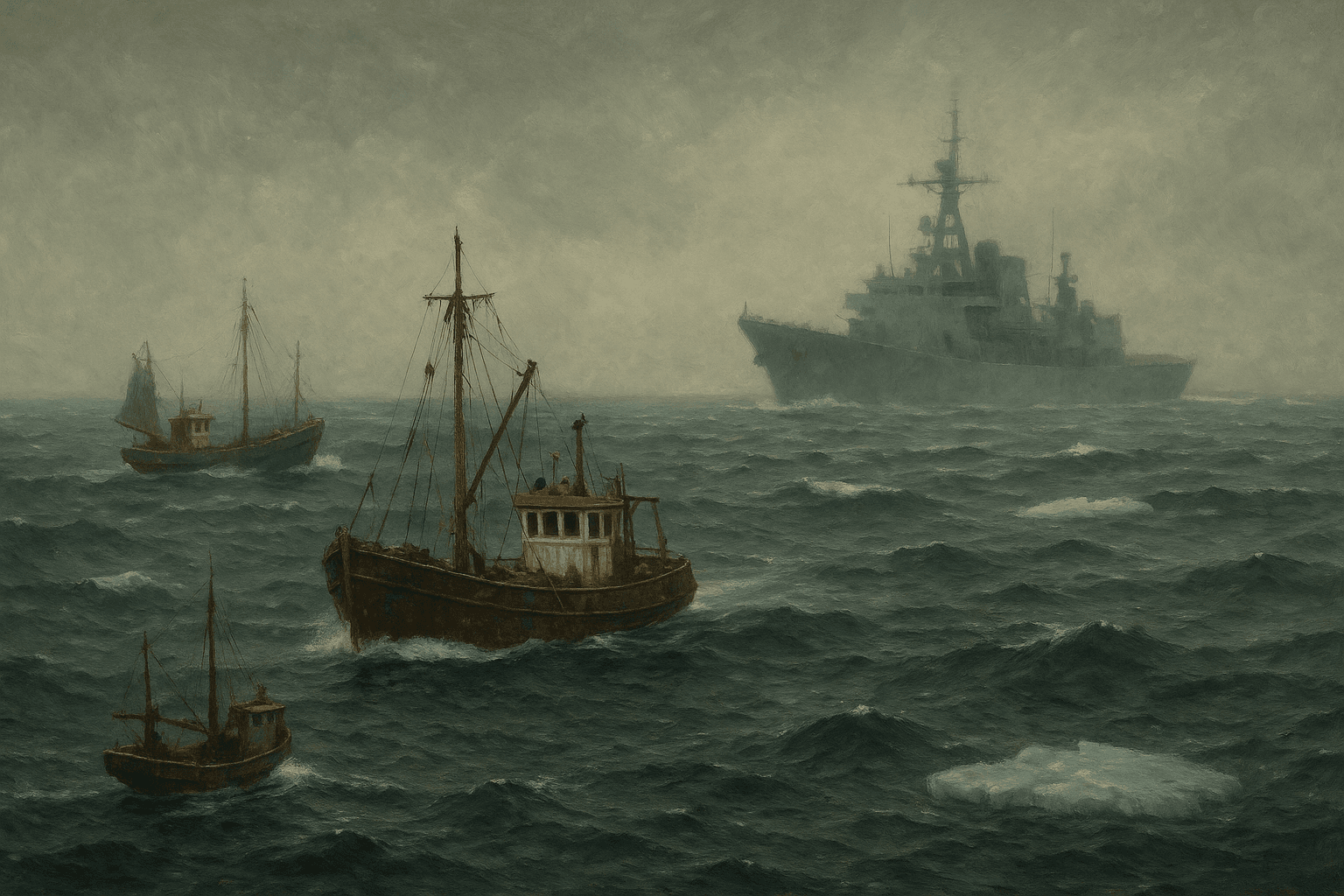
In February 2022, a group of Irish fishermen challenged Russian naval exercises scheduled in Ireland’s Exclusive Economic Zone. The fishermen declared they would continue working in the area, risking confrontation with warships. Their protest was simple but effective. By invoking their legal right to fish and the safety of their livelihoods, they forced Russia to relocate the drills. This was not a military victory, but it was a striking example of civil resistance shaping great-power behavior at sea.
Lessons for the Arctic
The Irish case shows that irregular actors do not need missiles or submarines to influence outcomes. Civil society can exploit legitimacy, visibility, and persistence. In the Arctic, the same dynamic could unfold. Norwegian or Greenlandic fishing fleets could act as eyes and ears along contested routes. Their presence complicates deniable Russian or Chinese maritime activity because any incident with civilian vessels carries political consequences.
Indigenous Communities as Frontline Actors
Arctic indigenous communities, from the Sámi in Scandinavia to Inuit populations in Greenland and Canada, also sit on the front line of irregular competition. Their territories overlap with military installations, shipping corridors, and resource extraction sites. These communities can serve as early-warning networks by reporting suspicious activity, but they are also potential targets of disinformation campaigns designed to erode trust in NATO states. Civil resistance here is both cultural and strategic, a form of resistance mobilization rooted in local knowledge and community cohesion.
Civilian Shipping as Strategic Pressure
Commercial shipping firms also play a role. Container and energy carriers navigating Arctic waters can be both tools and pawns in a hybrid conflict. Their decisions to sail or not sail affect the credibility of shipping routes such as the Northern Sea Route. Just as Irish trawlers used fishing rights as leverage, shipping firms in the Arctic could unintentionally become part of irregular pressure by refusing risky passages or exposing hostile interference.
Civil Resistance in Hybrid Warfare
Civilian actors bring unpredictability into the Arctic balance. They lack warships and aircraft, but they possess moral authority, legal leverage, and visibility. As the Irish fishing boats proved, even small groups can alter the decisions of great powers. In the High North, these irregular elements could become essential to how resistance and resilience are expressed in the maritime domain, through Total Defense concepts that integrate civilian populations into national security.
NATO and the Hybrid Defense of the Arctic
Lawfare as a Strategic Tool
Western states cannot match Russia’s sheer volume of Arctic military assets, but they leverage lawfare, the strategic use of legal frameworks. The Svalbard Treaty of 1920 allows Norway to administer the islands while granting economic access to other signatories. This arrangement has been used to limit Russian activity and assert NATO oversight. Similarly, the United Nations Convention on the Law of the Sea (UNCLOS) provides a basis for contesting excessive Russian claims on continental shelves. Legal instruments give NATO allies tools to constrain adversaries without firing a shot, a dimension of international law in irregular warfare.
Information Operations and Narrative Control
The information domain is just as important. NATO members consistently frame Russia’s militarization of the Arctic as destabilizing and risky. They also push back against China’s narrative of the Arctic as a global commons. By shaping how the region is perceived, Western governments aim to build consensus among allies and partners. These information operations are not propaganda in the Cold War sense, but strategic messaging that undercuts adversary legitimacy.
Dual-Use Presence and Civil-Military Integration
Western states also rely on dual-use assets. Coast guard patrols, research ships, and scientific stations perform civilian functions but also contribute to maritime domain awareness. For example, Norwegian research expeditions in the Barents Sea double as surveillance platforms. This blending of roles strengthens resilience while maintaining a visible presence in contested waters.
Total Defense Concepts in the Nordic States
The most significant Western innovation is the adoption of Total Defense models. Norway and Finland integrate civilian preparedness into national security planning. This includes training populations to respond to disinformation, stockpiling essential supplies, and ensuring rapid mobilization of reserves. Lithuania, though outside the Arctic, offers another example with its public resilience handbook, which has influenced Nordic practice. These models ensure that if hybrid operations target critical infrastructure or local communities, societies are not caught off guard.
Hybrid Defense as Deterrence
NATO’s approach in the Arctic combines law, information, dual-use presence, and civilian resilience. This hybrid defense posture does not mirror Russia’s aggressive tactics, but it achieves a different effect. It complicates adversary calculations by showing that the High North is defended not only by submarines and fighter jets, but also by legal authority, social cohesion, and civil participation.
What Arctic Hybrid Conflict Could Look Like
Svalbard as a Flashpoint
The Svalbard archipelago remains one of the most likely flashpoints. Norway administers the islands under the 1920 treaty, but Russia maintains economic rights through coal mining and other ventures. In a crisis, Moscow could stage deniable “civilian” disruptions such as blocking port access or contesting mining sites, while backing them with electronic warfare. Norway would face the challenge of responding firmly without escalating to open conflict.
Greenland and the Battle for Connectivity
Greenland’s importance lies not only in its resources but in its role as a connectivity hub. The Greenland Connect fiber-optic systems link the island to Iceland and Canada, anchoring both civilian and military communications. In a grey-zone confrontation, a cable cut or sabotage event could sever NATO’s link to U.S. and Danish installations. Attribution would be murky, but the disruption would immediately affect alliance cohesion and confidence.
Shipping Routes Under Pressure
The Northern Sea Route along Russia’s coast and the Northwest Passage across Canada are commercial prizes. In a crisis, hybrid actors could target shipping with GPS spoofing, cyber intrusions on navigation systems, or staged “accidents” involving trawlers or tankers. Even without physical destruction, the perception of risk could deter insurers and shippers, undermining economic viability.
Indigenous and Civilian Populations at Risk
Hybrid tactics would not stop at infrastructure. Indigenous communities in Norway, Finland, Canada, and Greenland could face targeted disinformation campaigns. Messaging might claim that NATO military activity threatens traditional livelihoods or that foreign powers seek to exploit natural resources. Such efforts would aim to weaken trust between local populations and national governments, a textbook application of subversion.
A Contest of Ambiguity
The defining feature of grey-zone Arctic conflict would be ambiguity. Russia or China could use dual-use assets such as research ships, fishing trawlers, or survey expeditions to mask aggressive actions. NATO would struggle to prove intent without escalation. The contest would be less about winning battles and more about shaping perceptions, controlling narratives, and eroding resilience.
OSS: Combined & Remastered collects the original Office of Strategic Services field manuals on sabotage, chokepoint attack and deniable operations, the direct doctrinal ancestor of the cable cutting and grey-zone pressure now running through the High North.
View on Amazon →The Arctic as a Laboratory for Irregular Warfare
From Frozen Frontier to Contested Arena
The Arctic is no longer a frozen buffer that isolates states from each other. Melting ice has opened routes, unlocked resources, and turned the High North into a contested arena. The region now draws in not only Russia and NATO, but also China, which frames itself as a “near-Arctic state.”
Hybrid Tactics Already at Work
Hybrid operations are not theoretical. They are already happening. GPS jamming in northern Norway and Finland, cyber intrusions against Arctic energy and satellite systems, and the unexplained cutting of undersea cables all point to a shift. The Arctic is being shaped through ambiguity, deniability, and irregular pressure long before open conflict occurs.
Civil Resistance as a Force Multiplier
Civil society actors, from Irish fishermen challenging Russian naval drills to Arctic indigenous communities monitoring local activity, demonstrate how resistance can influence great-power decisions. These irregular contributions complicate state strategies and provide early warning against hybrid activity. They also highlight the importance of resilience at the community level.
Western Responses Through Hybrid Defense
NATO and its Arctic allies have adapted by combining lawfare, information operations, dual-use assets, and Total Defense models. These measures expand deterrence beyond military might. They make clear that the Arctic is defended not just by submarines and aircraft, but by legal authority, social cohesion, and civilian preparedness.
A Test Case for the Future of Warfare
The High North serves as a laboratory for irregular conflict. The region’s geography magnifies vulnerabilities: every undersea cable, port facility, and satellite station is a chokepoint. Its sparse population means small-scale disruptions can have outsized effects. And its political environment, where sovereignty claims meet global commons rhetoric, creates fertile ground for grey-zone competition.
Final Assessment
Irregular warfare in the Arctic is not an abstract forecast. It is already shaping the balance of power. From Murmansk to Svalbard, from Greenland to the Northern Sea Route, the tools of sabotage, disinformation, and hybrid pressure are active today. For Arctic nations and NATO, success will depend on recognizing that resilience is as vital as deterrence. The future of the Arctic will be decided not only by fleets and icebreakers, but also by the strength of societies to withstand irregular threats.
// Further Reading
Small Wars Journal / Irregular Warfare Initiative: From Paper to Permafrost: Applying Irregular Warfare Doctrine to Arctic Homeland Defense (December 2025). Argues that the U.S. lacks the willingness to apply IW doctrine in the Arctic despite having the doctrinal framework. Read →
CEPA: High Stakes in the High North: Harnessing Uncrewed Capabilities for Arctic Defense and Security (February 2026). Detailed analysis of NATO’s drone gap and recommendations for Arctic-capable uncrewed systems. Read →
Bulletin of the Atomic Scientists: Seabed Zero: Baltic Sabotage and the Global Risks to Undersea Infrastructure (February 2026). Connects Baltic cable incidents to broader patterns of hybrid warfare targeting undersea infrastructure globally. Read →
U.S. Naval Institute Proceedings: War in the Arctic? (January 2026). Makes the case that NATO can no longer treat the Arctic as a low-tension zone given Russia’s military buildup. Read →
Tools: TeleGeography Submarine Cable Map · MarineTraffic AIS
