
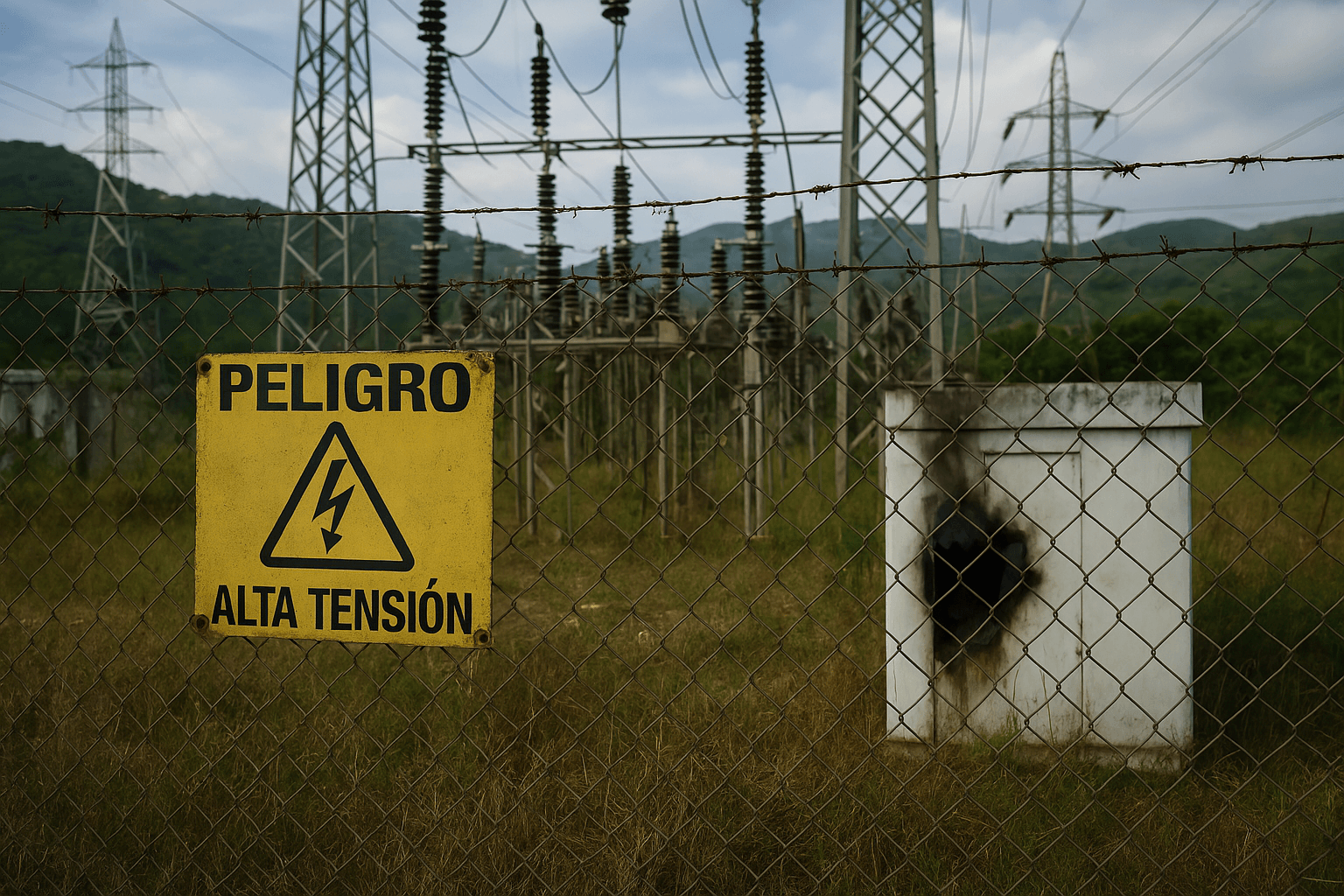
In early April 2025, Venezuelan authorities announced the arrest of three individuals accused of carrying out a “terrorist sabotage” operation against the nation’s electrical grid. The arrests mark the latest in a troubling pattern of attacks on Venezuela’s critical infrastructure. They have reignited a long-running debate about the links between internal dissent, foreign influence, and national vulnerability.
The Maduro government claims these acts are politically motivated attempts to destabilize the state. Officials argue that the timing, so close to national elections, suggests a deliberate campaign of disruption. However, the true nature and intent behind the sabotage remain unclear.
Some analysts view the attacks as part of a broader strategy of asymmetric resistance, executed by opposition groups or foreign proxies seeking to erode public confidence. Others argue they may serve as a convenient pretext for the regime to tighten its grip on power, using the specter of external threats to justify repression.
As tensions rise and the power grid remains exposed, the line between genuine threat and political narrative continues to blur. What’s clear is this: Venezuela’s infrastructure is not just failing. It is becoming weaponized.
Since this article was published in April 2025, Venezuela’s grid has moved from a backdrop of political tension to a frontline of international conflict.
U.S. capture of Maduro (January 3, 2026): U.S. special operations forces seized Venezuelan President Nicolás Maduro in a nighttime raid on Caracas. The operation was accompanied by targeted blackouts in the capital that cybersecurity analysts assessed as a cyber-enabled disruption of the grid, precisely the convergence of digital and kinetic sabotage this article anticipated. President Trump stated that the lights were turned off due to “a certain expertise we have.” Multiple analysts described it as the first confirmed military use of offensive cyber operations against a Latin American power grid. → Axios → Fortune
Background before publication: In August 2024, a 12-hour nationwide blackout affected nearly every state, the worst since 2019. The Maduro government again blamed opposition sabotage; independent engineers attributed it to failures at the Simón Bolívar hydroelectric plant. By March 2025, the government imposed electricity rationing across the public sector, with western states enduring daily blackouts of up to eight hours. → Venezuelanalysis
Post-Maduro Venezuela (2026): Vice President Delcy Rodríguez was named acting president by the Supreme Court immediately after the January 3 raid and has since consolidated control, replacing the Defence Minister, releasing more than 300 political prisoners and opening the oil and mining sectors to foreign operators. Washington reopened its embassy in Caracas on March 30, 2026, lifted sanctions on Rodríguez on April 1, 2026, and direct commercial flights between the two countries resumed for the first time in seven years. The grid did not recover with the politics. Consumption passed 15,500 MW in May 2026, a nine-year high, while rolling blackouts continued outside Caracas and Zulia state lost six hours of power a day or more. Electricity Minister Rolando Alcalá reiterated the ban on energy-intensive crypto mining and said the ministry is working to stabilise the system. → U.S. Department of State → EnergyConnects
Venezuela’s grid is no longer a metaphor for state fragility. It is an active theater of hybrid conflict. The timeline below maps the escalation.
Historical Context: Venezuela’s Vulnerable Grid
Venezuela’s energy infrastructure has long been a source of crisis and contention. The nation depends heavily on the Guri Dam, one of the world’s largest hydroelectric power plants, for its electricity. Yet systemic underinvestment, corruption, and chronic neglect have rendered the national grid both fragile and dangerously centralized. These vulnerabilities make it an ideal target for infrastructure sabotage.
From 2019 to 2021, Venezuela endured several nationwide blackouts. The government routinely blamed the United States and domestic opposition groups, framing the outages as acts of foreign aggression. Independent analysts, however, often pointed to technical failures, grid mismanagement, and decaying infrastructure. Still, documented incidents such as firebombed substations, damaged transformers and explosive devices planted near key nodes suggest that intentional disruption may have played a role.
By 2025 the pattern was repeating, and with greater sophistication. The 2025 attacks showed signs of planning, precision, and possibly insider access. Whether state-sponsored or grassroots, these operations exploit long-standing weaknesses that remain unaddressed.
Venezuela’s grid is more than a technical system. It is a symbol of state authority and societal stability. And in an era of asymmetric conflict, that makes it a battlefield.
The April Arrests: What We Know
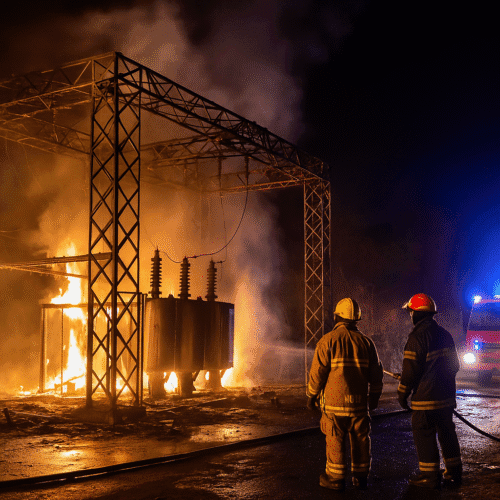
On April 11, 2025, Venezuela’s Ministry of the Interior announced the detention of three suspects linked to coordinated sabotage attacks. Authorities allege the individuals attempted to disrupt service at multiple points in the national power grid using explosives and “foreign-supplied technology.” Photos released by the ministry showed seized electronic devices and surveillance equipment. However, no independent verification has been provided.
Interior Minister Remigio Ceballos described the suspects as “terrorist operatives” and claimed they were connected to anti-government networks supported by foreign powers. “This is not just vandalism,” Ceballos said. “It’s a carefully orchestrated plan to plunge the country into chaos.”
Despite the gravity of the allegations, authorities have not released the suspects’ names or specific technical details about the attack. The lack of transparency has fueled both skepticism and unease among the public.
The incident marks a notable escalation in what officials call hybrid threats, combining kinetic action with electronic tools. Whether this was a genuine plot or a political narrative remains unclear. But the implications are serious: Venezuela’s already fragile grid now stands as a symbol of both national vulnerability and political tension.
Government Narrative vs. Ground Truth
The Maduro government has long framed infrastructure attacks as part of a broader “economic war” waged by imperialist powers and their local proxies. Officials claim these acts are designed to undermine public confidence in state institutions and destabilize key political moments, such as elections or economic reforms.
Yet critics argue that the government uses sabotage claims to deflect from chronic structural failures in the energy sector. As one Caracas-based academic put it: “Whenever the lights go out, it’s sabotage. But when it’s poor planning, theft, or a lack of spare parts, it’s silence.”
This skepticism is rooted in years of underinvestment, mismanagement, and corruption. Venezuela’s power grid, once a symbol of national development, is now riddled with outdated components, untrained personnel, and supply shortages. International sanctions have further compounded the problem, blocking equipment servicing and spare part imports.
Still, the rise in kinetic tactics such as explosive devices and signs of insider access suggests that not all incidents are manufactured excuses. Some attacks appear deliberate, precise, and plausibly deniable. In this context, Venezuela’s electrical infrastructure represents a soft target: vast in scope, thinly defended, and often located in remote areas.
It wouldn’t take a state-sponsored actor to exploit these vulnerabilities. In the age of asymmetric conflict, even small groups with limited resources can strike critical nodes and reshape national narratives. The manipulation of information surrounding these events is itself a form of warfare, as both government and opposition compete to control the story.
A Tactic of Irregular Warfare
If these incidents are indeed acts of sabotage rather than mere scapegoating, they reflect an evolving pattern of irregular warfare in Latin America. Unlike traditional insurgency, sabotage requires minimal personnel and can be carried out quickly, often without direct confrontation or sustained exposure. This makes it an ideal tool for non-state actors, foreign proxies, or even covert elements within the state itself.
Sabotage offers a flexible, deniable method to achieve multiple strategic objectives. Widespread blackouts erode public trust and discredit government competence, particularly during sensitive periods like elections or economic crises. Interruptions in power supply cripple industrial output, disrupt supply chains, and worsen inflation, further destabilizing an already fragile economy. Power outages also sever internet access, impair mobile communications, and delay news reporting, complicating coordination among civil society, impeding emergency response, and allowing misinformation to fill the void.
Because these operations remain below the threshold of conventional conflict, they provide maximum effect with minimal risk. By staying low-profile and deniable, actors can shape public perception, weaken state control, and avoid direct retaliation. The logic mirrors that of subversion: achieving political objectives through indirect means while maintaining plausible deniability.
As irregular warfare continues to evolve in the region, infrastructure sabotage is emerging as a go-to tactic that is precise, asymmetric and powerfully disruptive.
OSS: Combined & Remastered reprints the wartime manuals that first set out how a handful of people with hand tools can take a national utility offline, which is the doctrinal ancestor of every substation attack described in this article.
View on Amazon →Venezuela in a Regional Pattern
The incidents in Venezuela are far from isolated. Across Latin America, critical infrastructure is increasingly under attack in what appear to be deliberate acts of sabotage. From pipeline disruptions to telecom sabotage, adversaries are testing new ways to influence political and economic outcomes without crossing into open warfare.
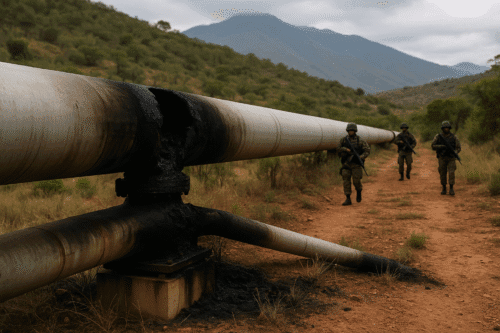
In March 2025, Bolivia reported attacks on oil routes near the Peruvian border, likely by armed groups challenging state control. One month earlier, Ecuador’s state-run electric utility confirmed arson attacks on key substations around Quito, triggering blackouts and public panic. These cases resemble Venezuela’s sabotage episodes, not just in method but also in state response: fast accusations, selective arrests, and limited transparency.
What’s emerging is a pattern of infrastructure sabotage in Latin America, one that blends political messaging, asymmetric tactics, and plausible deniability. It’s a form of irregular warfare playing out in the shadows of democratic instability.
Whether these are copycat operations, decentralized insurgent tactics, or part of a coordinated regional trend remains unclear. But the frequency and similarity of these incidents suggest something deeper is taking root: a shift in how power is contested across the region.
In a hemisphere already grappling with unrest, inequality, and contested governance, infrastructure has become a low-risk, high-impact battlespace, and it grew more volatile through 2025 and into 2026.
International Dimensions: The Geopolitics of Blackouts
While no definitive evidence links foreign actors to Venezuela’s most recent sabotage incidents, the political narrative from Caracas consistently blames external enemies. U.S. sanctions, Colombian paramilitaries, and European intelligence services have all been named in official statements as likely culprits.
Though these claims often serve as domestic propaganda, the strategic logic holds weight. Disrupting Venezuela’s power grid undermines the state’s ability to govern effectively, weakens its oil-driven economy, and creates fertile ground for unrest, especially around the contested 2024 presidential election. Foreign actors may see opportunity in such instability, either to delegitimize the electoral process or to catalyze regime change by proxy.
Cyber capabilities further complicate the picture. Venezuela has previously suffered cyber intrusions, and its critical infrastructure remains a soft target. A 2022 report by cybersecurity firm Dragos warned that Latin America’s energy systems were among the least defended in the Western Hemisphere. As utilities become more digitized, the attack surface expands, a vulnerability that intelligence services and non-state actors alike can exploit.
The convergence of digital and physical sabotage is no longer hypothetical. It is operational. Power stations can now be targeted from thousands of miles away, turning keystrokes into kinetic consequences. Whether through malware, insider manipulation, or targeted strikes, the line between foreign interference and domestic failure grows increasingly blurred.
In Venezuela, this uncertainty serves as both a tactical weapon and a strategic smokescreen. The grid is not just vulnerable. It is contested terrain.
// Venezuela Grid: Escalation Timeline
Civilian Impact and Public Sentiment
Beyond the politics, ordinary Venezuelans bear the brunt of these disruptions. Blackouts cripple hospitals, disrupt food supply chains, and cut off water access, since many communities rely on electric pumps to fill tanks or distribute water. During past grid collapses, medical facilities ran on failing backup generators, and cold storage systems failed within hours, spoiling vital food and medicine.
The psychological toll is equally damaging. Chronic uncertainty fosters fatigue, mistrust, and social fragmentation. Some citizens blame opposition groups for inciting chaos; others view the outages as a symptom of government neglect or mismanagement. In the absence of transparent information, fear spreads quickly, fueled by social media, whispered rumors and state propaganda. Over time, this breeds a culture of silence, speculation, and survivalism, where truth becomes as unstable as the grid itself.
The Road Ahead: Power, Protest, and Political Tension
The post-Maduro transition has answered some of the questions this section originally posed and left the hardest one open. Corpoelec now sits under an Electricity Ministry led by Rolando Alcalá, reporting to acting president Delcy Rodríguez, who has moved to open the oil and mining sectors to foreign operators. International capital has started to return: the United States reopened its Caracas embassy on March 30, 2026, lifted sanctions on Rodríguez on April 1, and direct commercial flights resumed after a seven-year gap. What has not changed is the grid. Consumption hit a nine-year high above 15,500 MW in May 2026 while Zulia and other western states still lose six hours of power a day or more. The same centralized, under-maintained system that made sabotage attractive under Maduro is still there for whoever wants to use it next.
More broadly, Venezuela illustrates how sabotage can serve as both an act of desperation and a calculated instrument of strategy. Whether motivated by ideology, foreign policy objectives, or basic survival, these attacks reveal the inherent fragility of centralized systems. They also highlight the increasing relevance of irregular warfare tactics in domestic and geopolitical struggles alike.
In this environment, infrastructure becomes more than a backdrop. It becomes the battleground. As cyber and kinetic threats converge, power stations, substations, and transmission corridors are transformed into high-stakes flashpoints. Monitoring these zones, and understanding the motives behind their targeting, is essential for anticipating the next phase of asymmetric conflict.
Final Thoughts
Sabotage is often seen as the weapon of the weak. In today’s fractured, multipolar world, it enables strategic disruption at every level, from grassroots resistance to state-sponsored cyber operations. Venezuela’s recurring blackout battles serve as a warning: the new frontlines of conflict are infrastructural, deniable, and dangerously close to home.
Power grids, water systems, and communication networks are no longer just public services. They are battlefield targets. In a landscape where attribution is difficult and retaliation carries risk, infrastructure strikes offer high-impact disruption without triggering direct conflict. These tactics thrive in the gray zone, shaping events while staying beneath the threshold of war.
As these attacks increase, we must ask not just who benefits but why they succeed and what they reveal about the systems we depend on.
// Further Reading
Axios published a detailed analysis of the cyber-enabled blackout during the Maduro raid, examining how U.S. military hackers may have exploited Venezuela’s fragile grid infrastructure. Fortune’s assessment of the operation describes it as a new chapter in the convergence of physical and cyber warfare. For the broader context of infrastructure targeting as an irregular warfare tactic, see TRH’s analysis of undersea sabotage in the Baltic and the sabotage campaign inside Russia.
More on The Resistance Hub
