Under Operation Southern Spear, US Southern Command led a Caribbean buildup and strikes against Venezuela that culminated in the capture of Nicolas Maduro in early 2026, per the Council on Foreign Relations. The analysis below predates that campaign.
The U.S. posture toward Cuba has shifted decisively in 2026. Executive Order 14404 of May 1 layered additional sanctions on entities tied to repression, building on Executive Order 14380 of January 29 that declared a national emergency and authorized tariffs against any state supplying oil to the island. The Department of State designated the military conglomerate GAESA and twelve regime officials on May 7. President Trump labeled Cuba a “failed nation” on May 12 and stated he would address the island “at the right time.” Cabinet officials have continued to describe Cuba as “next” in the sequence following Operation Absolute Resolve, the January 2026 special operations action in Caracas that captured Nicolás Maduro. Administration sources told AP in early May 2026 that no imminent kinetic operation was planned at that point, while the diplomatic, economic, and rhetorical pressure campaign continued to escalate. That posture has since shifted, as the update note below sets out.
Whether the trajectory ends in negotiated transition, regime fracture, or some form of direct action, the underlying conditions on the island will shape every outcome. The purpose of this assessment is to examine those conditions. It mirrors the framework applied in the Venezuela Contingency Operation assessment, focusing on the physical and human terrain that determines irregular warfare potential in Cuba today. It does not forecast outcomes. It identifies what any external actor, internal faction, or transitional authority would have to contend with.
The U.S. posture described above has moved. On July 15, 2026, CBS News reported that senior defense officials had been briefed on options for military action against Cuba, including an Army-led air assault built around the 101st Airborne Division. Officials stressed that neither the President nor the Pentagon has decided to carry out an operation, and Secretary of State Marco Rubio continues to press for a negotiated transition to a technocratic government. The May 2026 framing of “no imminent kinetic operation” should be read as a snapshot of that month, not as the current position.
Three further developments since publication bear on the analysis below. Raúl Castro was charged in a superseding federal indictment unsealed on May 20, 2026 over the 1996 Brothers to the Rescue shootdown, which raises the personal stakes of any negotiated exit for the regime’s founding generation. Visa and Mastercard suspended card processing on the island and Meliá Hotels completed its withdrawal during June and July 2026, closing the hard currency tourism channel that the Economic Substrate section below does not account for. Miguel Díaz-Canel remains president and has hardened his rhetoric, describing U.S. policy as a deliberate campaign to force the island’s collapse. The structural findings in this assessment are unchanged; the situational layer has moved.
Why Structural Conditions Drive Irregular Warfare Risk
Historical case studies demonstrate that forcible entry by foreign forces is often the simplest phase of armed conflict. The hard problem is what follows. The ARIS corpus documents repeatedly that resistance movements grow from preexisting networks, not from external pressure alone. Populations absorb political disruption, then reorganize around actors who provide identity, protection, or material support. The structural environment in which that reorganization happens is what determines whether a transition stabilizes or fragments.
This assessment maps that environment for Cuba. It examines the physical terrain that shapes movement, concealment, and interdiction. It examines the human terrain that determines who would mobilize, in what numbers, and around which authority. It examines the defense doctrine the regime has institutionalized over four decades and the economic substrate now eroding it. It examines the foreign influence networks that complicate any transition. It identifies what the underlying conditions enable and what they constrain.
Strategic Geography
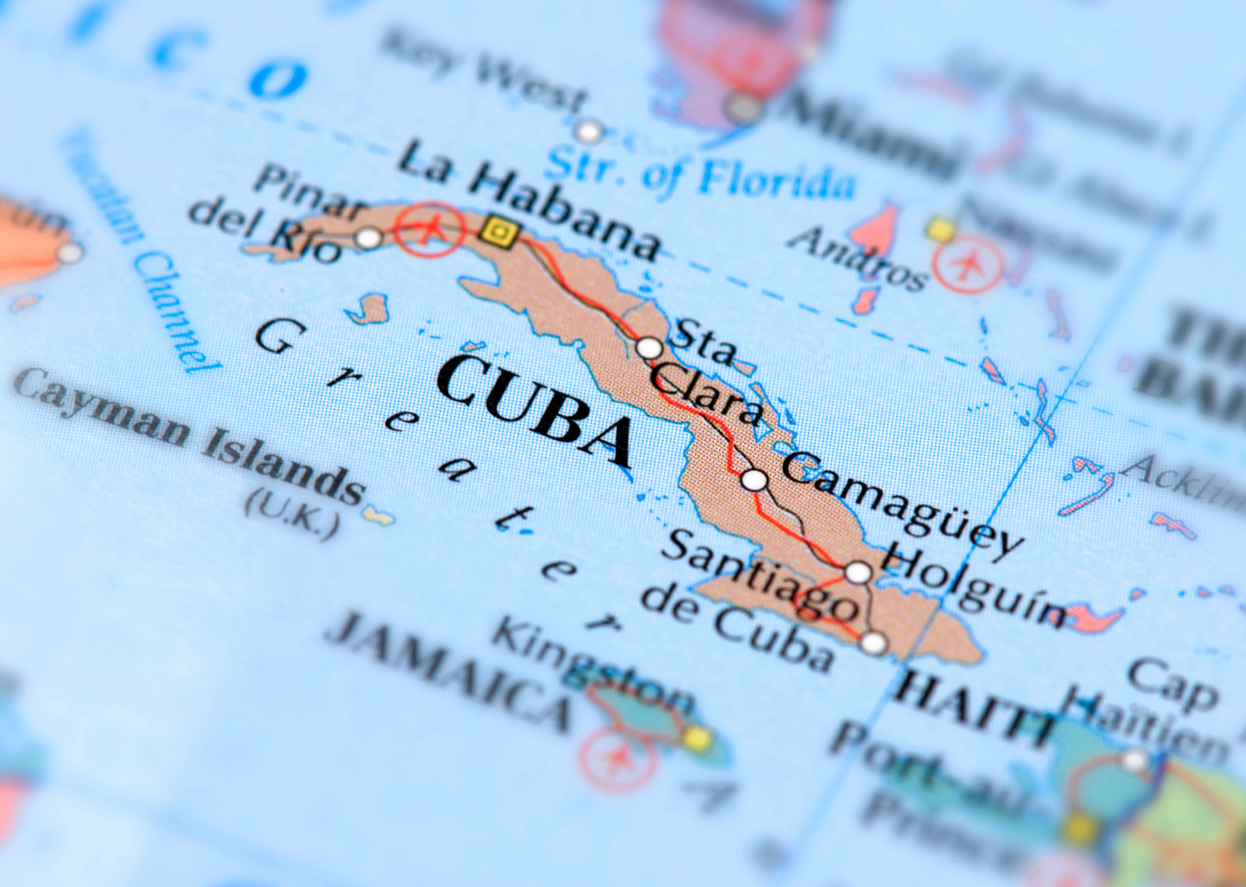
Cuba is the largest island in the Caribbean at 109,884 square kilometers, roughly the size of Pennsylvania. Its long, narrow shape stretches approximately 1,250 kilometers from Cabo San Antonio in the west to Punta de Maisí in the east, and at its widest measures only about 200 kilometers north to south. This geometry concentrates everything that matters. Ports, airfields, refineries, power generation, command nodes, and population centers all sit within a few hours of a coastline.
The island sits 145 kilometers south of Key West. It commands two of the most consequential maritime chokepoints in the western hemisphere: the Florida Straits to the north and the Yucatán Channel to the west. The Windward Passage between eastern Cuba and Haiti routes much of the traffic moving between the Atlantic and the Caribbean basin. The Cuban case sits among other maritime chokepoint battlespaces, with the added factor that U.S. Naval Station Guantánamo Bay occupies 117 square kilometers of the southeastern coast under the 1903 lease, a permanent U.S. military foothold inside Cuban territory.
Roughly three-quarters of the island is flat to rolling lowland. The Cuban interior is sugarcane plain, savanna, and karst pasture, much of it lightly forested and traversed by a relatively modest road and rail network. This terrain favors mechanized movement and aerial reconnaissance. It does not favor concealed massing of armed forces, sustained irregular movement, or the construction of difficult-to-detect base areas.
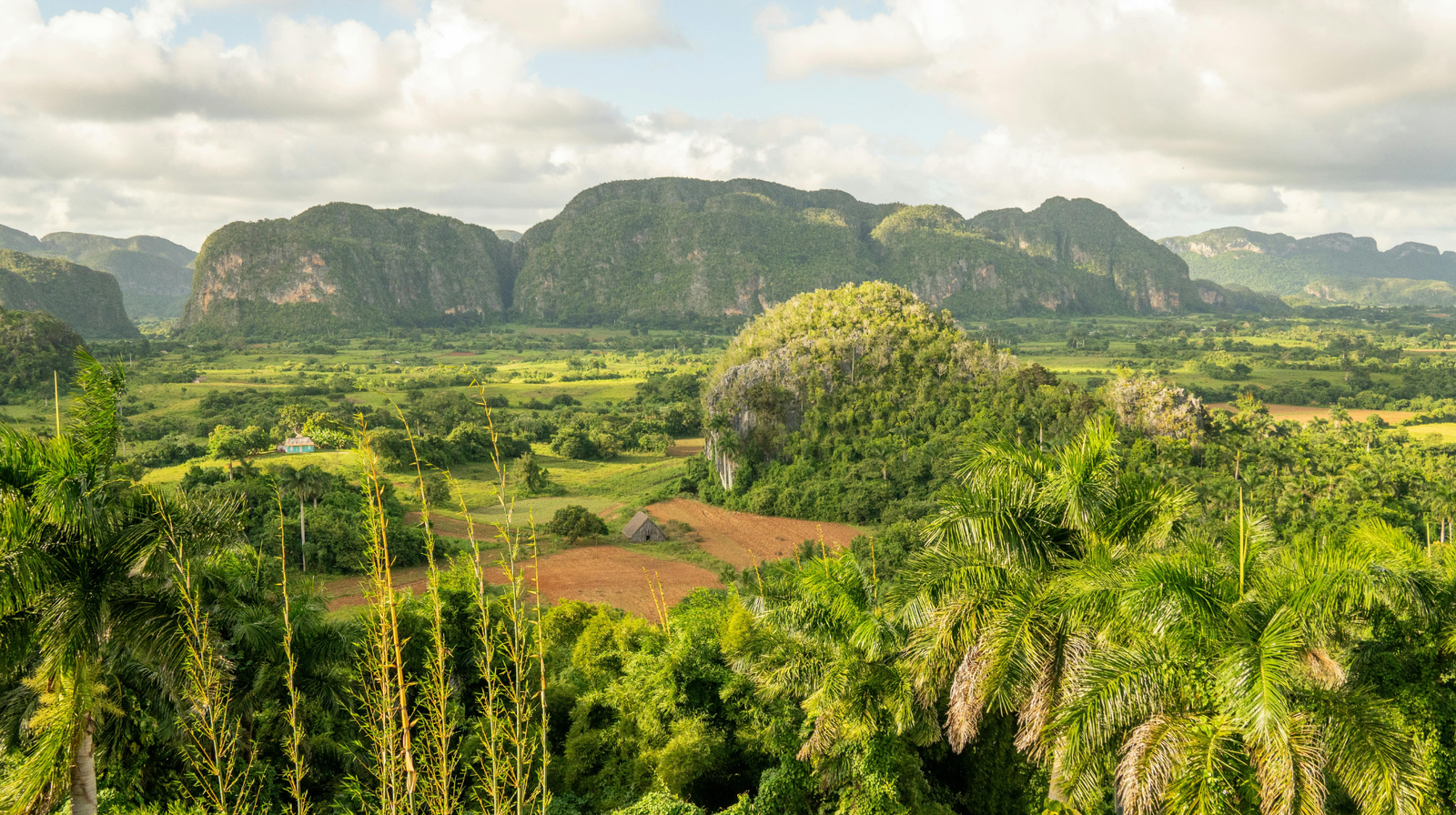
The remaining quarter of the island is mountainous and clustered in three ranges. The Sierra Maestra stretches roughly 240 kilometers along the southeastern coast, rising abruptly from the sea to Pico Turquino at 1,974 meters. Gradients on its steeper slopes exceed 45 degrees. Trails are limited, and the geology is broken by fault lines, narrow ridges, and isolated plateaus. The Escambray Mountains in the center of the island offer a smaller but more accessible refuge, with elevations under 1,200 meters and a denser population in the surrounding valleys. The Cordillera de Guaniguanico in the far northwest, including the Sierra de los Órganos and Sierra del Rosario, is lower still but heavily forested and pocked with limestone caves and sinkholes.
Cuban guerrilla operations have historically anchored in these mountains. The Sierra Maestra hosted the 26th of July Movement from 1956 to 1959. The Escambray hosted anti-Castro rebels from 1960 to 1965, suppressed only after a sustained counterinsurgency campaign known as the Lucha Contra Bandidos. The terrain still favors small-unit operations, but two conditions have changed materially since those earlier campaigns. First, the rural population that sustained them has thinned dramatically as Cubans have migrated to cities and abroad. Second, persistent surveillance, drone reconnaissance, and signals intelligence have raised the cost of any sustained rural sanctuary against a technologically equipped adversary. UAS systems have reshaped this calculus, and the historical refuge model degrades fast when adversaries field persistent aerial surveillance.
The coastline itself is a tactical problem. Cuba has approximately 5,700 kilometers of coastline including its outlying keys, far more than the regular armed forces can monitor. Mangrove belts, reef systems, the Zapata Swamp at 4,520 square kilometers, and the cay archipelagos off the northern coast provide concealment for small-craft infiltration but also for low-intensity smuggling, exfiltration, and external resupply. The Border Troops of the Republic of Cuba (Tropas Guardafronteras) under MININT are responsible for sealing this perimeter, and they are visibly degraded by the broader fuel crisis.
Human Terrain
The structural fact that dominates Cuba’s human terrain in 2026 is demographic collapse. The 2010 census recorded a resident population of 11.24 million. Independent demographers, most prominently Juan Carlos Albizu-Campos, estimate the effective resident population has fallen to between 8.6 and 8.8 million, a reduction of roughly 18 to 22 percent in five years. The Cuban Observatory of Human Rights reported in 2025 that 78 percent of Cubans either want to leave the country or know someone who does. This is not the kind of population dynamic that sustains either a stable regime or a mass insurgency. It is the dynamic of a society in flight.
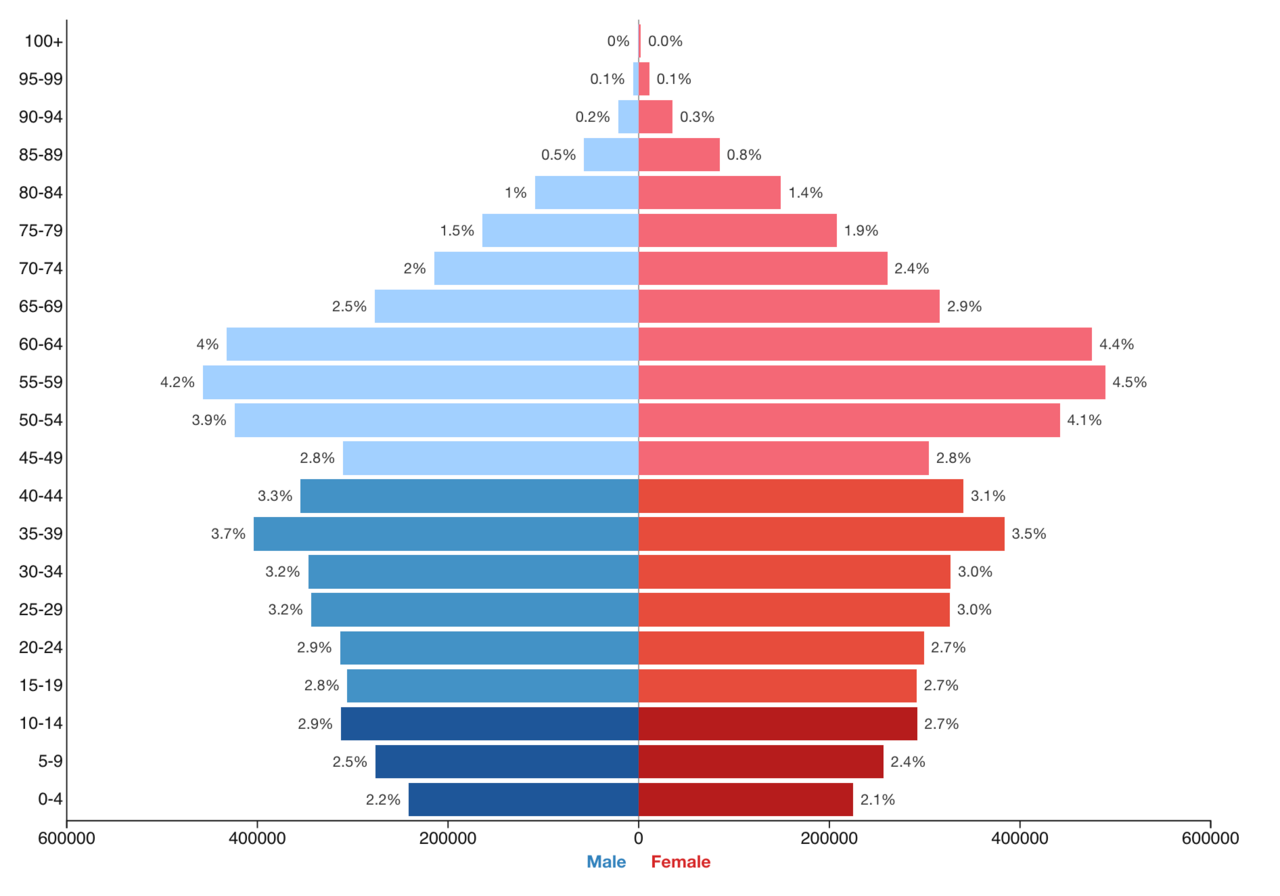
The population that remains is old. Median age is 42.5 years, among the highest in Latin America. Roughly 17 percent of residents are over 65, and the population pyramid is constrictive: the base is narrow, the upper middle bulges. Cuban demographers project that 2026 will be the first year in which annual deaths exceed annual births. The working-age cohort has been disproportionately stripped by emigration, and the rural workforce in particular has hollowed. This matters for irregular warfare for two reasons. Sustained insurgency requires a young male recruitment base, and Cuba does not have one in the relevant numbers. Sustained occupation requires a functional population that can be administered, taxed, and reconciled, and that population is shrinking faster than any plausible stabilization framework can accommodate. The literature on resistance mobilization consistently identifies demographic depth as a precondition for sustained armed movements; Cuba in 2026 lacks the demographic depth that earlier Latin American insurgencies could draw on.
Cuba is heavily urbanized at 82.4 percent. Roughly 2.1 million people, just under a quarter of the entire population, live in greater Havana. Santiago de Cuba, Camagüey, Holguín, and Santa Clara concentrate the bulk of the remaining urban population. This urban concentration creates two parallel effects. It makes population control by the regime tractable through neighborhood-level surveillance structures, and it makes any disruption of urban services, water pumping, food distribution, transportation, fuel supply, immediately and visibly felt by the entire population. The same density that enables Committees for the Defense of the Revolution to monitor every block also concentrates discontent into a small number of neighborhoods that can mobilize quickly. The dynamics of urban resistance in occupied cities apply with particular force in a society this concentrated.
The political baseline is unstable. The Cuban Observatory of Conflicts recorded 1,133 protests in April 2026, a 29.5 percent increase over April 2025. Cubalex documented protest events rising from 30 in January 2026 to 229 in March, with further escalation since. Most events have been small, localized, and triggered by immediate material grievances: power outages, food shortages, water cuts. The most visible incident was the March 14 sacking of a Communist Party municipal office in Morón, where protesters set government buildings alight. Pot-banging protests have become regular in Havana neighborhoods. Graffiti reading “Patria y Vida,” the slogan adopted from the 2021 protest wave, has reappeared on electrical infrastructure. The pattern parallels Sudan’s civilian resistance and Serbia’s student-led protests: localized grievance mobilization without a unifying political vehicle.
These are not yet movements in the organizational sense. They are dispersed expressions of exhaustion. They lack a coherent leadership structure inside the country, a unified set of demands, or a recognized political vehicle. Most prominent dissident figures have been driven into exile, imprisoned, or placed under sustained surveillance. Amnesty International documented an intensification of harassment against the families of political prisoners in early 2026. The state retains an information monopoly that, while increasingly contested by mobile data and VPN access, still constrains organized opposition activity. The Cuban case is among the most fully developed examples of authoritarian information control.
The diaspora is large, concentrated, and politically active. Between 1.5 and 2 million Cubans live abroad, with approximately 1.3 million in the United States, the bulk in South Florida. Remittances flowing into Cuba represent a major share of household income for the families that receive them, though that flow is unevenly distributed and disproportionately reaches phenotypically white Cubans, a pattern documented by both the BTI 2026 country report and independent migration research. The diaspora is not unified politically. It contains a hard-line older generation that prioritizes regime removal, a younger pragmatist cohort that prioritizes family reunification and economic engagement, and a recent migrant wave from the post-2021 exodus whose political orientation is still settling. Its capacity to influence Cuban internal dynamics directly, as opposed to lobbying U.S. policy, is real but limited by distance, monitoring, and the regime’s tight control of who enters the island.
Race is a quiet variable that no Cuban political actor has yet fully mobilized. Afro-Cubans receive fewer remittances, experience worse housing conditions, and feature disproportionately in the population the state can least afford to lose. Frustration is documented but unstructured. No political vehicle currently translates Afro-Cuban grievance into organized opposition, but the latent potential matters in any extended period of instability.
The Regime Defense Doctrine
Cuba’s defense doctrine since 1980 has been the Guerra de Todo el Pueblo, the War of All the People. It is explicitly designed to make occupation prohibitive rather than to defeat an adversary in conventional combat. The doctrine assumes the Cuban Revolutionary Armed Forces (FAR) cannot match a peer or near-peer adversary in air, naval, or armored operations. It treats forcible entry as the easy phase of any external campaign and structures the entire society to impose costs during the prolonged phase that follows. It is, in effect, an institutionalized version of the Resistance Operating Concept framework NATO partners have more recently adopted, predating that doctrine by four decades and embedded in Cuban civil-military structure rather than developed as a contingency plan.
The doctrine rests on four pillars. The first is the regular FAR, approximately 50,000 active personnel divided across the Revolutionary Army, the Air and Air Defense Force (DAAFAR), and the Revolutionary Navy (MGR). The second is the trained reserve component, approximately 39,000 personnel. The third is the Militia of Territorial Troops (Milicias de Tropas Territoriales, MTT), a paramilitary force established on May 1, 1980, that on paper exceeds one million members across approximately 200 regiments. The fourth is the civil mobilization infrastructure that ties civilian life to defense planning: the Committees for the Defense of the Revolution at the neighborhood level, the Defense and Production Brigades at the workplace level, the Youth Labor Army absorbing conscripts, and the National Civil Defense organization layered across all of it.
The doctrine on paper is formidable. The doctrine in practice in 2026 is degraded. GlobalFirepower and independent analysts describe the regular FAR as a force in terminal decline. Its primary armor consists of Soviet-era T-54, T-55, and a small number of T-62 main battle tanks dating to the 1970s. Its air force is built around MiG-21 airframes, the bulk of which are non-operational. Severe fuel shortages have grounded most flight training and restricted ground exercises to battalion level. The U.S. Defense Intelligence Agency assessed in 1998 that the FAR was “not capable of mounting effective operations above the battalion level,” and the trajectory in the intervening years has been further compression rather than recovery. Force structures organized around regime loyalty over operational competence are particularly brittle when subjected to sustained pressure, a recurring pattern across politicized militaries.
The MTT is the centerpiece of the War of All the People in theory, and the most uncertain element in practice. Its formal strength of over one million has not been independently verified for decades. Its training cycles were reduced significantly during the Special Period of the 1990s and have not recovered. The MTT is composed predominantly of women, the elderly, and male teenagers below conscription age. Its weapons are light and are issued only on occasion. From the 1980s onward, MTT members were involved in tunnel construction across the island, generating an unknown but extensive network of underground shelters and command nodes designed to absorb air attack and concentrate dispersed resistance.
The MTT’s combat value against a modern force is low. Its symbolic and social-control value is high. It binds large portions of the population into the regime’s defense framework regardless of individual conviction. Cuban “National Defense Days” have increased in frequency through early 2026, an indicator the regime is rehearsing mobilization sequences and the kind of activity any framework on indicators of invasion preparations would flag in a different context. Whether the population would actually mobilize for the regime under sustained pressure, or whether MTT structures would collapse, fragment, or defect, is the central uncertainty of the entire doctrine.
The harder, more reliable layer of the regime’s coercive apparatus sits outside the FAR. The Ministry of the Interior (MININT) controls border troops, state security, and specialized internal security units. Its core force, the Avispas Negras or Black Wasps (Mobile Brigade of Special Troops, Military Unit 4895), is the regime’s praetorian element, selected, equipped, and incentivized for loyalty over competence. The Tropas Especiales conduct counterterrorism, protective service, and the kind of decapitation-resistance operations a regime under pressure most depends on. These units are small, but they are the institutions most likely to remain cohesive under stress.
Economic Substrate
An irregular warfare assessment is incomplete without an honest reading of the economic substrate, because nothing in the human terrain holds steady when the underlying economy collapses. Cuba’s economic position in May 2026 is the most fragile it has been since the Special Period of the early 1990s, and arguably more fragile in absolute terms. Venezuela’s electrical infrastructure collapse displayed an early phase of this dynamic; the Cuban case differs in that the regime has no oil rents to fall back on once the energy lifeline is cut.
Venezuela was Cuba’s primary oil supplier, providing as much as 46,500 barrels per day at the peak. Following Operation Absolute Resolve in January 2026, Venezuelan shipments halted. Russian deliveries ceased in October 2025. Mexican deliveries ceased in January 2026. The oil blockade authorized by Executive Order 14380 on January 29, 2026 became fully effective the following month, the first sustained blockade of the island since the 1962 missile crisis. Cuban Energy Minister Vicente de la O Levy stated publicly in May 2026 that diesel and several other fuel categories had been exhausted. Blackouts in Havana have reached 22 hours per day. The national grid collapsed twice within a week in March 2026.
The downstream effects are universal. Hospitals have suspended elective surgeries. Schools have closed. Diesel-powered water pumps in Havana have stopped, interrupting potable water supply. Garbage collection is intermittent. Food prices in February 2026 reached 3,000 pesos for a carton of 30 eggs against an average state salary of approximately 6,500 pesos per month. The Food Monitor Program documented hunger in 33.9 percent of Cuban households in 2025, and conditions have deteriorated since. The Cuban medical brigade program, a major source of foreign currency, has been progressively dismantled as Guatemala, Honduras, and Costa Rica have withdrawn from agreements under U.S. pressure. Costa Rica closed its embassy in Havana in March 2026. The interaction between economic collapse and state coercive capacity is the core of strategic competition for governance, where material capacity is the substrate on which all political competition rests.
The relevance for irregular warfare is straightforward. An exhausted, undernourished, sedentary, and aging population is not a recruitment pool for either insurgency or sustained counterinsurgency. It is a population that prioritizes immediate material survival, that has limited capacity for organized political action of any orientation, and that responds primarily to whoever can deliver fuel, food, and electricity. This dynamic constrains the regime’s mobilization potential as severely as it constrains any opposition’s. It also creates a permissive environment for any external actor who can credibly offer material relief in exchange for political alignment.
Foreign Influence
Cuba’s strategic geography ensures continued foreign interest from actors hostile to U.S. regional primacy. Three external presences matter operationally, and each contributes to the broader pattern of influence operations and the weaponization of information across multiple theaters.
Russian engagement is reduced from Soviet-era levels but not negligible. Russia provided the last significant fuel deliveries before the 2026 blockade. Russian technical cooperation on intelligence, communications, and selected military systems has continued through periods of formal cooling. The closure of the Lourdes signals intelligence facility in 2002 ended one chapter of Russian presence; reports through the mid-2020s of renewed SIGINT cooperation suggest the relationship has been rebuilt in lower-visibility forms. The same Russian state apparatus active across the European theater, including the GRU’s crime-terror nexus and the broader pattern of Russian sabotage operations, retains a foothold in the Caribbean.
Chinese engagement has grown over the past decade. Multiple open-source assessments document Chinese-backed SIGINT facilities on the island used for surveillance of the southeastern United States. Chinese cooperation extends to cyber, telecommunications infrastructure, and limited but consistent economic engagement. China has not signaled willingness to break the U.S. oil blockade at scale and has prioritized its own strategic positioning over Cuban regime preservation, but it retains relationships, facilities, and influence on the island that any transition would have to address. The pattern is consistent with the paramilitary economic engagement model visible in China’s fishing flotillas, where commercial activity functions as a vector for state strategic interests.
Iranian engagement is the smallest of the three but has expanded in the wake of Iranian setbacks elsewhere. Iranian advisers, technical personnel, and intermittent material support have been documented, consistent with the broader expansion of Iran’s global irregular warfare apparatus into Latin America. Iran’s capacity to materially affect outcomes on the island is limited; its capacity to complicate them is real.
None of these external relationships substitute for the lost Venezuelan oil lifeline. Each, however, ensures that Cuba is not isolated from external influence and that any internal transition will be contested by actors with established positions on the island.
Cuba and Venezuela: Comparative Assessment
Both states are post-Bolivarian one-party regimes facing concurrent U.S. pressure campaigns. The underlying conditions, however, differ in ways that materially affect the irregular warfare picture.
The most consequential differences are economic and demographic. Venezuela retains oil revenue, however reduced, that funds the patronage networks holding its security apparatus together. Cuba has no equivalent rent source and depends entirely on imports it can no longer fund. Venezuela’s population is young, dispersed across a vast continental geography that defies effective blockade, and contains armed non-state actors with independent capability. Cuba is older, concentrated, blockade-vulnerable, and lacks autonomous armed groups outside the regime’s structure.
The implication is asymmetric. Venezuela presents a higher-cost intervention against a more robust resistance environment. Cuba presents a lower-cost intervention against a more fragile state, but with a more rigid and institutionally embedded defense doctrine and a population whose capacity to sustain any prolonged political process, regime or opposition, is materially constrained by demographic and economic collapse.
What the Terrain Enables and Constrains
Pulling the threads together, several conclusions follow from the underlying physical and human terrain. They are not predictions. They are statements about what the conditions on the island in May 2026 make easier and harder.
What the terrain enables. The island geography makes coercive economic pressure unusually effective. Maritime interdiction is achievable. Energy strangulation translates directly into population pressure without lengthy supply-line warfare. Urban concentration of population means whoever controls Havana effectively controls political legitimacy. The aging, exhausted, and migrating population reduces the size and durability of any organized armed resistance, whether pro-regime or anti-regime. The Soviet-legacy state’s tunnel network, hardened command nodes, and dispersed mobilization infrastructure provide significant absorption of conventional precision strikes, but they do not generate offensive capability. The diaspora provides an external organizational base for information operations, political mobilization, and selective material support, though not for sustained armed operations from outside.
What the terrain constrains. The mountain refuges that hosted past insurgencies remain physically present, but their utility against modern surveillance, drone, and signals intelligence is materially reduced. The rural population that sustained mid-20th-century guerrilla operations has thinned by emigration and urbanization. The FAR’s degraded conventional capability cannot produce a meaningful conventional defense, and the MTT’s symbolic mass is not matched by trained combat capability. The regime’s coercive apparatus is concentrated in small, loyalist MININT units whose effectiveness depends on continued central command cohesion. Should that command cohesion fracture, there is no equivalent of the Venezuelan colectivo network or armed criminal proxies to fill the vacuum, but there is also no organized armed opposition prepared to occupy it.
The space between what the regime can defend and what any successor or external actor would inherit is wide. The institutions of mass mobilization, the CDR network, the MTT structure, the conscription pipeline, persist as scaffolding. Whether the population mobilizes through them, around them, or against them is the variable on which any future depends. That variable is presently unresolved, and the demographic and economic trajectory is reducing the population available to answer it.
Conclusion
Cuba in 2026 is a state with an institutionally formidable defense doctrine resting on an institutionally exhausted society. The War of All the People remains the organizing framework, but the people are leaving, aging, and hungry. The regime retains coercive capability but has lost the material capacity to sustain the population it depends on for legitimacy. The opposition exists in dispersed and unorganized form, lacks internal leadership infrastructure, and has not consolidated around either a political vehicle or an armed program. Foreign actors retain presence and influence but lack the willingness or capacity to substitute for the collapsed Venezuelan oil lifeline.
The irregular warfare picture follows directly from these conditions. The physical terrain favors blockade and coercive pressure. The human terrain favors fragmentation rather than mobilization, whether for the regime or against it. The lessons that total defense doctrines draw from cases like Finland and Estonia do not transfer cleanly to a state whose population is in net decline and whose economic substrate has been broken. The psychological resilience of small nations rests on social cohesion and shared identity as the foundation on which any resistance doctrine depends; the Cuban population’s flight is precisely the erosion of that foundation.
The strategic value of this assessment is not in forecasting which path Cuba takes, but in identifying the variables that any path will have to contend with. Forcible entry, as the Venezuela assessment noted, is generally the simplest phase of any conflict. What follows depends on the durability of social structures under stress, the cohesion of armed factions when central authority weakens, the availability of external sponsors, and the willingness of populations to participate in whatever transition emerges. Cuba’s structures are durable on paper and exhausted in practice. Its armed factions are concentrated in regime-loyal units. Its external sponsors are constrained. Its population is shrinking. These are the conditions any actor, internal or external, will operate in. The question of where the pressure campaign travels after the Caribbean is taken up separately in Beyond Cuba.
The Venezuela Contingency Operation assessment applied the same analytical framework to a continental Bolivarian regime in late 2025. The State-Insurgent Strategic Competition for Governance series provides the doctrinal framework for understanding how external sponsorship and internal mobilization interact in contested political environments. The Resistance Operating Concept page describes the formal framework NATO partners use to prepare for resistance against occupation, useful as a counterpoint to Cuba’s longer-institutionalized but materially degraded War of All the People doctrine. What large states can learn from small-state total defense strategies addresses the comparative dimension at the doctrinal level.
Three Distillery Press editions condense the doctrinal foundations into accessible reference volumes: Masters of Resistance (Series 1) covers the foundational thinkers on resistance organization and underground operations; Guerrilla Tactical Triad (Series 2) addresses the operational triad of Mao, Giap, and Guevara on protracted irregular conflict; and OSS Combined and Remastered (Series 3) brings together the declassified Office of Strategic Services field manuals on sabotage, subversion, and unconventional operations behind hostile lines. A standard reference on the Cuban Revolutionary Armed Forces and the institutional history of the War of All the People doctrine is Cuba’s Military 1990-2005 by Hal Klepak, which remains the most comprehensive English-language study of the FAR’s adaptation through the Special Period.
