

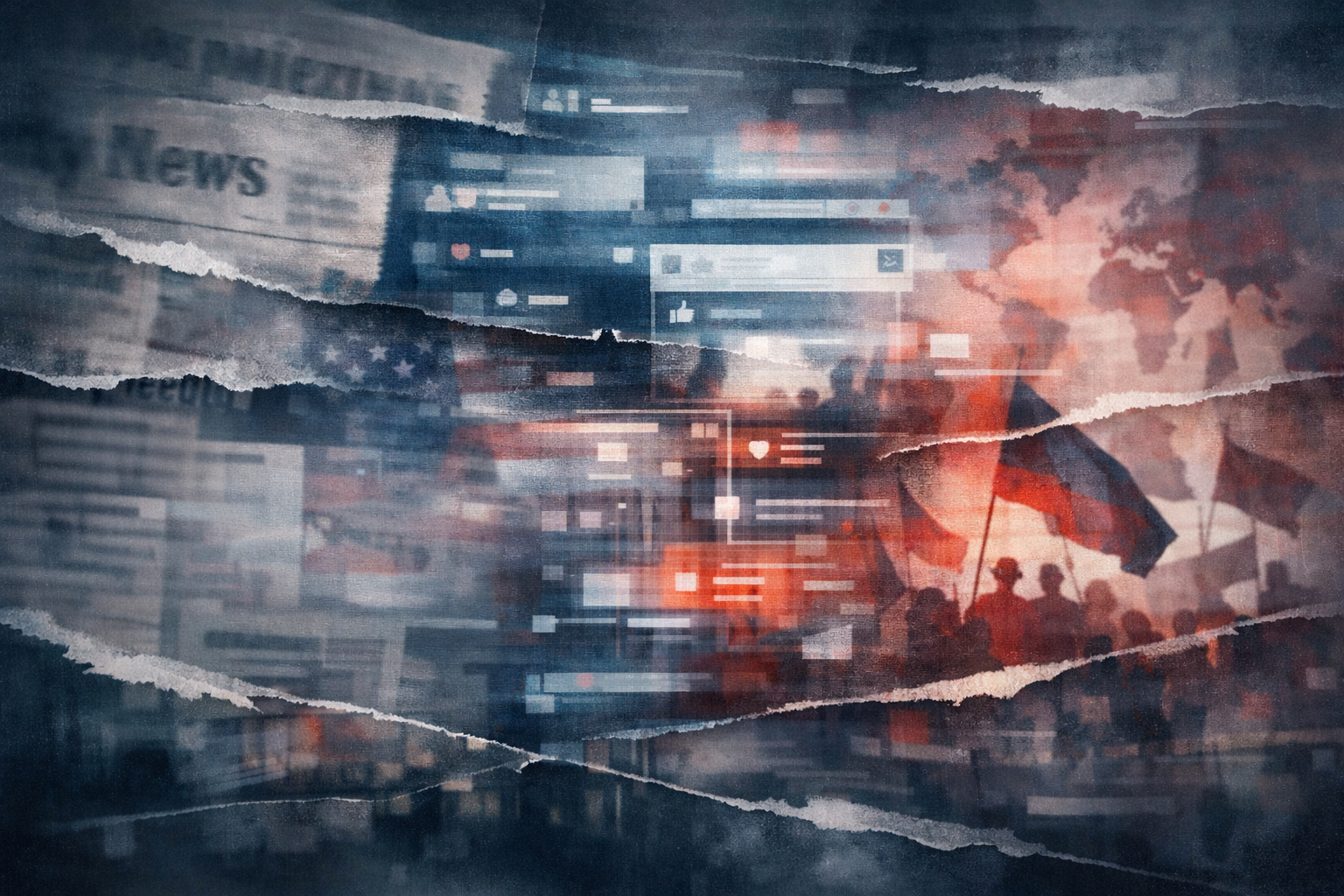
Subversion is among the most potent — and least understood — tactics in the arsenal of resistance movements. It is the art of undermining an adversary’s power structures from within, using psychological, social, and political tools to destabilize institutions and delegitimize authority. From the Cold War’s covert campaigns to the grassroots uprisings of the Arab Spring and the AI-driven information operations of the 2020s, subversion has played a critical role in shaping the world’s political landscape.
This article examines the theory and practice of subversion, tracing its intellectual foundations and evaluating historical case studies of both success and failure. By understanding its principles, we can better appreciate its enduring relevance — and its accelerating evolution — in the modern era.
Understanding Subversion
At its core, subversion is about eroding the foundations of an opponent’s power. Unlike direct confrontation, it operates covertly, targeting a regime or institution’s moral, social, and institutional legitimacy. The objective is not to defeat an adversary on the battlefield but to create internal dissent, weaken cohesion, and foster instability until the structure collapses under its own contradictions.
Subversion often works in tandem with other forms of irregular warfare, amplifying the effects of guerrilla campaigns, nonviolent protests, sabotage, and espionage by sapping an opponent’s resolve from within. Together with sabotage and espionage, it forms the underground tactical triad — the three pillars of clandestine resistance operations.
Key Elements of Subversion
Subversion relies on three interconnected mechanisms. Psychological operations aim to influence public opinion and morale through propaganda, disinformation, or the selective amplification of grievances. Cultural undermining challenges dominant narratives and introduces counter-cultural ideas that erode the regime’s claim to legitimacy. And institutional infiltration embeds agents or sympathizers within key organizations to disrupt operations, leak intelligence, or sow discord among decision-makers.
Theoretical Foundations of Subversion
Several thinkers have shaped our understanding of how subversion operates and why it can succeed against far more powerful adversaries.
Antonio Gramsci and Cultural Hegemony. The Italian Marxist theorist argued in his Selections from the Prison Notebooks that power is maintained not only through coercion but through cultural dominance — what people perceive as “common sense.” In this framework, subversion targets the dominant culture itself, seeking to replace it with alternative values and ideas. Gramsci’s concept of the “war of position” describes a long-term struggle for ideological influence within civil society, laying the groundwork for political change before any direct confrontation occurs.
Gene Sharp and Nonviolent Subversion. Sharp’s landmark work The Politics of Nonviolent Action outlines how nonviolent tactics can subvert authority by undermining a regime’s moral and social legitimacy. Sharp identified 198 methods of nonviolent action and emphasized the power of grassroots movements to withdraw consent and disrupt the functioning of oppressive systems. His work profoundly influenced resistance mobilization strategies worldwide.
Sun Tzu and the Primacy of Deception. The Art of War highlights the strategic value of sowing confusion and discord as alternatives to pitched battle. Sun Tzu’s dictum that all warfare is based on deception underscores the timeless importance of subversion as a tool to weaken the enemy without direct confrontation — a principle that remains central to modern hybrid warfare doctrine.
Che Guevara and Revolutionary Mobilization. In Guerrilla Warfare, Guevara highlighted subversion as a tool to ignite revolutionary fervor, particularly among marginalized populations. He believed that a committed vanguard could create the conditions for revolution through persistent agitation — though his experience in Bolivia would demonstrate the catastrophic risks of miscalculating local dynamics.
In 2007, Greenpeace launched an online poll to name a satellite-tagged humpback whale, hoping a personal identity would rally public opposition to Japan’s plan to hunt 50 humpbacks. The poll listed 30 serious names drawn from sea deities and environmental themes. Then Reddit found it. Users coordinated a mass vote for the joke entry “Mister Splashy Pants,” overwhelming the poll with 78% of 150,000 votes. Greenpeace resisted — extending the deadline, purging suspicious ballots — but the name only gained momentum, spreading to Boing Boing, 4chan, Digg, and Facebook. Reddit even changed its logo. When Greenpeace finally embraced the result, the viral wave did what diplomacy hadn’t: Japan abandoned its humpback hunt that December. The campaign became a case study in how losing control of a message can be the most subversive act of all.
Source: TED / Alexis Ohanian — “How to Make a Splash in Social Media”
Historical Case Studies: Successes
Soviet Disinformation During the Cold War. The Soviet Union mastered subversion through the KGB’s “active measures” program. Operations exploited social fissures in the West, promoting racial tensions in the United States, infiltrating peace movements to weaken public support for Western defense policies, and planting fabricated documents in foreign media to undermine trust in democratic institutions. These campaigns demonstrated that subversion could achieve strategic effects without firing a single shot — a lesson that Russia’s intelligence services would carry into the 21st century.
The Velvet Revolution (1989). In Czechoslovakia, subversion was critical in dismantling communist rule. Civic organizations, underground publishing networks, and Charter 77 worked for over a decade to undermine the regime’s credibility. Vaclav Havel’s The Power of the Powerless became a manifesto for dissent, articulating the regime’s moral bankruptcy and arguing that individuals could resist simply by “living in truth.” When mass protests finally erupted in November 1989, the regime had already lost its ideological foundation — the subversive groundwork had made the revolution almost inevitable.
The White Rose Movement in Nazi Germany. The White Rose resistance group used underground literature to challenge the Nazi regime from within German society. By disseminating anti-Nazi pamphlets across university campuses, they sought to awaken the moral conscience of ordinary Germans. Though the group’s leaders — Hans and Sophie Scholl among them — were executed, their subversive actions left a lasting legacy as one of history’s most powerful examples of symbolic resistance.
Anti-Apartheid Subversion in South Africa. Anti-apartheid activists leveraged international media to expose the brutality of the regime, transforming a domestic struggle into a global cause. Combined with internal labor strikes, boycotts, and the African National Congress’s underground networks, this strategy delegitimized apartheid on the world stage and forced the regime to contend with unsustainable internal and external pressures.
Historical Case Studies: Failures
The Bay of Pigs Invasion (1961). The CIA attempted to subvert Fidel Castro’s regime through covert operations, culminating in the failed Bay of Pigs invasion. Poor planning, a catastrophic misreading of local support, and Castro’s effective counter-subversion apparatus turned the effort into a debacle that strengthened the very regime it sought to destroy. The episode became a textbook example of how externally driven subversion fails when it lacks genuine grassroots legitimacy.
Che Guevara in Bolivia (1966–67). Guevara’s efforts to subvert the Bolivian government floundered precisely because he violated his own principles. His inability to mobilize local support, a fundamental misunderstanding of Bolivian indigenous communities, and effective countermeasures by the Bolivian military — aided by CIA advisors — led to his capture and execution. The failure demonstrated that revolutionary subversion cannot be exported like a commodity.
The Hungarian Revolution (1956). Western-backed subversion efforts to support the Hungarian uprising against Soviet control ultimately failed when the Soviets deployed overwhelming military force. Despite initial successes by Hungarian revolutionaries, the rebellion was crushed, exposing the limits of external subversive support when an adversary retains both the will and the capacity for brutal repression.
The Arab Spring (2011–2012). While subversion played a key role in mobilizing protests across the Middle East and North Africa, its success was profoundly uneven. In Egypt, initial victories were undone by the military’s counter-subversion apparatus and the resurgence of authoritarianism. In Bahrain, subversion failed to overcome entrenched power structures backed by Saudi military intervention. The Arab Spring revealed that successful subversion requires not only the capacity to mobilize dissent but the organizational depth to consolidate gains — a lesson explored in depth in TRH’s analysis of Serbia’s student-led protests.
Key Lessons and Principles
Factors Behind Success
Effective subversion relies on grassroots involvement — without widespread participation and perceived legitimacy among the population, subversive campaigns remain fragile and easily disrupted. It depends on the skilled use of media and communication to shape narratives, expose regime weaknesses, and build solidarity across social divisions. And it succeeds when it taps into pre-existing grievances and amplifies genuine discontent rather than attempting to manufacture opposition from scratch.
Common Pitfalls
The historical record reveals recurring failure modes. Cultural blindness — misunderstanding local dynamics and values — can alienate the very populations that subversion seeks to mobilize, as Guevara’s Bolivia campaign demonstrated. Over-reliance on external support undermines the legitimacy that distinguishes subversion from mere foreign interference, a lesson the Hungarian and Bay of Pigs episodes made painfully clear. And underestimating regime resilience remains the most common miscalculation: authoritarian regimes often maintain robust counter-subversion capabilities, including surveillance networks, controlled media, and the willingness to employ overwhelming force.
Subversion in the Modern Era

The 21st century has fundamentally transformed both the tools and the tempo of subversion. What once required years of clandestine organizing, underground printing presses, and physical infiltration can now be initiated from a laptop in a matter of hours.
Digital Subversion and State-Sponsored Information Warfare
Cyber operations, disinformation campaigns, and hacktivism have become powerful instruments for both state and non-state actors. Russia has led the way, adapting Soviet-era “active measures” for the digital age. According to a 2025 CSIS report, Russian subversion operations — including sabotage, cyberattacks, and information warfare campaigns — have nearly tripled over the past year, driven largely by Moscow’s effort to undermine Western support for Ukraine.
The playbook extends well beyond Europe. In the lead-up to Moldova’s 2025 parliamentary elections, Russia allocated an estimated $55 million to destabilization efforts combining disinformation, illicit funding, and oligarch-controlled media. Similar operations are now targeting Armenia’s 2026 elections, using deepfakes, bot networks, and impersonation websites to portray the government as corrupt while positioning Moscow as the country’s only credible protector. Meanwhile, in West and Central Africa, investigations have uncovered networks of fabricated journalists — “ghost reporters” — publishing pro-Russian narratives through local media outlets, reshaping public perception and geopolitical alliances across the region.
AI, Deepfakes, and the Industrialization of Subversion
The rise of artificial intelligence has accelerated subversion’s reach and sophistication. Research by Surfshark documented deepfake incidents targeting elections in 38 countries since 2021, affecting a population of 3.8 billion people. AI-generated content has been deployed to fabricate political endorsements, create synthetic audio of candidates making inflammatory statements, and generate misleading imagery of election fraud — all circulated at a speed that overwhelms traditional fact-checking mechanisms.
In 2025, AI-enabled subversion matured from an experimental threat into an operational reality. During Canada’s federal election, a deepfake of Prime Minister Mark Carney promoting a cryptocurrency scam reached over one million social media views. In Romania’s presidential election, scammers deployed deepfake videos of multiple candidates endorsing fictitious investment schemes. In Poland, AI-generated images featured in viral disinformation alleging voter fraud immediately after first-round voting. OpenAI’s June 2025 threat intelligence report confirmed that state actors were primarily misusing AI platforms to support information operations rather than traditional cyberattacks — underscoring that subversion, not sabotage, remains the primary digital weapon of choice.
Ethical Considerations
As subversion evolves, ethical questions sharpen. The UK’s 2025 Strategic Defence Review identified disinformation as a top-tier hybrid threat, calling for a “whole-of-society” institutional response comparable to the creation of the National Cyber Security Centre a decade earlier. But the boundaries between defensive counter-disinformation and offensive narrative control remain contested. How do democratic societies build resilience against subversion without replicating the authoritarian information practices they oppose? And as AI lowers the barriers to sophisticated influence operations, can international legal frameworks adapt fast enough to establish meaningful guardrails? These questions will define the next decade of both resistance and governance.
Conclusion
Subversion remains a vital tactic in the arsenal of resistance movements — and an increasingly potent instrument of state power. Its successes and failures across two centuries of conflict offer enduring lessons: that legitimacy is the foundation of effective subversion, that cultural understanding is non-negotiable, and that technology amplifies both the opportunities and the risks. As AI-driven information warfare reshapes the threat landscape, understanding the mechanics of subversion has never been more critical. For a deeper exploration of the theoretical frameworks that underpin these tactics, see TRH’s companion analysis, Subversion: Unseen Forces That Reshape History. And for the broader context of how subversion fits within the spectrum of unconventional conflict, explore the Irregular Warfare Glossary.